






News
By Steve Davis, May 3, 2008


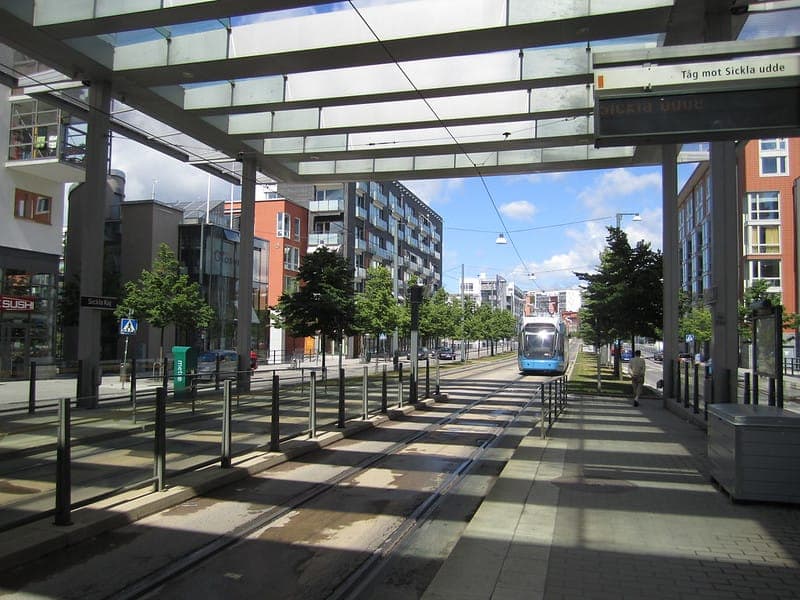
Walking in the ditch to Pleasant View Elementary School in Franklin, Wisconsin on an incomplete street, left, and a complete street that is safe and accessible for all users, right.
updated 5/3/08: Photo source of left photo added at bottom.
If you've been feeling pinched at the pump lately and tried cutting down on gas by walking your children to school, or walking up to that grocery store a half mile away, you might have discovered that the roads were slightly unfriendly if you weren't cocooned in a few thousand pounds of glass and steel. If they even exist, sidewalks sometimes end without warning, crosswalks are non-existent, and crossing eight lanes of traffic can be intimidating without a few hundred horsepower.
If you found yourself thinking, "what can we do to make our roads more friendly to more users — walkers, bikers, the handicapped and the elderly?"— Thursday was a good day towards making roads safe and accessible to all users.
First, Rep. Doris Matsui (Sacramento, CA) introduced a complete streets bill in the House, meaning that there is comprehensive complete streets legislation in the House and the Senate for the first time. While other "leaders" are proposing short-sighted measures like suspending the gas tax, Rep. Matsui is to be praised for looking at alternatives that might make driving a little less necessary, and walking or biking safer and more enjoyable. From her office's press release:
“Once again, gas prices have hit record highs this week. As American families continue to feel the pain at the pump due to the skyrocketing costs of gasoline, they are driving less and less. By diversifying our roadways, we can provide real alternatives to travel by car,” said Rep. Matsui.
Meanwhile, Senator Norm Coleman (R-MN) signed on this week as first Republican co-sponsor of the Senate version of the bill, S.2686, the Complete Streets Act of 2008, introduced a few weeks ago by Senators Tom Harkin (D-IA) and Thomas Carper (D-DE). The concept of Complete Streets is one that enjoys broad support from a diverse range of groups — from groups representing environmental, health, transportation, and disability interests.
Hopefully, Sen. Coleman's signature this week will begin a flow of leaders of all political stripes who see the value in making sure that our streets and roads consider the needs of everyone, making them safe and inviting for all.
From the Coalition's press release:
Across the country, many transportation agencies have continued to design many roads primarily for drivers – discouraging bicycling and leaving those on foot tramping through a track worn in the grass. Yet men and women outlive their driving years by six and ten years respectively and prefer to walk rather than be stuck at home. Transit users often face dangerous crossings and uncomfortable waits, while people who use wheelchairs or have vision impairments often cannot venture out at all due to a lack of sidewalks and curb ramps.
And surveys show Americans of all ages and income levels want safe places to walk and ride bicycles, and public health officials says such activity is an essential component of fighting the obesity epidemic. Complete Streets policies require transportation planners to take the needs of all users into account in all upcoming transportation projects – so the road network can be gradually improved for everyone.
Find out more information and track the bills' progress on the Complete Streets federal policy page, and on the Smart Growth America action page.
Left photo of Pleasant View Elementary in Franklin, Wisconsin from John Michlig and Sprawled Out. Right photo of a complete street from Portland Office of Transportation
Related News





Livable places. Healthy people. Shared prosperity.


© 2026 Smart Growth America. All rights reserved
Site By3Lane Marketing
