






News
By Sam Gordon, March 16, 2026
This year, the National Brownfields Coalition has worked closely with both Majority and Minority staff members on the House Committee on Energy & Commerce as Congress considers reauthorization of the Environmental Protection Agency Brownfields Program. For decades, the program has helped communities across the country clean up contaminated properties and redevelop them into productive community assets—from new businesses and housing, to parks, public spaces, and other projects that strengthen local economies and improve quality of life.
The EPA Brownfields Program is approaching a significant funding cliff. Supplemental funding provided through the Infrastructure Investment and Jobs Act (IIJA) is set to expire at the end of the law’s five-year funding window in 2026. Without congressional action, the program faces a projected annual shortfall of more than $150 million. This would mean fewer resources available for communities to assess and clean up contaminated sites, fewer redevelopment projects moving forward, and fewer opportunities for local governments to transform neglected properties into economic and environmental assets.
Over the past several months, the National Brownfields Coalition (NBC) has been actively engaged with congressional staff on both sides of the aisle, providing feedback on preliminary discussion drafts and sharing insights from practitioners and communities working on brownfields redevelopment across the country. As the Committee advances efforts to reauthorize the EPA Brownfields Program, NBC is working to ensure that the perspectives of local governments, redevelopment professionals, and community partners are reflected in the legislative process and that the program remains a strong and effective tool for community revitalization nationwide.
The EPA Brownfield Program
Cleaning up and revitalizing brownfields (such as abandoned gas stations, dry cleaners, factories, and other properties formerly used for industrial or commercial purposes) remains an often-overlooked but critically important form of community development and neighborhood revitalization. Addressing brownfield sites can transform environmental liabilities into community assets, strengthening neighborhoods and improving residents' quality of life.
Across the United States, more than 450,000 brownfield sites remain scattered across communities awaiting cleanup and reuse. Redeveloping these sites can reactivate land that has sat vacant for years or even decades, support new businesses, increase local tax revenue, and reduce environmental and public health risks.
The federal Brownfields Program was formally established in 2002 through the Small Business Liability Relief and Brownfields Revitalization Act, signed into law by President George W. Bush, and administered by the EPA. The program was most recently reauthorized in 2018 through the Brownfields Utilization, Investment, and Local Development (BUILD) Act, which increased funding levels, expanded grant eligibility, and modernized the program.
The program has been remarkably successful. Since its creation, EPA Brownfields grants have helped assess and clean up hundreds of thousands of contaminated sites, making more than 4 million acres of land ready for reuse and leveraging more than $50 billion in redevelopment investment nationwide.
More recently, the Infrastructure Investment and Jobs Act (IIJA), signed by President Biden in 2021, infused over $1.5 billion into the program over five years. However, that funding boost will expire at the end of the current IIJA funding window in 2026. Without renewed investment from Congress, annual funding levels could fall back toward pre-IIJA baseline appropriation levels of less than $100 million—a dramatic funding cliff that would severely limit communities’ ability to continue redevelopment work.
This makes congressional reauthorization of the program—with sustained and increased funding—especially important to ensure that communities can continue addressing contaminated sites and advancing redevelopment projects.
NBC testifies as Congress considers proposals to reauthorize the Brownfields Program
As part of this legislative process, the House Committee on Energy & Commerce recently released four discussion drafts of legislation intended to update and reauthorize the federal Brownfields Program.
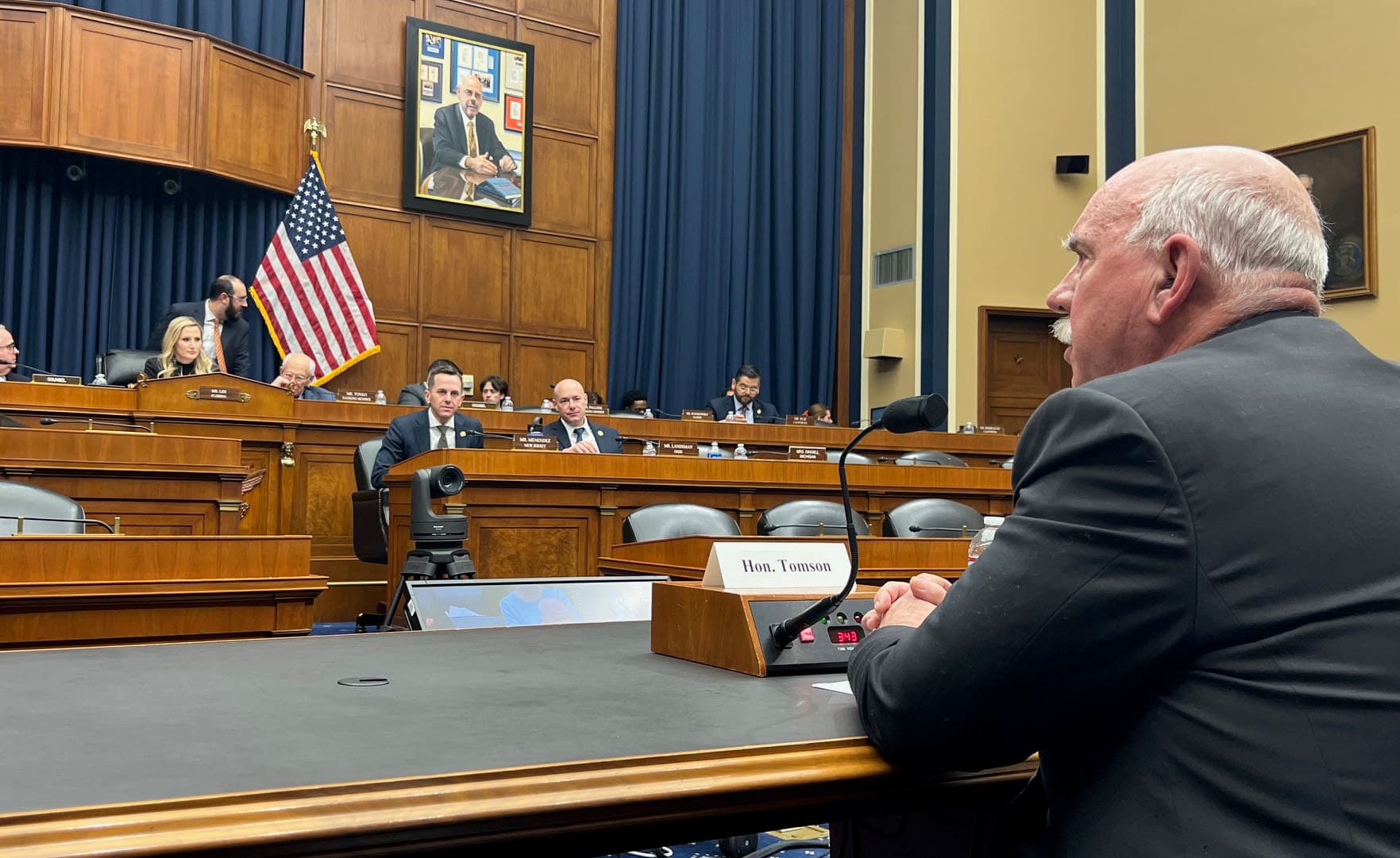
The National Brownfields Coalition has been working with staff on both sides of the aisle to review and provide feedback on these proposals. On March 4, 2026, the Committee invited NBC to participate in a legislative hearing where members of Congress reviewed the discussion drafts and heard testimony on how the program should evolve.
Coalition ally Mayor Alan Tomson of Davis, West Virginia, testified before the Committee in support of reauthorizing the EPA Brownfields Program and increasing grant funding to help communities remediate and redevelop contaminated sites.
In his testimony, Mayor Tomson shared how the program has supported redevelopment in his small Appalachian community. One example he highlighted was the cleanup of an abandoned gas station site in Davis that now houses New Heritage Distilling and the Big Timber Logging Camp brewery—thriving local businesses that contribute to the town’s growing tourism and outdoor recreation economy.
Mayor Tomson also raised concerns about provisions in the draft legislation that could allow private developers to directly access federal brownfields grant funding for large-scale industrial projects such as data centers, power plants, or other major infrastructure developments.
He pointed to a proposal near his own community as an example: a massive data center complex planned just outside Davis on land adjacent to a brownfield and the county landfill. According to the proposal, the project would include a 1,600-megawatt power plant and large-scale diesel fuel storage to support what developers claim could become the world’s largest data center campus.
While projects of this scale may play an important role in the country’s broader infrastructure and economic strategy, the National Brownfields Coalition believes that limited federal brownfields funding should remain focused on helping local governments, nonprofits, and community-based entities address contaminated sites that would otherwise remain neglected.
In many cases, private developers pursuing large infrastructure projects already have access to significant private capital. Allowing those projects to compete for EPA Brownfields grants could divert scarce public resources away from the small towns, rural communities, and under-resourced local governments that rely most heavily on these grants to move redevelopment projects forward.
Why brownfields investment matters for communities
When done effectively, brownfields redevelopment unlocks opportunities that benefit both the public and private sectors while strengthening communities as a whole. Transforming contaminated sites into productive uses can support local job creation, expand tax bases, improve environmental conditions, and create new amenities for residents.
These outcomes directly align with Smart Growth America’s mission to help communities create healthy, resilient, and economically vibrant places.
Brownfields redevelopment is also one of the policy areas that consistently receives strong bipartisan support at the federal level. Because the program delivers tangible benefits to communities across the country—urban, suburban, and rural alike—it represents a powerful opportunity for lawmakers to work together to advance policies that strengthen local economies and environments.
What comes next
Over the coming weeks and months, the National Brownfields Coalition will continue to work with both Majority and Minority staff on the House Committee on Energy & Commerce to advocate for a clean reauthorization of the EPA Brownfields Program that maintains strong federal investment while avoiding provisions that could jeopardize bipartisan consensus.
Ensuring the continued success of the Brownfields Program will allow communities across the country to transform long-neglected sites into new opportunities for economic development, environmental improvement, and community revitalization.
With hundreds of thousands of brownfield sites still awaiting cleanup and reuse, the importance of sustaining and strengthening this program has never been clearer.
Related News






Livable places. Healthy people. Shared prosperity.


© 2026 Smart Growth America. All rights reserved
Site By3Lane Marketing
