






News
By Courtney Cole, Smart Growth America, May 28, 2026
Community members have expertise essential to creating a safer, more convenient transportation system that works for everyone. That’s why effective community engagement should be part of every planning process. Community engagement efforts give practitioners the tools to implement projects that align with what residents want and need, and ensure that these projects have a more meaningful impact.
Over the years, Smart Growth America has worked with hundreds of communities across the country to make our transportation system safer and more effective. One key to achieving that goal is helping the communities we work with build the skills and capacity for effective community engagement.
Community engagement is too often treated as a checkbox—an occasional open house, a survey for a major project, or a public meeting that happens after decisions are already made. But real community engagement is more than just occasional feedback. It’s an invaluable tool for making informed decisions around transportation, creating space for the people who have historically been left out, and building lasting relationships—and communities across the country are showing what that looks like in action.
1. Be proactive
Engage early and often.
When community engagement starts after decisions have already been made, projects usually don’t reflect what the community wants and needs. When that vision is shaped by community voices, from the beginning, it leads to better projects and stronger relationships.
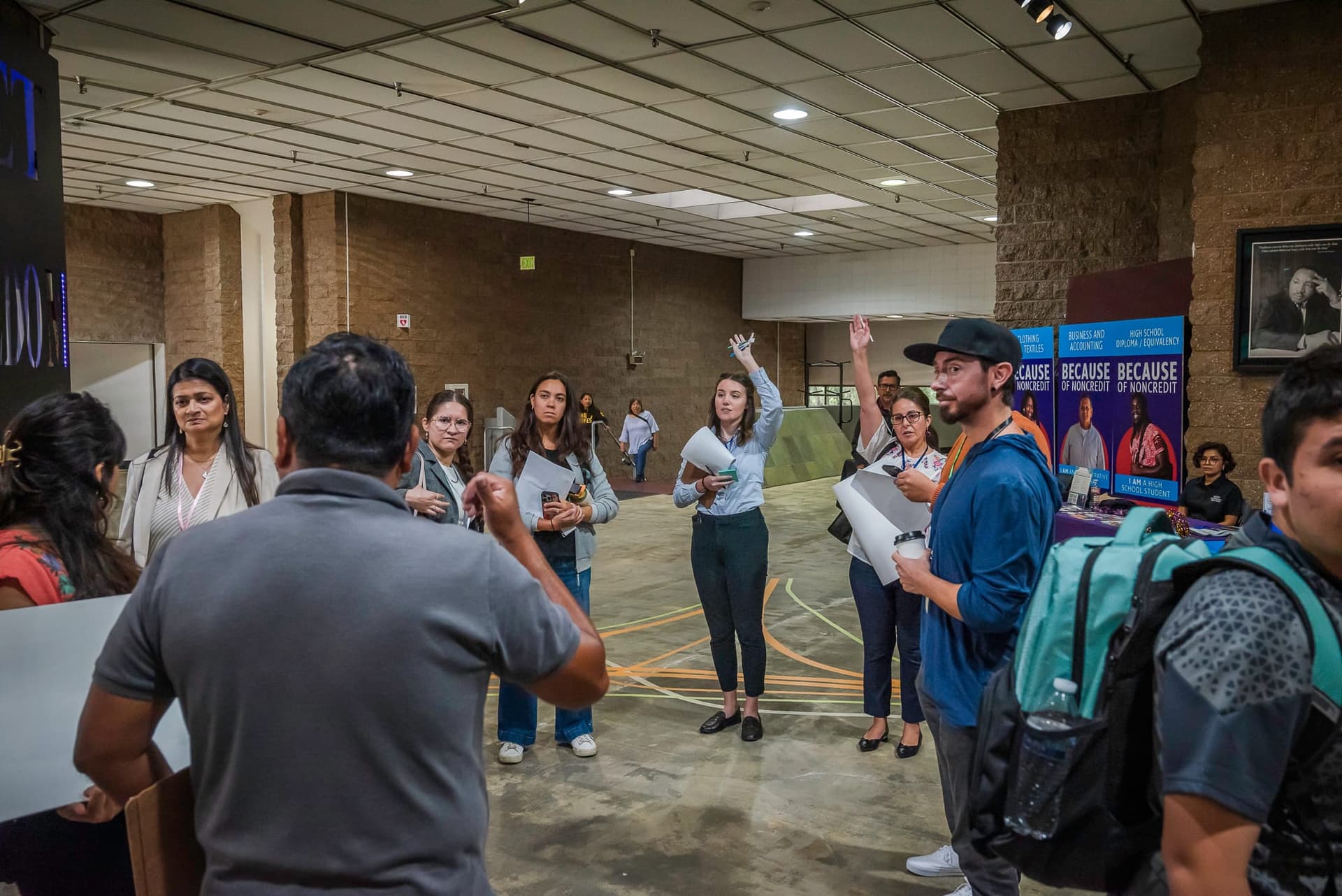
In Boyle Heights, CA, organizers and artists led workshops, artmaking, and collective mapping to explore how residents defined “resilience” in a community with a history of disinvestment. The process helped planners develop a vision and strategies to make the changes to streets and transportation that meet the community’s needs. Now, the community has a roadmap they can use to advocate for the types of changes they want to see.
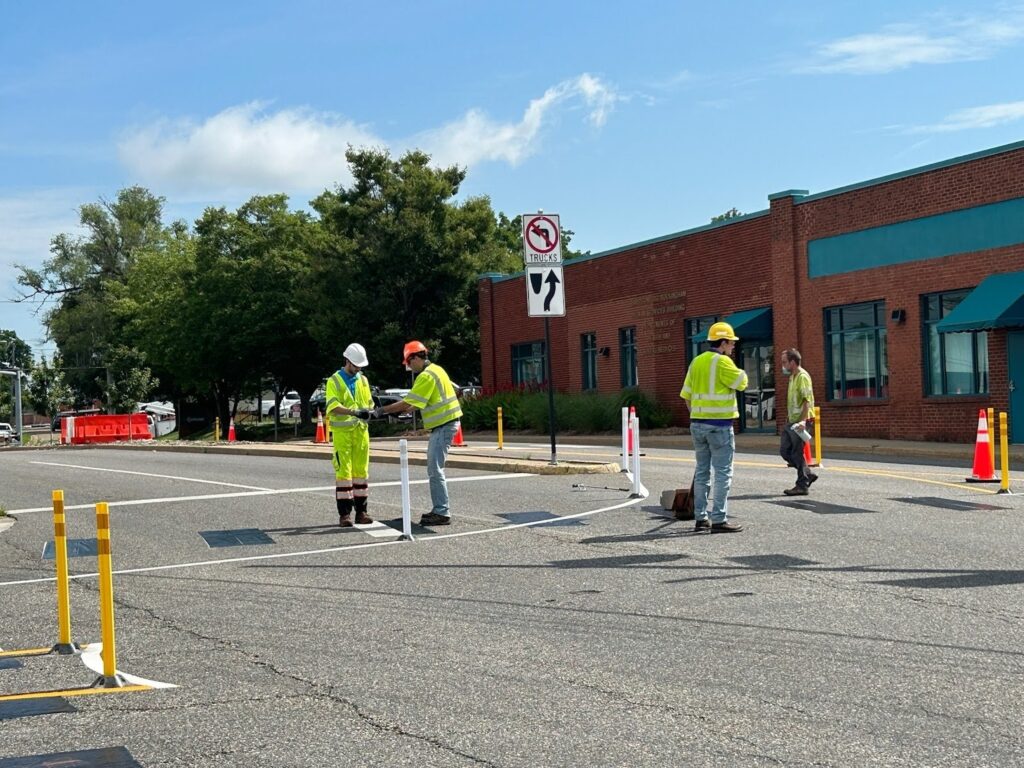
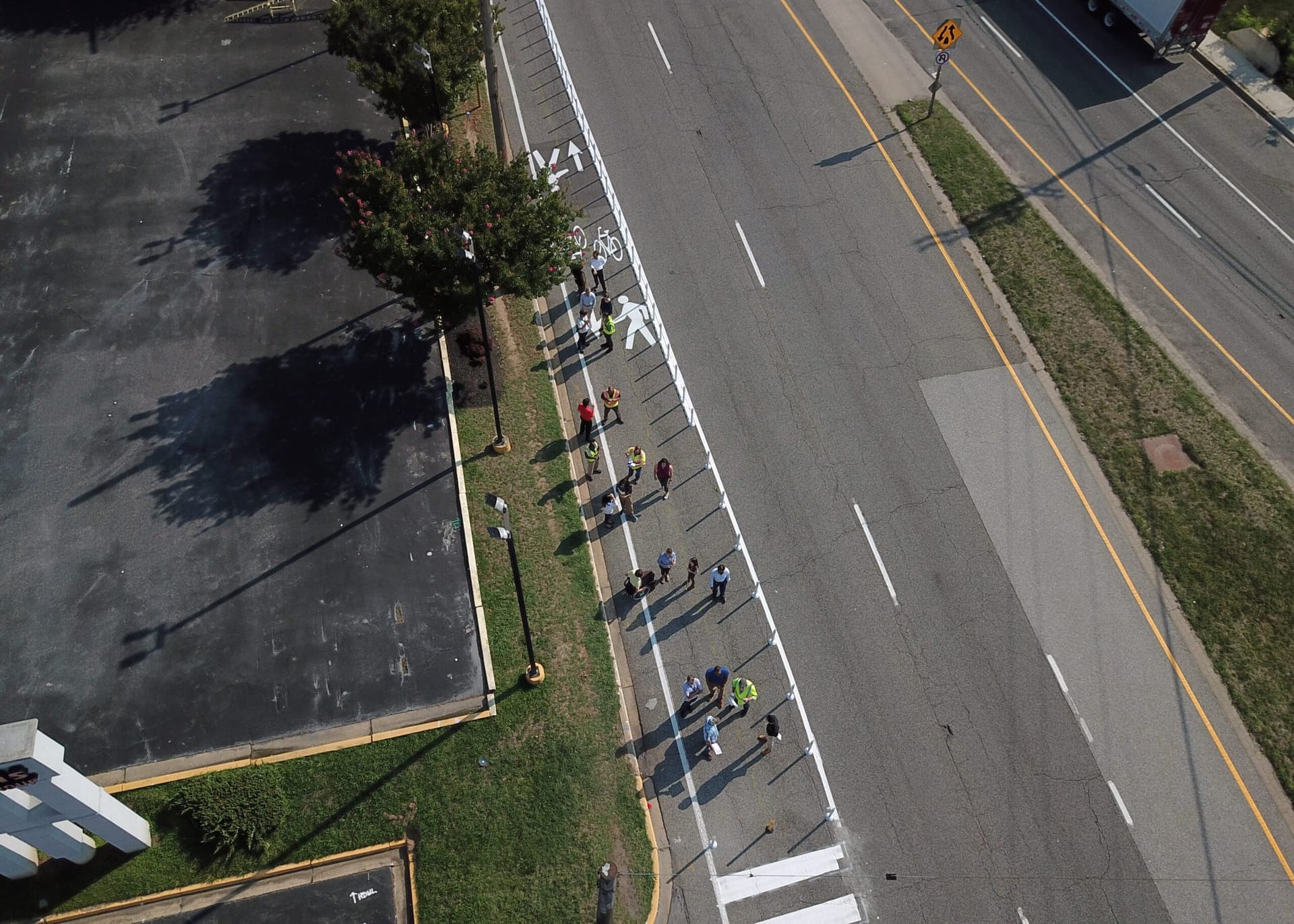
In Harrisonburg, VA, planners realized in the early stages of a redesign project on a historically divisive highway that the surrounding community hadn’t been engaged with enough. So, they paused working on the project to hold listening sessions and neighborhood gatherings with residents. This shift not only helped refine the project’s goals but also reestablished trust with residents whose neighborhood had been harmed when the highway was originally installed in the 1960s.
How to do it:
- Assign responsibility for community engagement to specific member(s) of the project team
- Create systems that support successful community engagement as soon as projects are approved
- Make a list of key stakeholders for outreach
Embed opportunities for community input at multiple points in the project timeline
2. Be transparent
Build open lines of communication that support strong collaboration.
Clear expectations and honest communication are central to effective community engagement. Community members should know how projects, policies, and initiatives are developing, how they might be affected, what opportunities they have to influence decisions, and what problems the project intends to solve.
Transparent, consistent communication between agencies and communities is especially important. One great way to support this is through regular reporting. Doing this allows the public to see what progress is being made and keeps agencies accountable. Milwaukee’s annual Complete Streets reports and Knoxville’s Vision Zero reports are great examples for agencies to follow. They provide yearly data, analyze progress, and evaluate current trends in an approachable format.

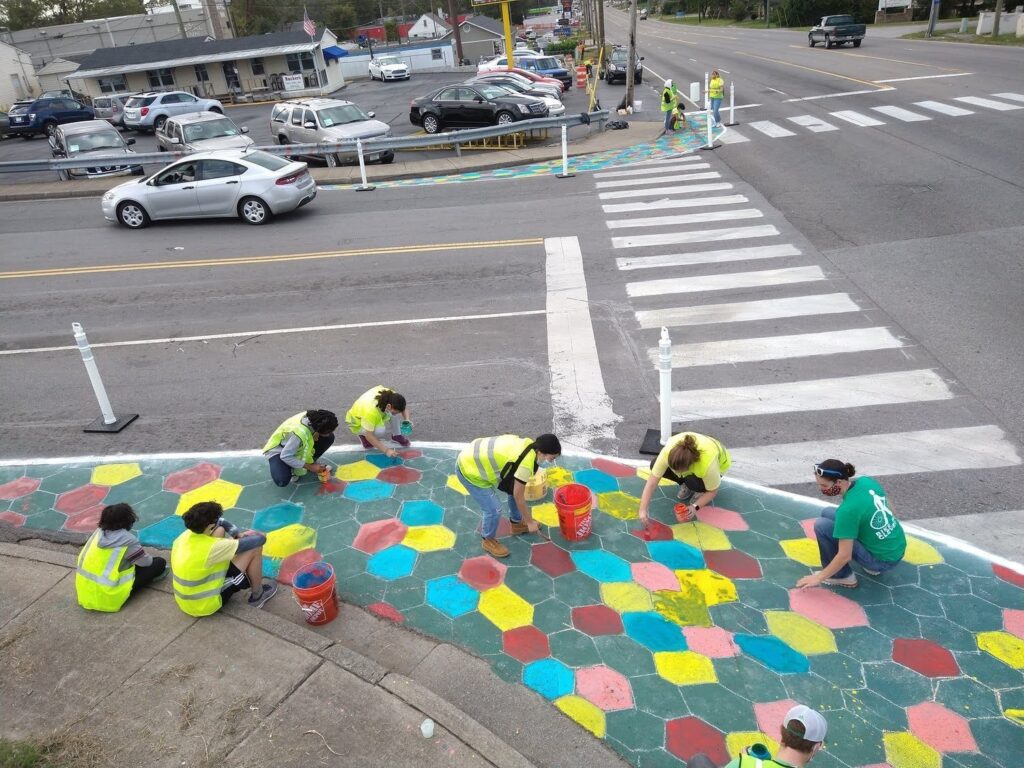
In Chattanooga, TN, city staff gathered input from residents living on a street where they planned to test pedestrian safety improvements before implementing any changes. These early efforts to make sure that the changes didn’t blindside residents also allowed community members to develop a sense of ownership and connect with the project. The city built on this by including residents in an art-making portion of the project after its installation, which added color and fun to the space while highlighting the upgrades.
How to do it:
- Consistently collect and publish data and project details
- Keep residents informed about project schedules and changes, especially those who will be impacted by construction or detours
- Provide multiple opportunities for community members to learn about projects—both in-person and virtually
3. Be creative
Community engagement should be…engaging!
Engagement doesn’t have a single correct format. Every community is unique and diverse, and engagement approaches should reflect that. Creative tools that allow all community members to participate regardless of age, primary language, or ability result in fuller representation and better feedback.
For example, in Doraville, GA, youth organizers led creative mapping projects and photography exercises to document how unsafe and disconnected their built environment felt. These collaborative activities—which explored the intersections of data, climate change, and transportation systems—helped participants better understand that the way we build communities shapes our lives. Latinx teens walked away understanding how to advocate on issues that affect their daily lives, such as inadequate crosswalks and long bus waits. Lessons and art from these sessions were also shared with decision-makers.

In Boston, the Metropolitan Area Planning Council (MAPC) found that some of the community’s most critical industries are being heavily impacted by climate change. To develop strategies for mitigating these impacts, they convened focus groups and conducted follow-up interviews with managers, employees, and representatives from the construction, farming, home healthcare, and fishing industries. In addition to this effort, city staff coordinated an art installation that brought together residents and partners to visually represent the community’s perspective and experience with climate change.
How to do it:
- Provide multiple ways for participants to express themselves
- Promote a sense of ownership among community members through individual or group art
- Integrate your community’s unique identity into community engagement efforts by centering activities on things your community is already passionate about
4. Be reciprocal
Give-and-take builds trust and meaningful partnerships.
Too often, community members are asked to show up, share stories, and contribute time without being paid, credited, or truly included in decision-making. But when engagement is reciprocal, it builds strong symbiotic relationships.
In Tampa Heights, FL, a church in a historically Black neighborhood was at risk of being removed. As part of an effort to save the church, community groups held a gathering in the space to emphasize its significance and build support for preservation of the space. The event included dance, spoken word, and visual art created by residents. Critically, local creatives who participated in the event were compensated for their time and contributions, demonstrating respect for the artists in a concrete way that is critical to building long-term partnerships. This public celebration also helped illustrate the value of protecting cultural spaces.
When agencies show up, they can demonstrate that they truly value community members’ input and time, which moves community engagement from occasional consultation into meaningful partnerships. Residents treated as respected co-creators are more willing to bring their expertise to future projects.
How to do it:
- Hire local vendors and service providers whenever possible
- Make sure that compensation for time and contributions is part of the project planning and budgeting process
- Look for ways to partner with local organizations and leaders, like co-hosting events and cross-promoting each other’s updates and calls to action
Community engagement shouldn’t be viewed as just another task to check off. It’s the foundation for stronger relationships and more effective transportation decisions.
More community engagement resources to explore:
Best Practices for Meaningful Community Engagement | Groundwork USA
Community Engagement 101: Ultimate Beginner’s Guide | Visible Network Labs
Related News




Livable places. Healthy people. Shared prosperity.


© 2026 Smart Growth America. All rights reserved
Site By3Lane Marketing
