








News
By Beth Osborne, September 15, 2026
You have probably heard of Single Occupancy Vehicles. But have you heard of Zero Occupancy Vehicles? You will soon. We shouldn’t let them become common.
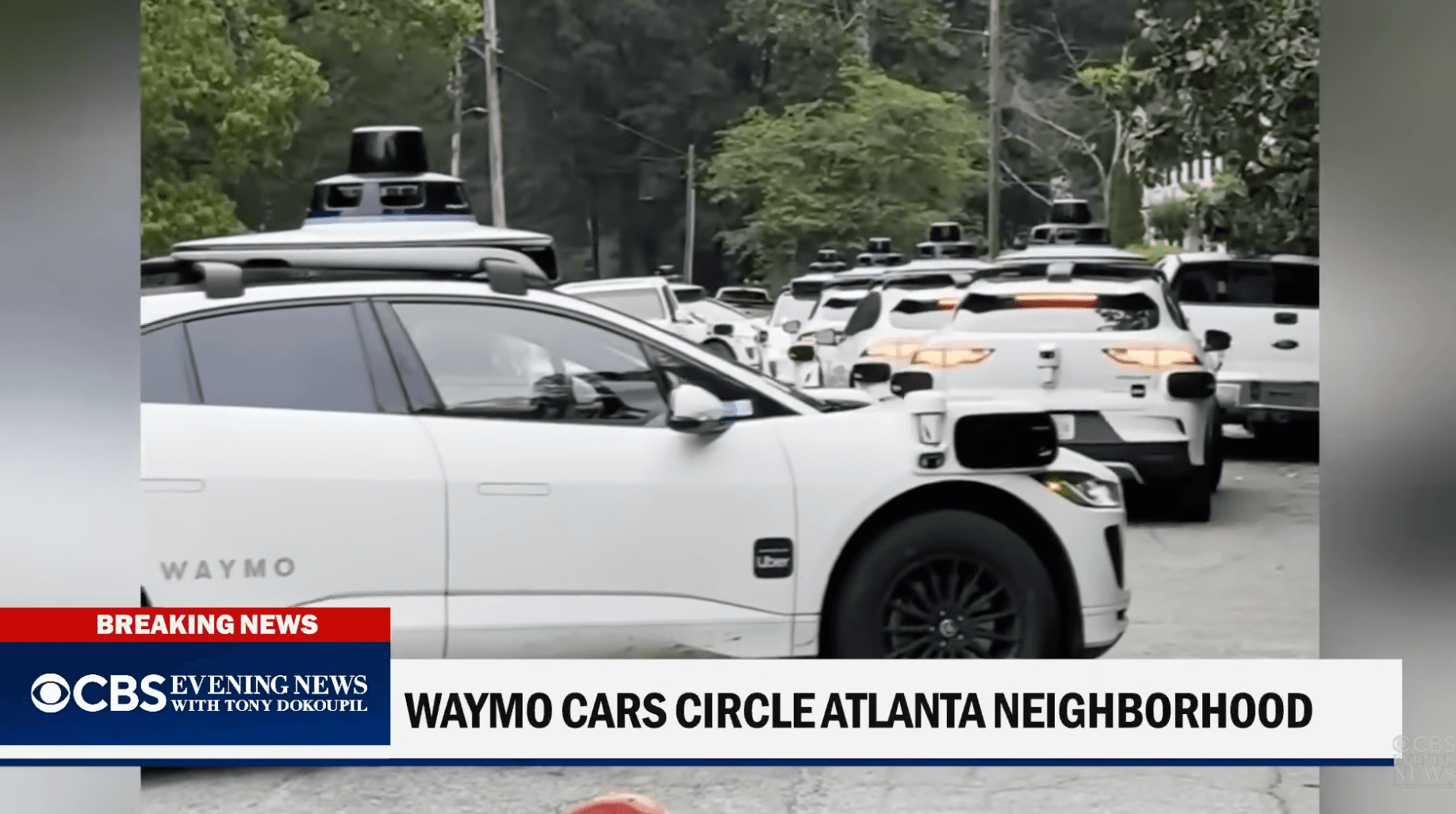
Before sunrise on a Thursday in May, residents of a quiet cul-de-sac in Atlanta started counting Waymos. About 50 of them passed through in a single hour. Empty, nobody inside. These vehicles were just looping the dead-end street over and over. Someone tried propping up a kid’s crossing sign to break the pattern. Eight robotaxis got stuck trying to figure out how to turn around.

Yes, it was a glitch. But it points out how deploying a fleet of vehicles that might be empty a good bit of the time searching for a customer could fill the roads, exacerbate traffic congestion, and slow you down when you are trying to drop your kid off at school or get to work. It is one thing to deal with traffic congestion. It is a totally different thing for the congestion to come from vehicles that aren’t moving people or goods.
Autonomous vehicles (AVs) are becoming a real part of the urban landscape now, not a pilot program tucked away in a test lot. And a huge share of their miles are driven with nobody in the car. Waymo’s own numbers show something like 44 percent of its miles are empty, and two-thirds of those are cars circling or repositioning while waiting to get assigned a rider. A recent MIT study confirmed what a lot of people promised robotaxis would fix and haven’t: they don’t reduce traffic.
We’ve seen this movie before. Uber and Lyft drivers spend somewhere between 20 and 50 percent of their miles “deadheading” — driving with no passenger, waiting for the next ping. That extra driving alone adds congestion and increases the length of the congestion while adding emissions and noise. Robotaxis didn’t invent empty driving. They just took the driver out of it.
Here’s the problem in plain terms: when there’s no price signal attached to driving around with no one in the car, companies have good reason to do it. An empty AV costs the operator almost nothing to keep moving — no driver to pay, no idle-time wage. But it allows the operator to spread them out and have them available for the next ride request. So they circle and hunt for the next fare on the same road that you need to use to get you, an actual person, to an actual place.
Here’s the fix: charge AV operators (and, someday, individual owners) an escalating fee when their vehicle is on the road with no passenger — a minimum charge per mile and per minute of dwell time, higher in congested times and zones. And it should be tagged to inflation so that the fee doesn’t quietly become meaningless in a few years.
This isn’t a new idea. New York City has already studied a version of it. A 2021 city council analysis proposed charging ride-hail companies 11 cents a minute for every minute their vehicles sit in the Manhattan congestion zone without a paying passenger, timed to run alongside the city’s congestion tolls on cars and trucks. That plan targeted human-driven Ubers and Lyfts and never got implemented. It seems doubly appropriate to apply to AVs, since they have such a clear, low-cost incentive to keep circling.
We need to get ahead of this before individuals are buying AVs, and it isn’t that far off. The auto industry knows it stands to make a lot more money selling AVs to replace the nearly 300 million privately owned vehicles than by focusing solely on fleets. And I have heard on numerous occasions from AV experts and advocates that AVs will be a reason to cut down on parking because people can send their cars back home once they have been dropped off. Think about all of those empty vehicles driving miles from people’s jobs to their houses and back again later to pick them up. We should set a price signal now that makes it clear to AV owners that flooding the street with an empty car isn’t free.
What should we do with the money raised? It should stay in the region where it’s collected to fund things that will reduce congestion, such as incentives for higher vehicle occupancy, supporting and expanding transit, and designing roads to make walking and biking safer. It could also include building desperately needed housing closer to jobs and services so that people can do everything they need to do in less time and with fewer trips.
Members of Congress keep saying they need to bring more money into the Highway Trust Fund. But those in the House are too busy putting fees on electric vehicle owners (the same fee no matter how much or how little you drive or how big or small your vehicle is). They could instead turn their attention to the empty vehicles clogging our roads and have their owners pay for the inconvenience they cause the rest of us.
In transportation, we often face problems that come up unexpectedly or are hard to fix, technically or politically. But empty vehicles blocking our way aren’t just predictable—it’s happening now. And there is an easy fix that could benefit all of us. There is no time to waste. Let’s use our roads to move people and goods, not empty vehicles.
Want to hear more from SGA President and CEO Beth Osborne? Follow her on Substack for regular commentary on transportation, housing, smart growth, and the policies shaping our communities.
Related News




Livable places. Healthy people. Shared prosperity.


© 2026 Smart Growth America. All rights reserved
Site By3Lane Marketing
