







News
By Corrigan Salerno, December 10, 2025
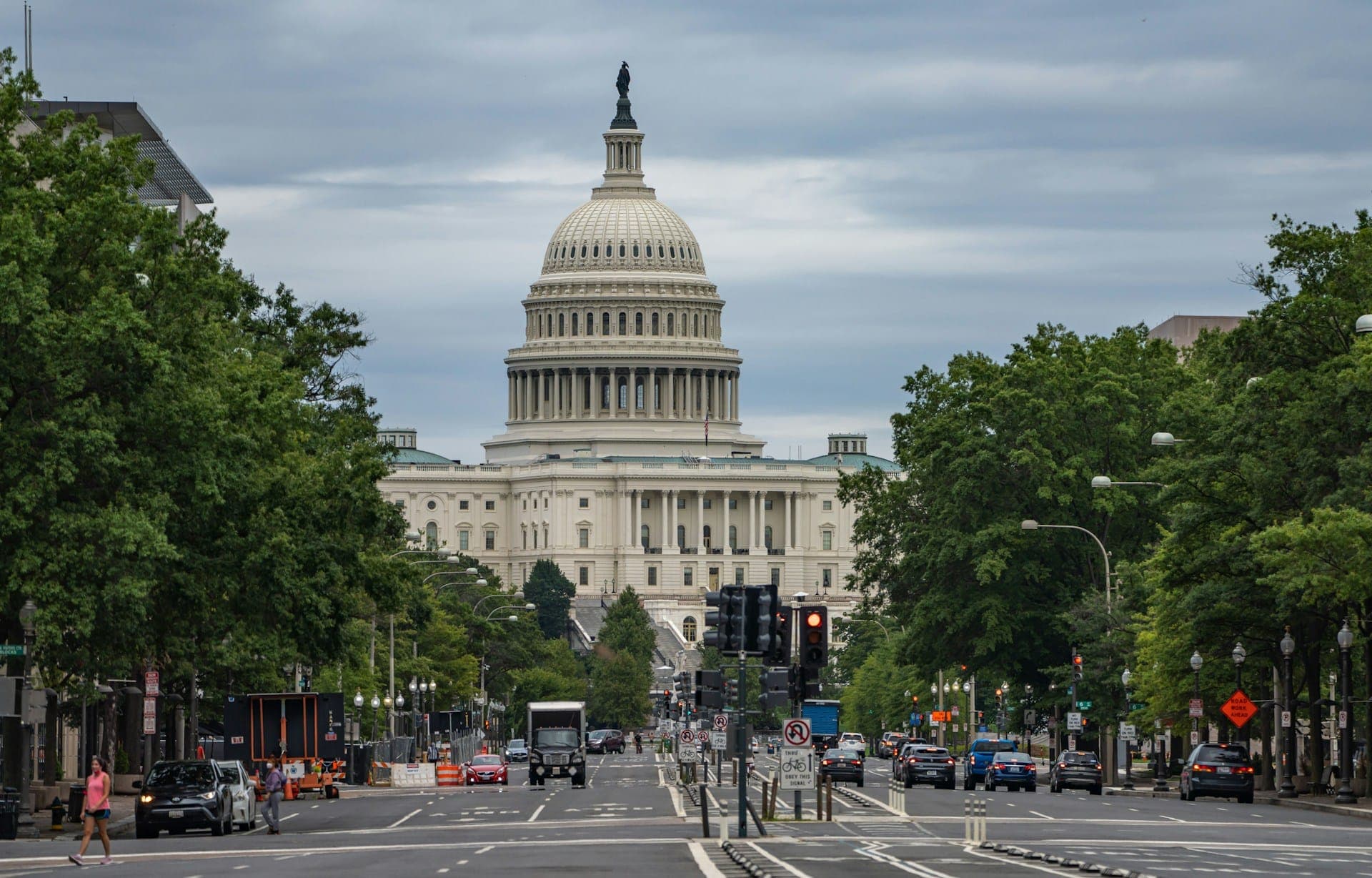
A new bill introduced in Congress this week, the REPAIR Infrastructure Act, would continue the work of the Reconnecting Communities Pilot program to improve people’s access to destinations that matter and help address the mistakes of divisive transportation infrastructure. Previous examples of projects have successfully generated billions in benefits, providing safety improvements, affordable housing, public amenities, and new economic development opportunities.
Issues for miles
While freeways can be good at moving vehicles from point to point at high speed, their construction often came at a significant cost for the people in the neighborhoods they were built through. Hundreds of thousands of homes in vibrant communities supporting strong, local economies were knocked down in the effort to build the highway system, displacing over a million residents. Though we may never know the full extent of foregone economic opportunities, analyses of Washington, DC, and Atlanta, Georgia, reveal that billions of dollars worth of valuable land that once was used for homes for all types of people has since been lost to overbuilt infrastructure. In rural towns, main streets were transformed into dangerous, high speed roads to provide for the convenience of travelers at the expense of residents’ safety and the local economy. The Infrastructure Investment and Jobs Act initiated a pilot program to begin to reverse the damage, and over a thousand communities across the country attempted to participate, but over $13.8 billion in requests unfortunately went unanswered, largely due to the Reconnecting Communities Pilot’s low funding of $1 billion over five years.
The REPAIR Infrastructure Act, recently introduced in the Senate by Senator Lisa Blunt Rochester, co-sponsored by Senators Merkley and Warnock and in the House by Representative Pat Ryan, co-sponsored by Representative Shomari Figures, would continue those efforts started in the IIJA, opening up $15 billion in new opportunities to stitch America’s communities back together and prioritize people and their access to jobs and economic opportunity.
The REPAIR Infrastructure Act would pick up where the Reconnecting Communities Pilot left off. This is great news for the country’s many rural and urban communities split by overbuilt infrastructure, especially when one considers how massively oversubscribed the RCP program was compared to other programs. Looking back even to its first year, the pilot program garnered a similar number of applicants as the Multimodal Project Discretionary Grant program, which had nearly 15 times the funding. In just three years of funding opportunities, the REPAIR Infrastructure Act’s predecessors (Including both the Reconnecting Communities Pilot and Reconnecting Communities and Neighborhood Program, which shared a joint Notice of Funding Opportunity in FY2023) received over 1,400 applications for funding from communities from all fifty states, with over 1,000 applications from towns, cities and counties, many in rural areas.
What the bill does
The REPAIR Infrastructure Act would reauthorize and evolve the Reconnecting Communities Pilot from the Infrastructure Investment and Jobs Act to continue its work, enabling communities across the country to access federal funds for projects to reconnect communities split by divisive transportation infrastructure. The bill would provide $3 billion annually over a five year period for localities, states, Metropolitan Planning Organizations, nonprofits, tribal governments, and other entities to apply for planning and capital project funding on a competitive basis.
Building off its predecessor, the program would encourage applicants to put forward projects with strong community partnerships and an emphasis on improving people’s access to housing, healthcare, places of worship, and economic opportunities. Awards made in fiscal years 2022, 2023, and 2024 show a geographically diverse, national demand for strong projects to bridge all kinds of dividing infrastructure in all kinds of communities. With over $500 million awarded to planning projects for reconnecting communities over the last four years, there’s still much work to be done to advance these projects. Improving on how it delivers for rural communities relative to its predecessor, the bill explicitly calls on USDOT to grade applications based on how well they would support development along rural main streets—which is key, as nearly 20 percent of awards went to rural communities in the FY 2023 round of awards. Going further, the REPAIR Infrastructure Act introduces new eligibilities to existing federal aid highway programs, like the massive National Highway Performance Program, such that states could use any of their largest sources of federal funds to advance these projects.
All the while, the program stays focused, limiting funding to projects that would not add new liabilities and lane miles to the highway system, instead prioritizing safety, communities, and economic development.
Going the distance
While the REPAIR Infrastructure bill does a great job at providing discrete opportunities for communities and even states to reverse the course of bad decision-making, it falls short of making the sort of systemic change that would fully solve these problems at the scale we are actively creating them each year. Congress needs to ensure that the largest streams of federal funds—federal highway formula dollars—do not continue to be used counterproductively to demolish existing homes and businesses in service of highway expansion, as they still are across the country. Take California for example: Hundreds of homes were demolished by the government to expand highways between 2018 and 2023, all for projects that have ultimately failed in their goals to reduce traffic congestion.
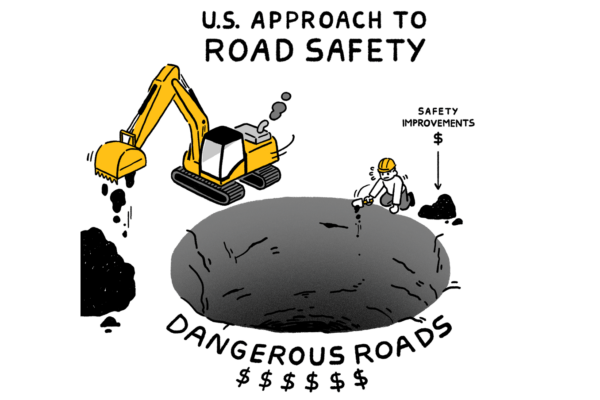
The United States has no shortage of urban roads and highways, yet we keep building. Over the decades spent expanding our highway system, the country has become so covered in roads that, according to a recent analysis, they occupy an estimated 22,000 square miles of land in urban areas worth over $4.1 trillion. To put that in context, that would be about roughly the size of West Virginia, or a triangle with points in Dallas, Houston, and San Antonio, Texas. Considering that the United States has a growing $830 billion deferred highway maintenance bill to deal with, but shrinking highway revenues to pay for it, scaling down the state-sized stamp of asphalt seems wiser and wiser each year.
By reducing the number of lane miles we have to maintain, we permanently cut down on future maintenance costs, and replacing that same land formerly occupied by roads opens up new opportunities for long-term economic development. That same analysis found that reducing just a fraction of the country’s urban lane miles and replacing them with much-needed housing, commercial development, or other uses could actually net over $27 billion annually. While that might initially sound hard to believe, it pencils out when you consider how economically successful projects that would today be eligible under the REPAIR Infrastructure program, like Rochester’s Inner Loop North Project, which netted more than $200 million in private investment off a $24 million public project, have been. In Milwaukee, the benefits of a project to remove divisive infrastructure were even greater, with a $25 million project generating a billion dollars worth of completed or planned private real estate development. While the REPAIR Infrastructure Act does not focus exclusively on road projects, it would provide opportunities for projects like this and others that would unlock the benefits of access in communities of all sizes.
By giving communities long awaited opportunities to prioritize infrastructure investment that (re)connects people and provides access to destinations that matter, the REPAIR Infrastructure Act would continue to help undo the legacy of divisive transportation infrastructure. Bills like the REPAIR Infrastructure Act are crucial to set the tone in Congress for what’s really important to address in Surface Transportation reauthorization—prioritizing safety and connectivity by rethinking how and why we build transportation infrastructure.
Related News




Livable places. Healthy people. Shared prosperity.


© 2026 Smart Growth America. All rights reserved
Site By3Lane Marketing
