










News
By Salimatou Doumbouya, March 9, 2026
Counties across the country are grappling with housing shortages that threaten economic growth and community stability. Solutions Sprint #3 wrapped up the Counties for Housing Solutions, a fast-paced technical assistance program funded by the Gates Foundation and delivered in partnership with the National Association of Counties. Through the program, elected officials, planners, and stakeholders from eight counties learned how zoning reforms can unlock affordable housing and support economic development.
Counties can play an important role in increasing housing supply. They frequently control large areas of unincorporated land, influence infrastructure investments, and manage development rules that determine where and how housing gets built. When counties modernize zoning and land-use policies, they can unlock new housing opportunities while strengthening local economies.
Counties can facilitate housing supply at the right place, type, and price
Over the course of the Counties for Housing Solutions Sprints, county staff and elected officials learned how to facilitate and nurture the right type of housing in the right places at the right price to improve economic growth and shape the future of their communities. While Sprint 1 and Sprint 2 focused on the full development process for counties, Sprint 3 was focused on zoning for affordable housing. By the end of Sprint 3, counties walked away with tangible next steps, including model ordinance language, strategies for modernizing zoning codes, and tools to evaluate how existing regulations are shaping local housing supply.
Read the Guide for Developing Affordable Housing on County-Owned Lands here.
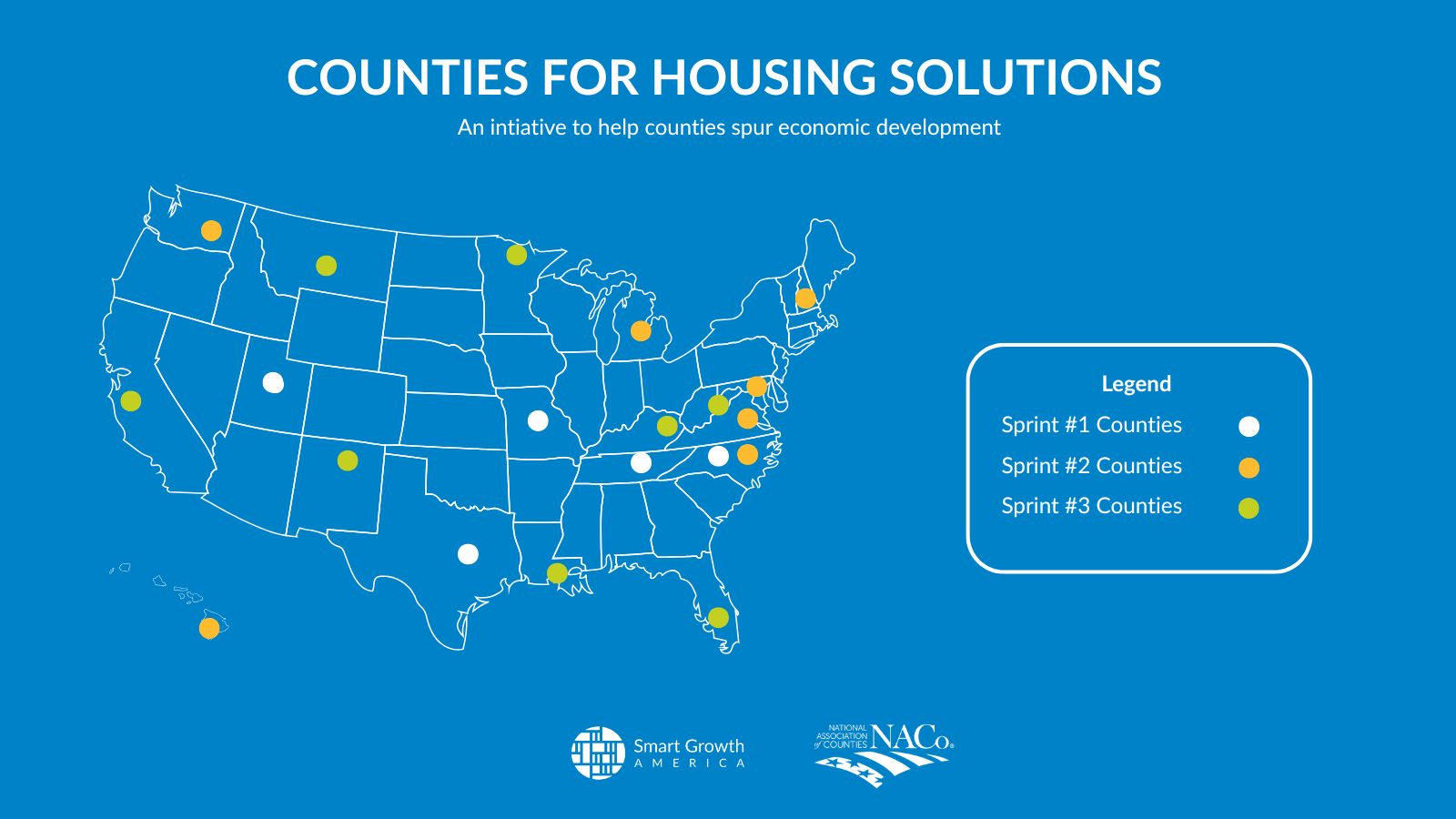
Each participating county explored how these zoning strategies could be applied locally and began developing approaches tailored to their own housing challenges. The participating counties in Sprint 3 are: San Joaquin County, California; St. Tammany Parish, Louisiana; Taos County, New Mexico; Big Horn County, Montana; Miami-Dade County, Florida; Montgomery County, Maryland; and Greenbrier County, West Virginia. and Rice County, Minnesota. Each county walked away with a development strategy tailored to its local housing challenges, identifying practical solutions and outlining how these approaches can be deployed using the tools and resources counties already control.
Sprint 3 drilled down on zoning interventions that can support affordable housing:
- What are the rules? Introduction to zoning for housing and economic property: Exploring how zoning shapes housing markets and affordability
- Overcoming roadblocks: Qualitative tools to understand zoning barriers and identify reform opportunities: Discussing qualitative approaches to understanding the barriers to housing.
- Measuring zoning’s impact on housing supply: How to quantitatively analyze zoning’s constraints on housing supply: Exploring where and how quantitative analysis can identify where zoning constrains housing development.
- First mover advantage: How to streamline permitting to fast-track housing development: Cohort members learned how to accelerate housing development by eliminating and reducing permitting complexity while aligning zoning tools with practical delivery strategies.
- Putting it all together: from concept to adoption: Cohort members discussed the practical realities of relying on in-house staff vs. hiring consultants to modernize their zoning for housing
- Create real impact via long-term planning: Design and deploy systems to measure the impacts of zoning reforms on housing supply
Key themes from Sprint 3
Housing is often overlooked in favor of flashier economic development strategies. But communities cannot focus only on job growth and job retention. Housing must be treated as a core economic development activity. Ensuring the right type of housing in the right places helps retain workers, attract jobs, and keep dollars circulating locally.
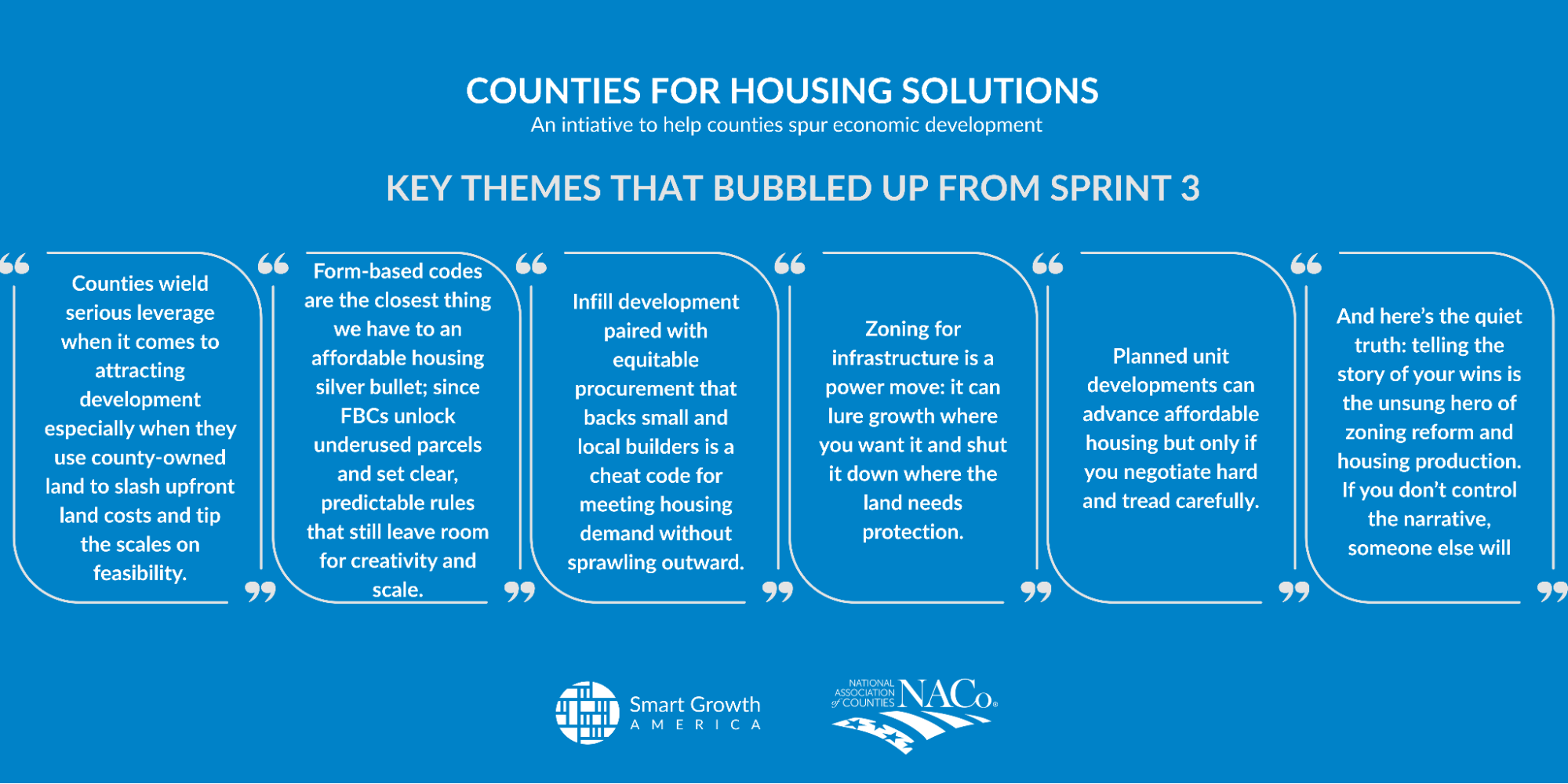
Throughout the sprint discussions, several themes consistently emerged from county leaders and housing experts.
- Counties wield serious leverage when it comes to attracting development, especially when they use county-owned land to slash upfront land costs and tip the scales on feasibility.
- Form-based codes are the closest thing we have to an affordable housing silver bullet, since they unlock underused parcels and set clear, predictable rules that still leave room for creativity and scale.
- Infill development paired with equitable procurement that backs small and local builders is a cheat code for meeting housing demand without sprawling outward.
- Zoning for infrastructure is a power move: it can lure growth where you want it and shut it down where the land needs protection.
- Planned unit developments can advance affordable housing, but only if you negotiate hard and tread carefully.
- And here’s the quiet truth: telling the story of your wins is the unsung hero of zoning reform and housing production. If you don’t control the narrative, someone else will
The Counties for Housing Solutions program is designed to support counties in understanding how they can influence housing development. With the right strategies, counties can align zoning, land policy, and economic development to unlock housing and support local economic growth. Expanding this work to more counties across the country could play a meaningful role in addressing the nation’s housing shortage.
Related News












Livable places. Healthy people. Shared prosperity.


© 2026 Smart Growth America. All rights reserved
Site By3Lane Marketing
