





News
By Dustin Robertson, January 30, 2026
After the recent winter storm, DC prioritized plowing roads for cars, while leaving sidewalks, curb ramps, and bus stops inaccessible. For me, and the many other DC residents who get around walking or rolling, the city remains essentially closed. It’s yet another example of how DC’s transportation decisions continue to prioritize cars over people.
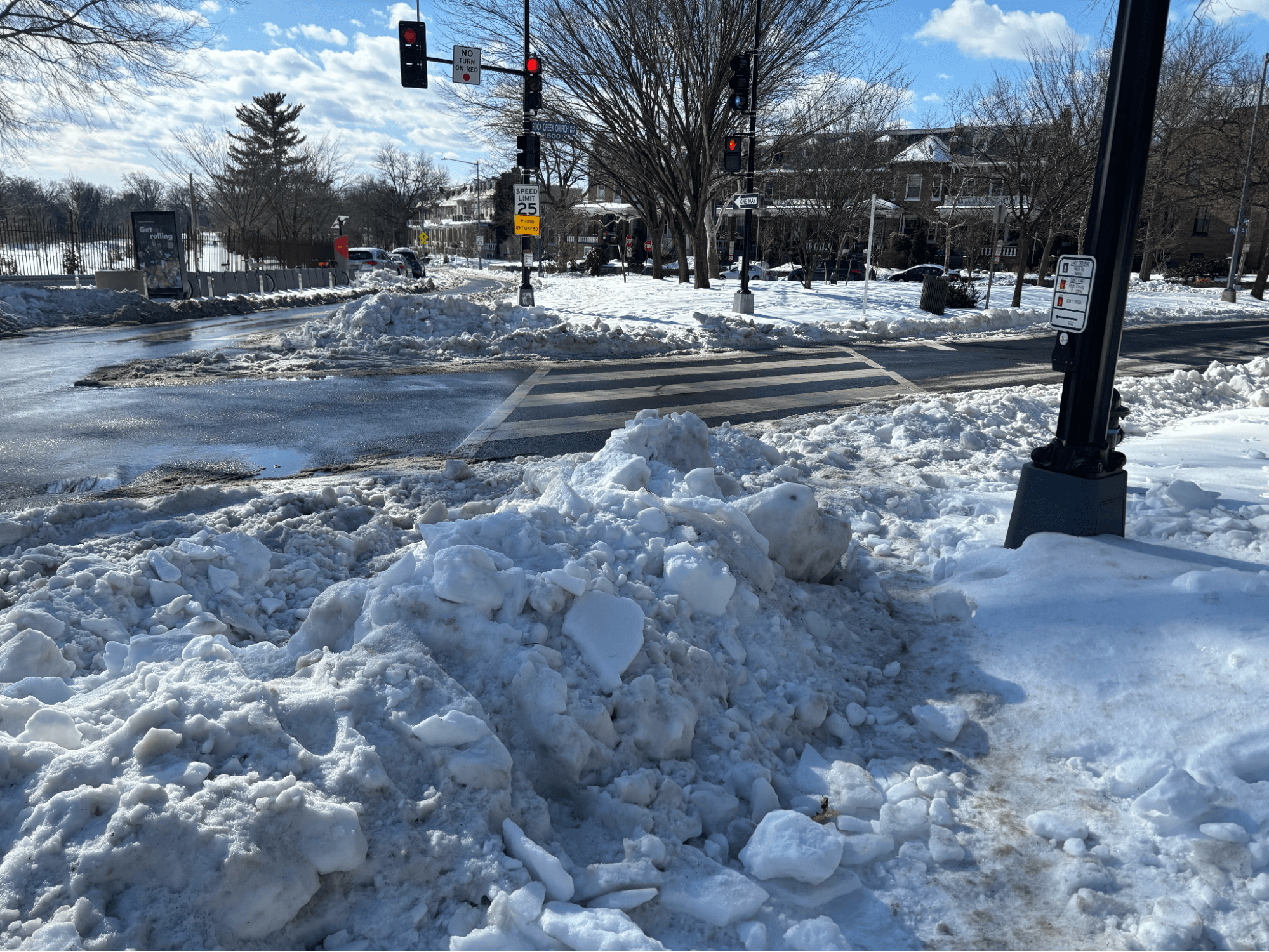
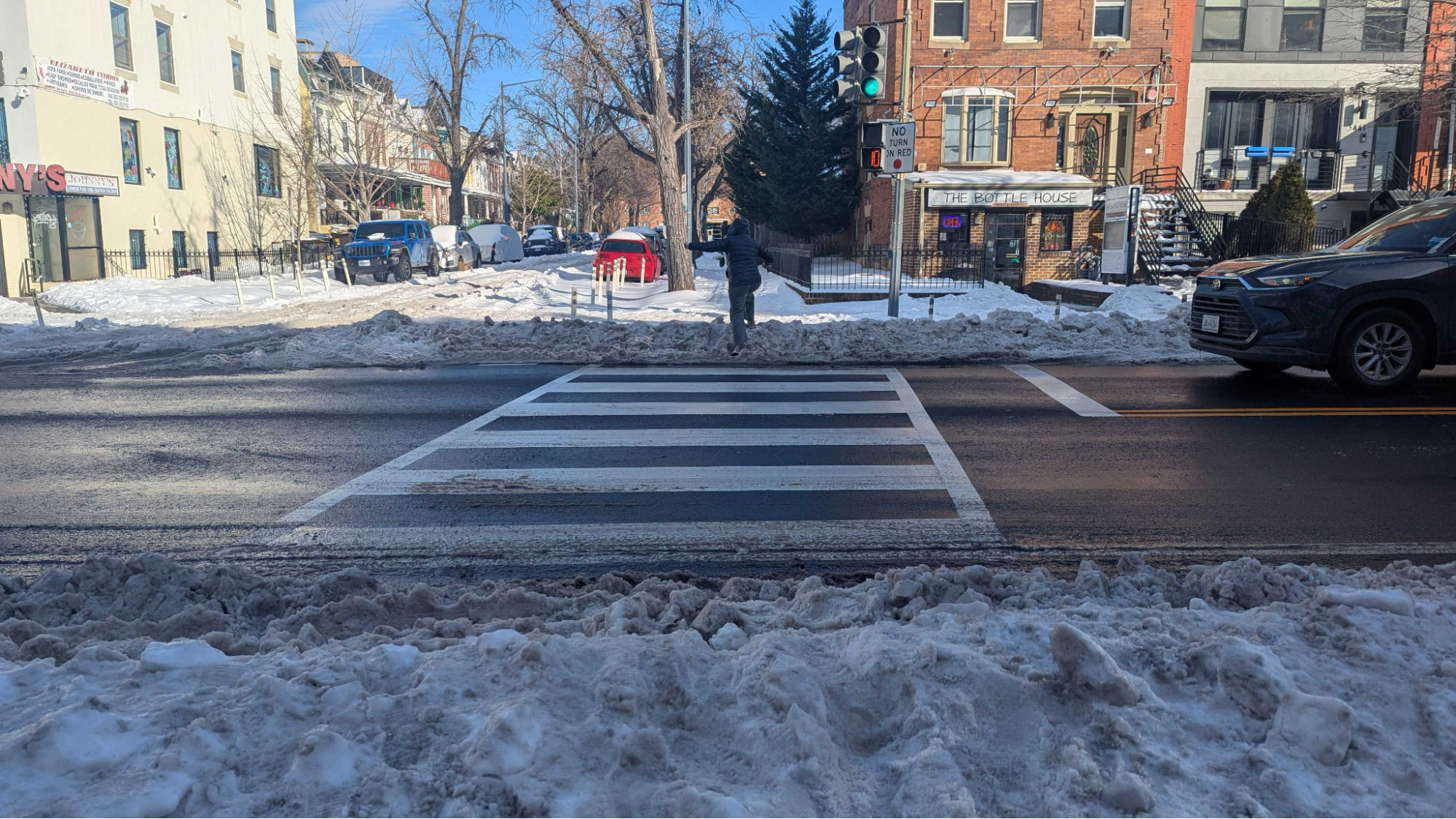
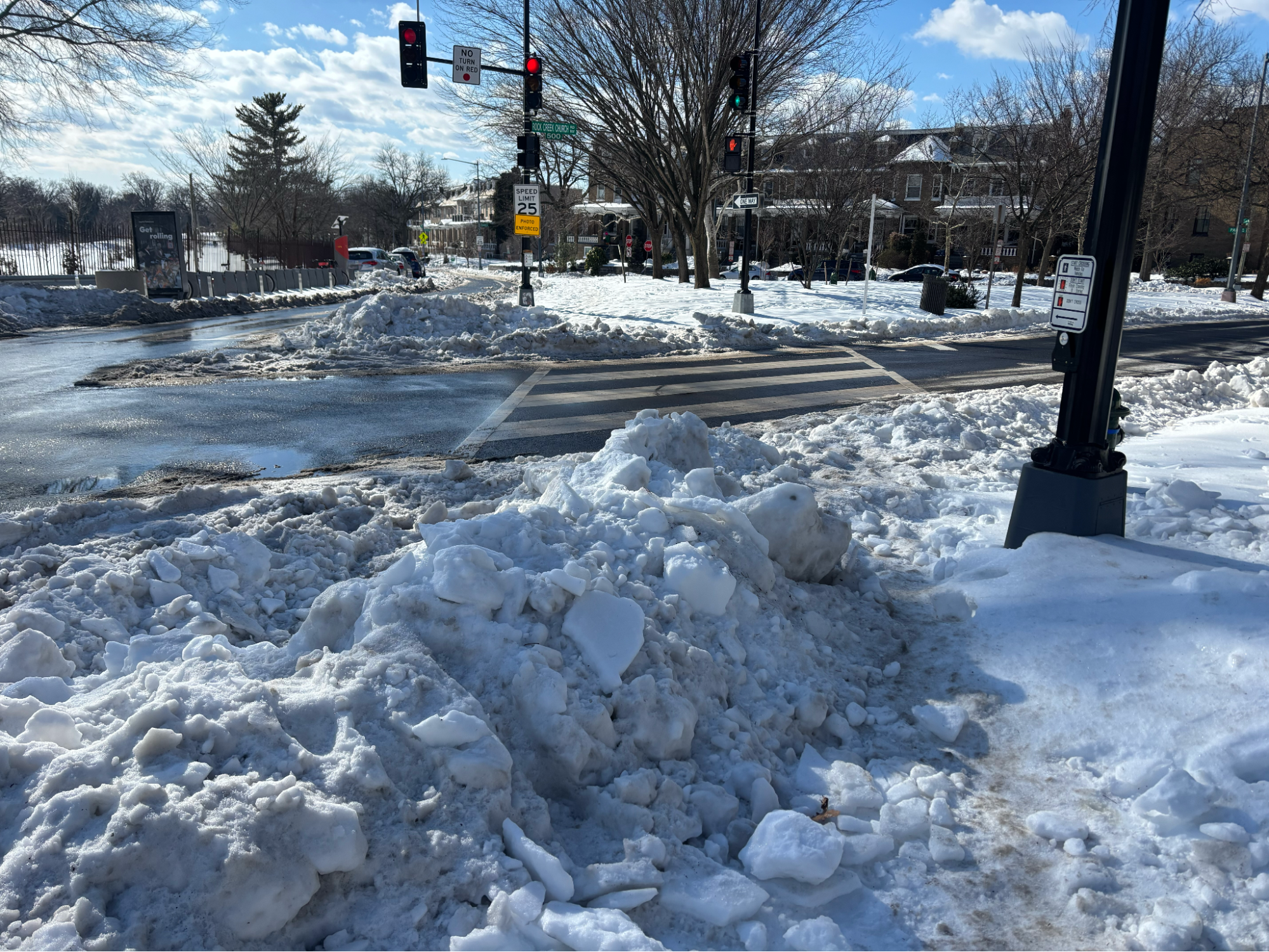
I use a wheelchair, and it’s common for winter conditions create extra obstacles for me to navigate. But I’m not unrealistic; I did not expect the snow and ice from the recent storm would be cleared instantly or even overnight. But when I learned that the streets near my home had been plowed, I was excited to get out after being stuck at home for three days. However, when I left my apartment and got to the corner, I realized my journey was over before it even started. While the streets were relatively clear for cars, there were mounds of snow on top of curb ramps, and sidewalks were only inconsistently cleared. I was left with serious concerns that even if I was able to cross this street, the next intersection could be even worse. Some pedestrians were carefully climbing over mounds of ice and snow, but it was not possible—forget about being safe—for me to proceed.
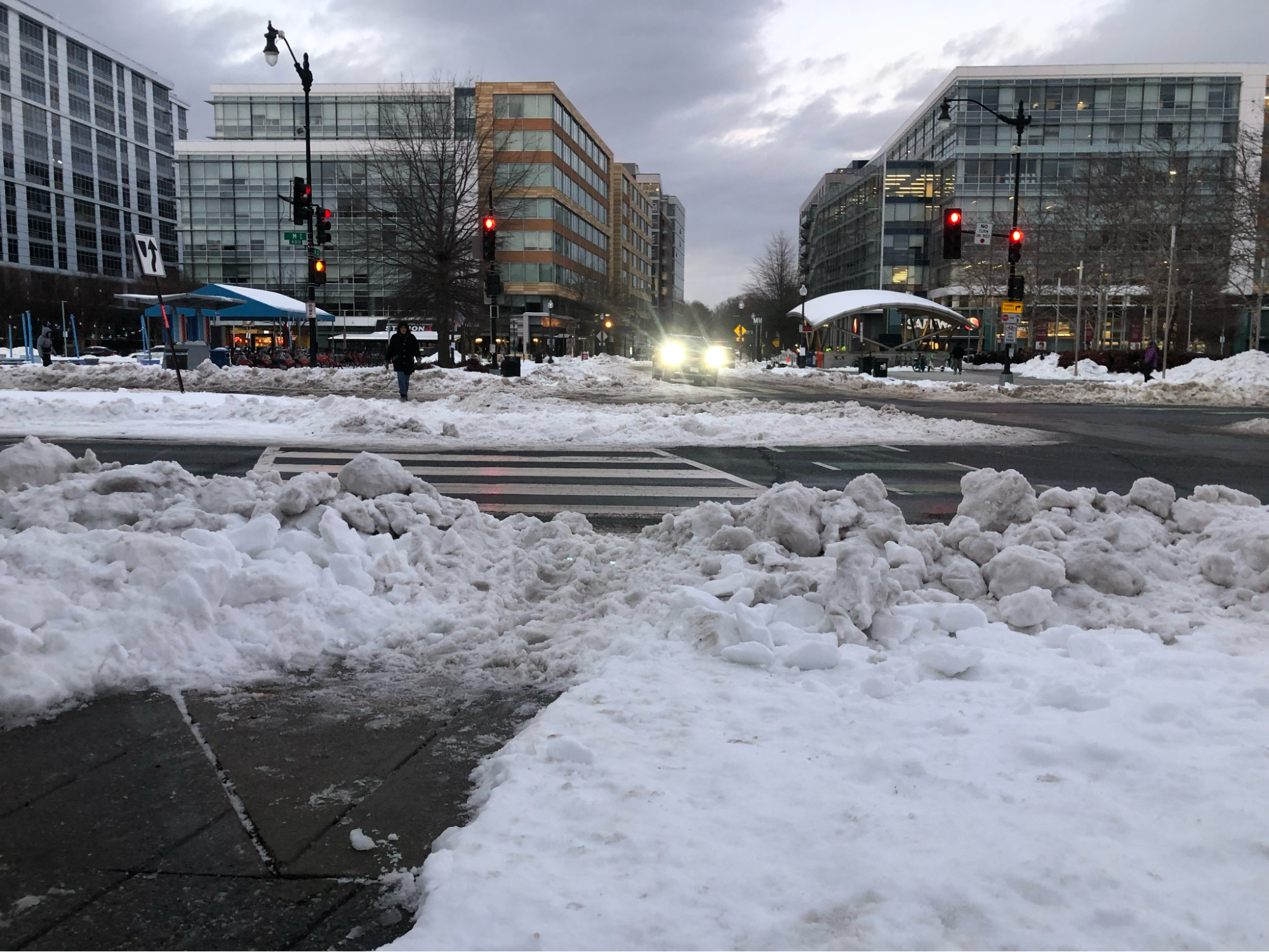
My neighborhood, Southwest Waterfront, is generally great for walking, rolling, and transit (that’s a big part of why I live here), so most of the trips my neighbors and I take are not in cars. But during the past week, the response to the snow has made it feel more like a car-dependent suburb than a bustling city neighborhood.
I couldn’t make it beyond my block, so I can’t give a first-hand citywide perspective, but my colleagues assure me that the situation is no better in other parts of the city. Streets remain hazardous or impossible for people walking or rolling, days after the storm has passed.
Like many parts of the country, DC has had some serious winter weather in the last week. Unfortunately, the city government’s response has once again demonstrated that when it comes to streets, cars are the priority. Last year, I wrote an article in response to statements by the DDOT director about who the streets of DC should prioritize. Unfortunately, the events of the last week have forced us at Smart Growth America to revisit this topic.
To deal with conditions like we’ve had over the past week, the city has a District Snow Team that includes the Department of Public Works, the District Department of Transportation, and other agencies. I don’t know what’s going on behind the scenes, and there are multiple factors involved, including the strength of the storm, but from what we see out on the streets, we are unimpressed. After the snow and freezing rain stopped on Sunday, the city began deploying snow plows and other equipment to clear streets. However, while this cleared the way for some vehicle traffic, it did little for people outside of vehicles. In fact, in some cases, the plowing seems to have created additional obstacles like the crosswalk mounds seen in the pictures above. Our friends at Greater Greater Washington have also pointed out how bus stops are being blocked by “bus berms,” and our team has seen people waiting for the bus out in the streets because the bus shelters are still snowed in. Regarding sidewalks, in DC, property owners are responsible for maintaining them, including snow removal. However, over the past week, the city announced that it is suspending fines for failure to comply. This has contributed to the patchwork of sidewalk accessibility across the city.
Transportation cannot mean only driving, and any plans to reopen a city after a major weather event cannot focus on a form of transportation that only serves a portion of residents. One has to wonder about the motivation behind prioritizing vehicular traffic for further destinations, rather than close, community trips to schools, grocery stores, and other key destinations currently blocked for residents.
The failure to deal with the ice and snow and ensure safe mobility options for all residents is bad. But to make things even worse, we have been treated to messages warning people to stay off the streets.
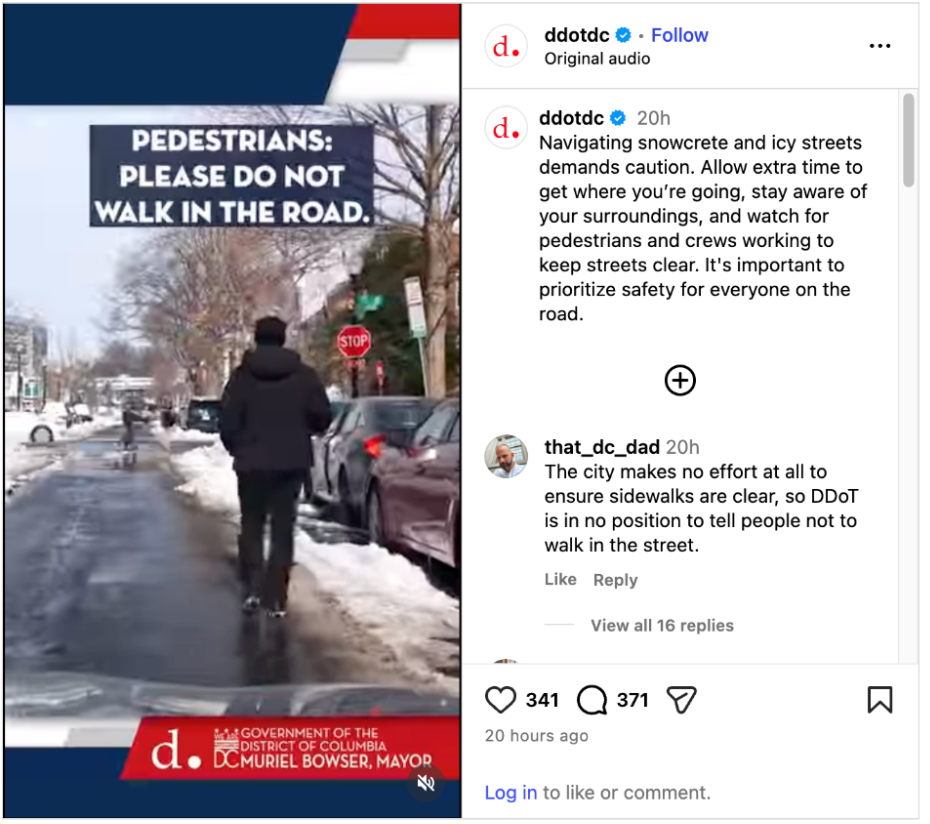
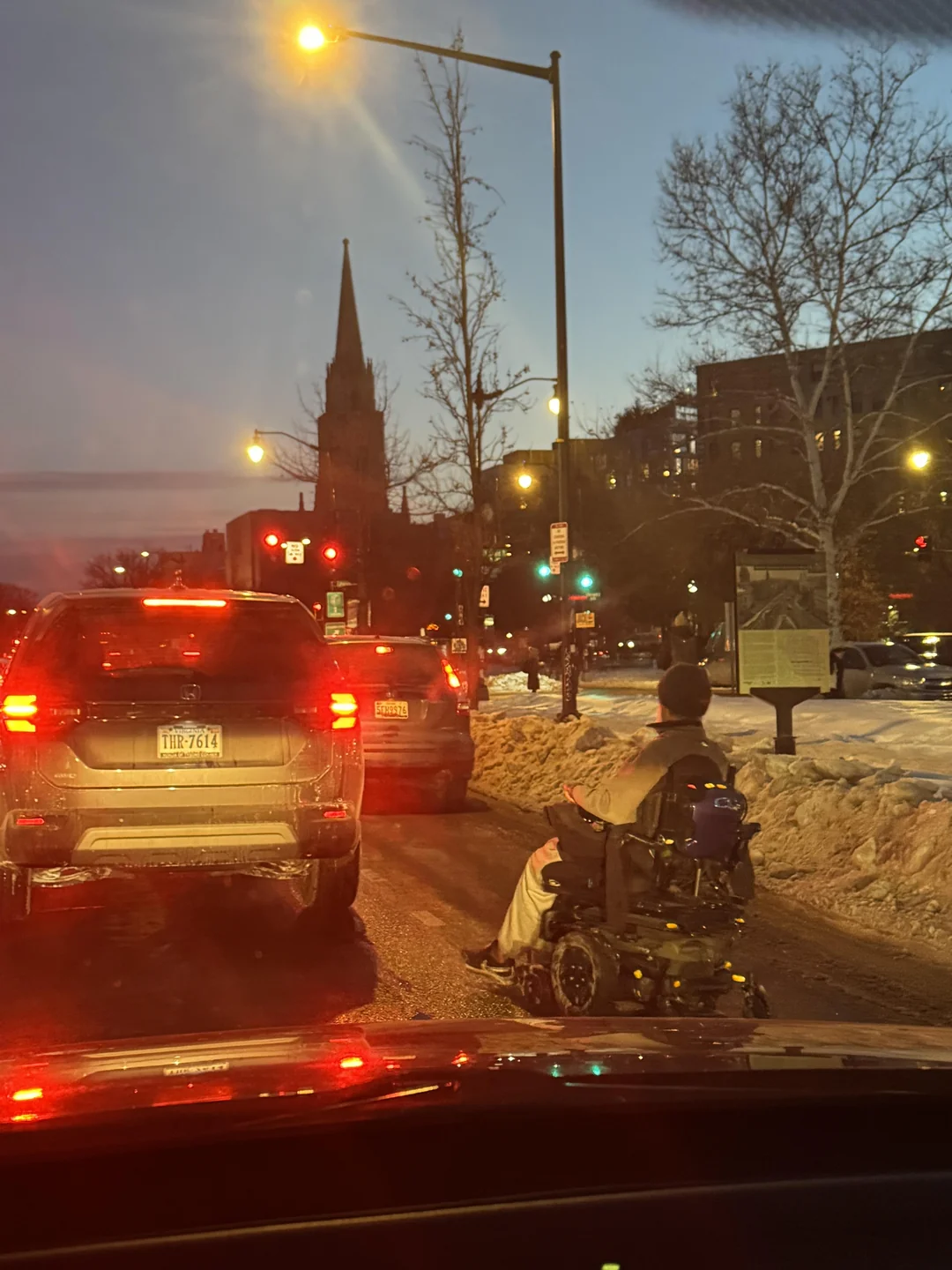
SGA’s experience with transportation safety and walkability has taught us that people aren’t dumb. They will walk or move in the places and ways that are safest and most accessible for them. If folks are in the street, it is most likely because that is their only option. It is a symptom of decisions and practices from decision-makers at DPW, DDOT, and elsewhere. Rather than blaming pedestrians for trying to reach their destinations, the city should prioritize clearing the snow and ice for all people, no matter how they get around.
Like it or not, it snows in the winter. DC government departments and any aspiring mayoral candidates must learn from the mistakes of the last week and from other cities that are doing a better job. But the lessons should not apply just to extreme weather. The transportation and mobility needs of all residents and visitors must be addressed in a fair and efficient manner.
Related News





Livable places. Healthy people. Shared prosperity.


© 2026 Smart Growth America. All rights reserved
Site By3Lane Marketing
