












News
By Miguel Rodríguez, December 11, 2025
Even with good zoning and better land-use rules, many projects fail because the financing system is designed only to support a narrow set of housing types. Financing—the entire system of investment capital, equity, loans from banks, incentives from government, and other components that make a housing project possible—ultimately shapes what gets built, where, and at what price. This makes it an essential part of the type/place/price equation. But even when communities modernize their rules and identify suitable sites for infill, many projects never get started.
Homes cannot be built if the financial system is not structured to support them, and many of the housing types communities say they need most do not fit easily into today’s lending practices. Understanding how housing is financed and how financial risks are evaluated is a critical part of solving the housing crisis. Without stronger alignment between zoning, land use, and financing, even the best reforms can fall short.
How homes get built
Any project must work for three groups: communities, developers, and lenders, each with specific goals and priorities. Communities (elected officials, city staff, residents) pursue a high quality of life to meet the needs of new and existing residents. Developers aim to strike successful deals and produce housing at price points that generate them a net profit. Lenders look for secure and sound investments.
To fund a project, a developer raises some combination of capital from direct investors and debt from lending institutions in order to acquire land and pay for construction and management. The lending itself may have different types of loans depending on the sequence of debt. Layered onto this system, the developer may also add tax benefits to this layering—known as the “capital stack”—from federal, state and local governments. Examples might be federal LIHTC credits for low-income housing, state enterprise zone credits, and any specific tax abatements a local city council may provide.
While “the market” may demand more missing middle housing, for example, financing is still needed to make it happen. The majority of people report they would prefer houses on smaller lots where it is easy to walk to the places they need to go. Over the past century, we have built fewer and fewer housing types, resulting in both deep expertise in limited types of housing (like single-family homes on large lots) and lending practices that only work for those types. Because lenders rely heavily on past performance and familiar product types, housing that falls outside those categories is often treated as higher-risk, regardless of actual demand. Today’s lending practices make it easy to finance single-family homes and large multifamily buildings, but far harder to finance the small-scale or missing-middle housing that many communities need, leading to a limited developer pool to build anything in between. This presents significant barriers to increasing supply in the right place and at the right price.
When good ideas fail to “pencil out”
If projects don’t pencil, a significant share of homes that planners, local leaders, and residents envision simply do not meet the financial guidelines required by lenders. Smaller multifamily buildings and missing middle housing often fall outside traditional lending categories, as financial institutions deem these products too complicated for single-family mortgages and too modest for large-scale multifamily financing. As a result, many projects that are legal, well-designed, and suitable for their neighborhoods remain financially unworkable.
Rising construction costs, a weakened construction labor market, higher interest rates, stricter lending standards, and appraisal challenges contribute to this issue. Additional regulations, such as parking requirements and design mandates, can further escalate costs and tip projects from feasible to infeasible. Greenfield development then takes precedence due to its lower financing burden, despite being located farther from jobs and transit, thereby increasing public service costs for infrastructure.
This situation then creates a cycle: development follows capital rather than community needs, and developers build homes with established financing structures instead of more places where demand exists and where it makes the most sense. Even with good zoning and available land, financing obstacles persist. Banks are familiar and comfortable with single-family homes and large apartment complexes and the middle market is overlooked. This is because of some common challenges like rising material and labor costs, stricter lending standards that limit borrowing capacity, fewer market comparables for small multifamily appraisals, and local mandates and design requirements that increase costs.
Any one of these elements can derail a project. Collectively, they often thwart the construction of legally permitted housing even when local leadership and communities desire a more diverse type of housing stock. In this sense, financial barriers can undermine well-intended promises of zoning reform, especially in communities striving to promote more than single-family development.
Perceptions and market habits also shape what gets built
Financing habits are hard to break, even when a project and investment are technically sound. Ultimately, the risk tolerance of investors and lenders plays a role, and those very people tend to stick with what they know because expertise in an area lowers risk. When we also have very few developers with small-scale development experience, we tend to see more of the same housing type.
Local resistance to added density increases this uncertainty. If a developer believes that neighborhood opposition or long approval timelines could slow or derail a project, they are less likely to attempt it. This places even more pressure on the few housing types that remain “safe” from a financing perspective in a given area. The result is unmet demand for specific types of homes in connected, walkable locations.
The disconnect between zoning and financing
Consider a developer’s position who has to navigate several worlds to see a project through. At the local level, they face zoning and local land use regulations; at the state level, housing policies and a bevy of incentives that may or may not apply; and then a set of federal financing policies and state-specific financing policies. In this brew of considerations, these elements are bound to misalign.
These misalignments, in turn, create challenges for developers trying to build housing who must navigate regulatory uncertainty, request zoning variances or updates, and marshal capital in a system that doesn’t always naturally support the type of housing they are trying to build. Developers must navigate zoning, site control, community support, and design before they can even secure necessary financing from lenders. With too much uncertainty, the risk profile increases, financing becomes more difficult or impossible, and the housing doesn’t get built.
Many projects fail long before they reach a bank because of unresolved zoning issues or unclear development standards. Even when zoning is technically supportive, the cost and time required to confirm compliance can make financing unworkable. For financing to succeed, local conditions must be predictable and aligned with the types of housing the community wants to encourage. In short, public policy choices create or inhibit the predictability that influences financing markets and the cost of development.
Tools and strategies to bridge the gap
Financing issues do not have a single solution. They require coordinated action across policy, regulation, and lending practices. Communities can, however, take several steps to create an environment where missing middle housing and small-scale infill become more feasible.
Updating zoning to allow more housing types in more neighborhoods is important, yet it must be paired with modernized development standards. Subdivision regulations can be revised so that smaller lots and missing middle buildings are allowed without special approvals. Manufactured housing built to HUD Code can be permitted in all residential zones to create more affordable options. Parking requirements can be separated from permit approvals so that they do not automatically inflate project costs. Developers could also provide more housing more efficiently with shorter, more transparent administrative review processes.
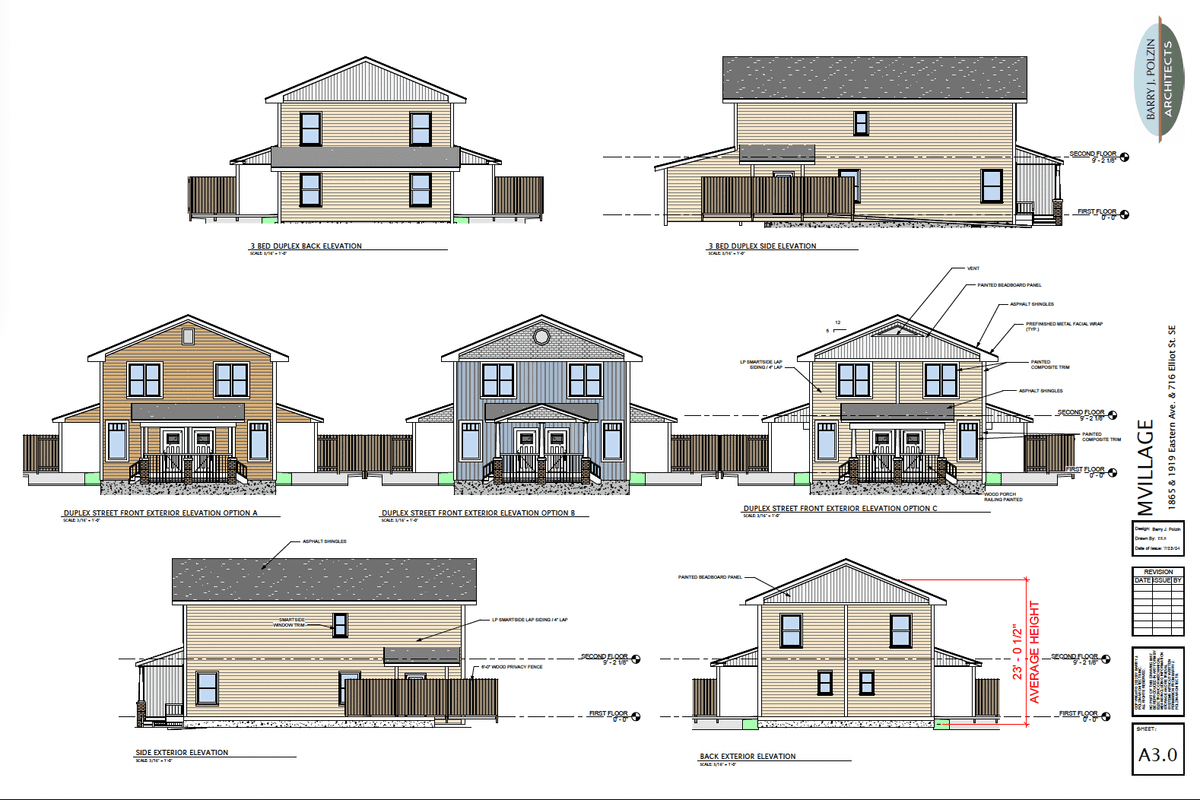
Communities can also adopt pre-approved building plans for common missing middle types such as duplexes, fourplexes, and small courtyard apartments. This reduces design costs and shortens review times. Surface parking lots, dead malls, and large underused commercial centers can be designated for streamlined residential redevelopment. Growth boundaries and form-based codes can encourage infill and discourage outward expansion that strains public budgets.
At the same time, lenders and financial institutions need better information about how small-scale multifamily housing performs. Encouraging them to modernize lending practices and recognize the stability of these housing types can help shift the market over time.
Why financing belongs in the type, place, and price conversation
Financing determines what types of homes get built, which places receive new investment, and how much those homes ultimately cost. Even the best zoning reform efforts cannot successfully unlock housing supply if financing systems continue to prioritize only the largest or most conventional development patterns. Aligning zoning, land use, and financing is essential if communities want to build more homes that are well located, well designed, and more attainable.
Financing ultimately determines which housing types move forward, which places see new investment, and what homes cost. Modernizing regulations will better position communities to create more inclusive, resilient, and affordable places to live. However, reforms to the broader financing environment will require systemic changes within lending institutions as well as capacity building for developers who focus on missing middle housing. SGA’s LOCUS Coalition offers support to purpose-driven developers and investors looking to deliver more housing near transit, strengthen opportunities for partnerships and innovative financing, and support communities in meeting the demand for more types of housing.
Related News











Livable places. Healthy people. Shared prosperity.


© 2026 Smart Growth America. All rights reserved
Site By3Lane Marketing
