










News
By Jeri Mintzer, July 1, 2026
For too long, housing in the U.S. has sprawled outward, becoming increasingly expensive and offering limited choices in the types of homes we can live in. None of this has been accidental. Our rules, policies, and choices created today’s housing crisis. Reforming those rules is how we start to solve it.
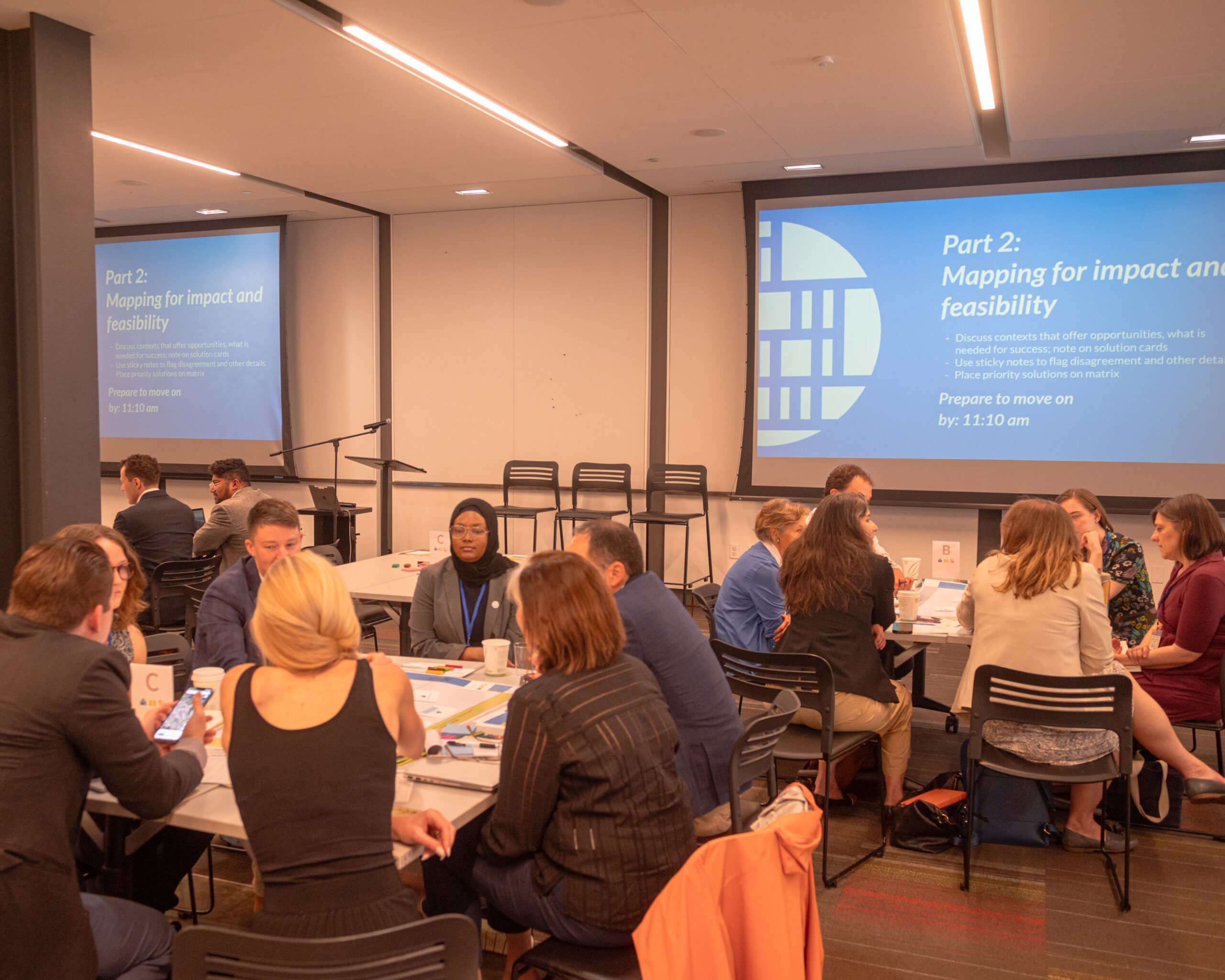
Earlier this month, Smart Growth America’s Center for Zoning Solutions convened nearly 30 organizations for a working session on how zoning reform can help communities build more homes. Participants ranged from pro-housing advocates and academics to real estate professionals and practitioners working at the national, state, city, and community or neighborhood level.
Special thanks to our presenters, including New York University’s Furman Center, National League of Cities, Schlegel Collaborative, Elevated Chicago, YIMBY Action, and the Welcoming Neighbors Network, as well as participants from SGA programs and coalitions, including cohort members from Zoning for Equitable Solutions and Thriving Communities (ZEST) and members of the Smart Growth Roundtable.
The convening focused on identifying which zoning reforms have the strongest evidence behind them and how communities can build the support needed to put them into practice.
Ahead of the event, we reviewed zoning reform efforts from across the country and the field to identify what works. We found broad evidence that zoning and land-use constraints significantly reduce housing supply and drive up costs, and often compound rising construction costs. These constraints are especially problematic in locations that would benefit most from new development.
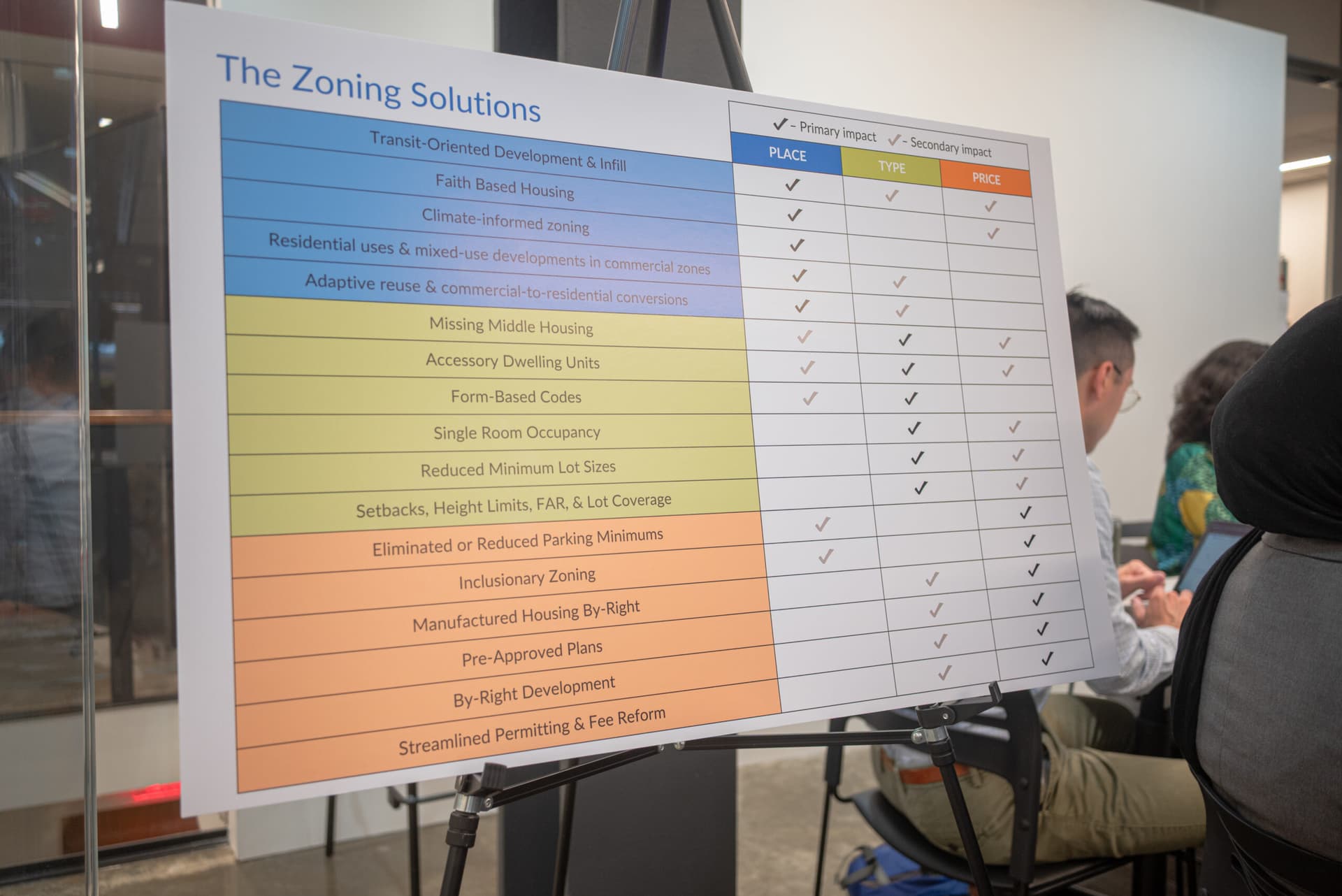
As we’ve shared before, the smart-growth approach to housing focuses on three interconnected principles: the places where homes are built, the types of homes our rules allow, and the price at which they can be delivered. Building on that framework, we presented a set of zoning solutions to tackle the housing supply shortage and improve community health and economic outcomes. These solutions align with a core set of reforms supported by a growing coalition of organizations in the planning, housing, public health, and advocacy fields.
Participants spent the day digging into those solutions and discussing how they would be most effective in different contexts, including at the state and local levels. They also discussed the messages and tools needed to make them a reality.
A few themes emerged from those conversations:
- Communicating zoning reform and policy change requires using accessible language that avoids jargon and emphasizes the community and individual impacts of the housing shortage.
- States are passing bills to address the housing crisis, but their results are mixed. When state mandates push localities to quickly react and update their guidance and processes without offering any support, the resulting tension can jeopardize success. All levels of government must work more effectively together to address the housing gap.
- While policy change can unlock housing supply, existing lending practices (e.g., loans and investment capital) and developers’ capacity to build outside market norms remain significant barriers.
- In addition to planning and immediate costs, it’s important to consider future costs such as the impacts of climate change on our built environment.
- There has been important progress at the federal level, including the landmark 21st Century ROAD to Housing Act, which offers significant opportunities to address the housing shortage, but these efforts will require resources behind them and an ongoing commitment to implementation.
- Collaboration, trust, and coalition-building among stakeholders and levels of government are key components to successful advocacy.
Even though we know what often works, there is no single approach that will ensure people at all stages of life can find and afford the homes they need. The solutions below can help tackle the housing shortage and improve community health and economic outcomes. Various combinations are proven to work in different contexts and markets, are supported by research, and are being implemented in communities across the country.
In the coming weeks, Smart Growth America will share more about our recommended set of reforms, including a clear definition for each reform, the policies to implement, potential barriers, and specific levers that make each reform effective in practice.
We organize these reforms into three interconnected categories that address where homes are built, what kinds of homes can be built, and how to help them be more affordable for both residents and developers.
| Place | Type | Price |
|---|---|---|
| Transit-oriented development and infill | Missing middle housing | Eliminated or reduced parking minimums |
| Faith-based housing | Accessory dwelling units | Inclusionary zoning |
| Climate-informed zoning | Form-based codes | Manufactured housing by-right |
| Residential uses and mixed-use developments in commercial zones | Single room occupancy | Pre-approved plans |
| Adaptive reuse and commercial-to-residential conversions | Reduced minimum lot sizes | By-right development |
| Setbacks, height limits, FAR, and lot coverage | Streamlined permitting and fee reform |
No community will implement every reform, nor should it. But communities that want to address today’s housing shortage need more than one tool. Combining reforms that expand where housing can be built, diversify housing types, and help create more homes that people can afford offers the best path toward creating places where people at every stage of life can find a home.
Related News











Livable places. Healthy people. Shared prosperity.


© 2026 Smart Growth America. All rights reserved
Site By3Lane Marketing
