





News
By Mehr Mukhtar, January 28, 2026
Walk audits can reveal what traffic data alone often misses about how dangerous roadways shape people’s everyday lives. By creating space for residents to share their experiences in real time, walk audits help ground conversations about safety in what people actually encounter on the street. Along Eugene’s Highway 99 and River Road corridors, this approach brought community voices to the forefront.
A city’s streets should serve the people who live there, helping them safely reach essential destinations using the transportation options that work best for their lives. Better Eugene–Springfield Transportation (BEST) is a local non-profit organization dedicated to advocating for transportation choices, safe streets, and walkable neighborhoods. With the support of AARP and Smart Growth America team members Mehr Mukhtar, Chris Rall, and Dustin Robertson, BEST convened a community workshop to better understand current conditions and elevate community perspectives along two key Eugene corridors, Highway 99 and River Road.
Too often, planning processes begin with predefined solutions, leaving limited space for ideas shaped by the lived experiences of the people who use streets every day. Walk audits offer an opportunity to flip that script by creating space for learning, listening, and shared understanding. Approaches that center community voices, especially when City staff and decision-makers are present to witness conditions and hear directly from residents, help ground conversations about transportation improvements in real-world experience.
Experiencing the corridors firsthand
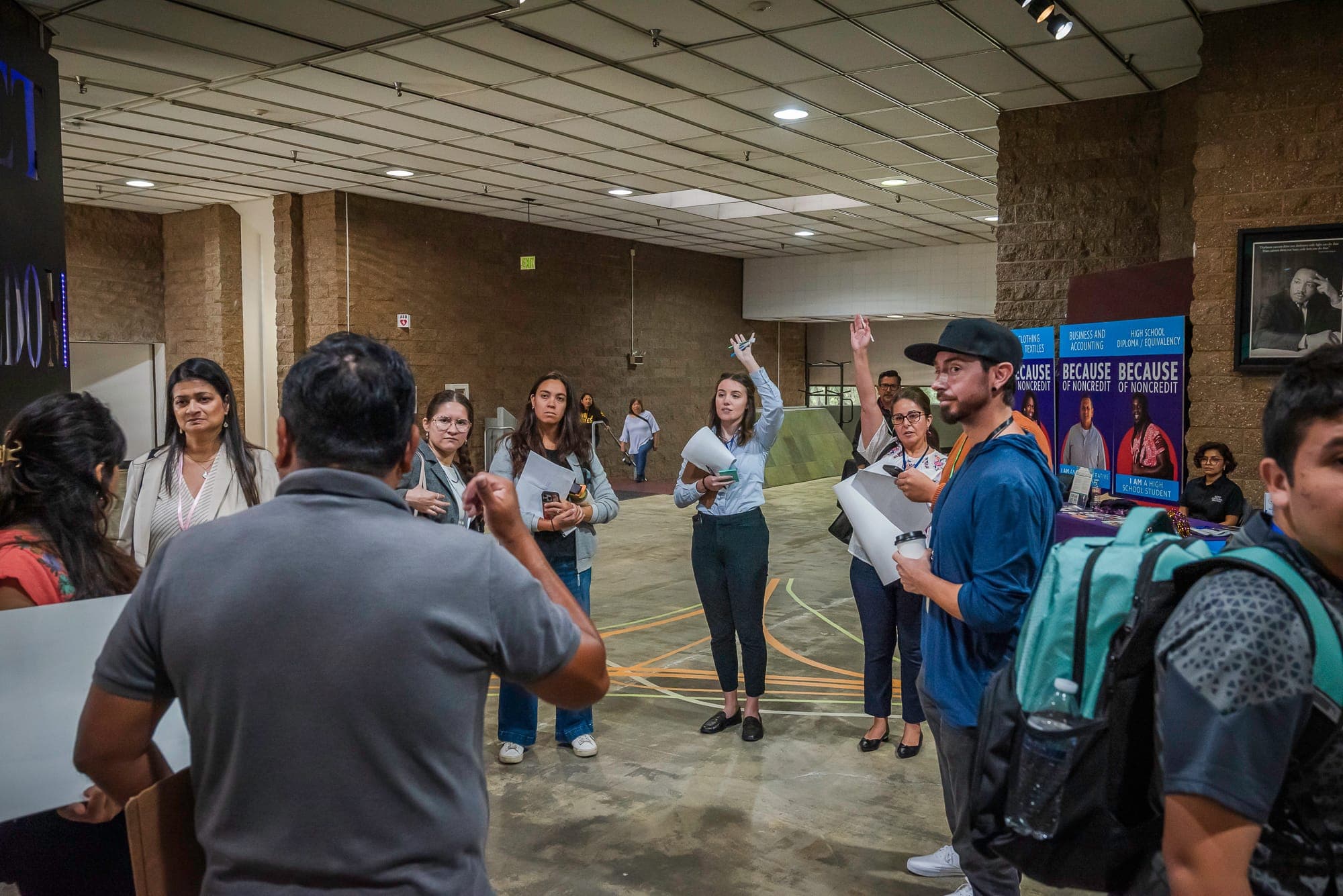
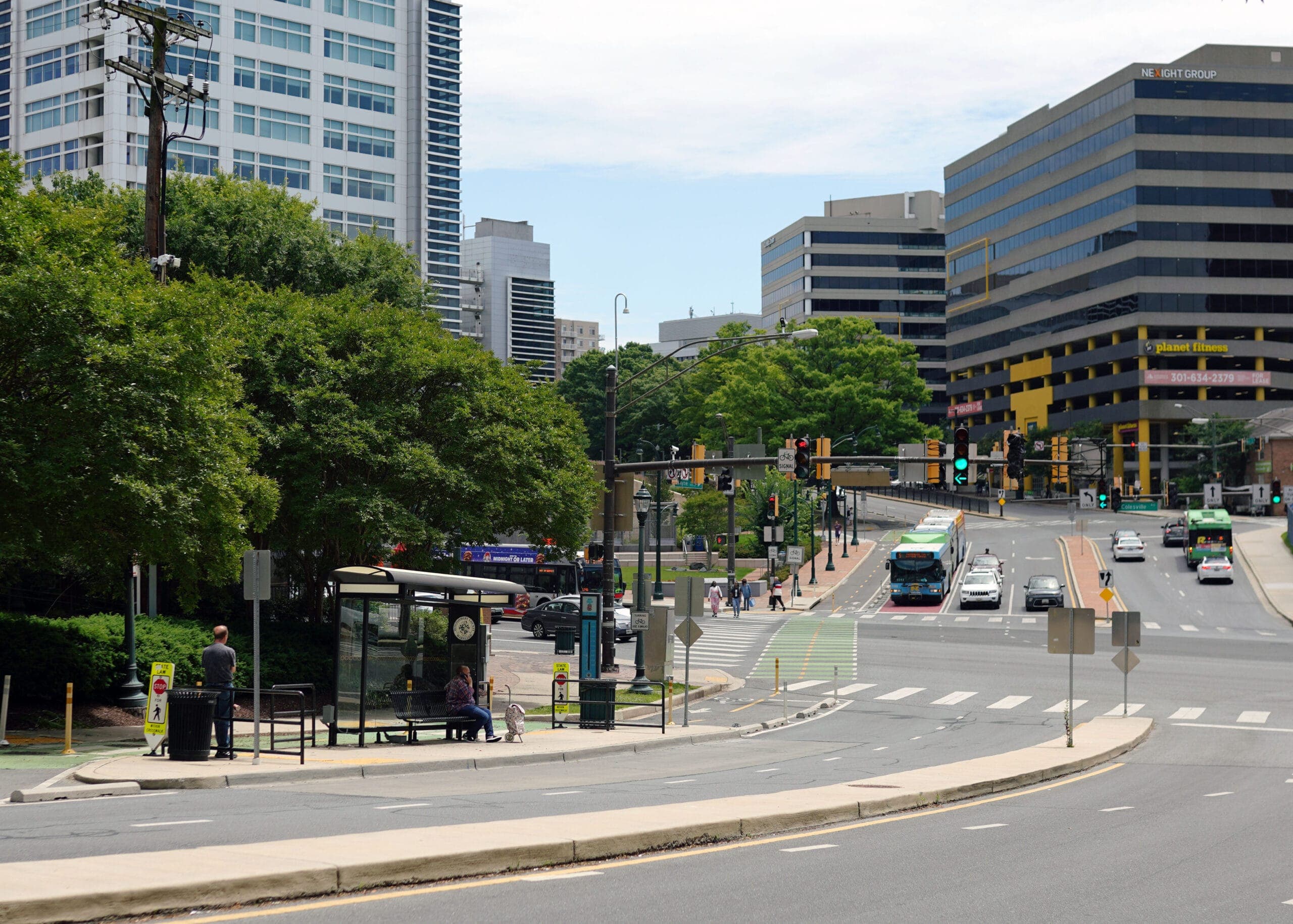
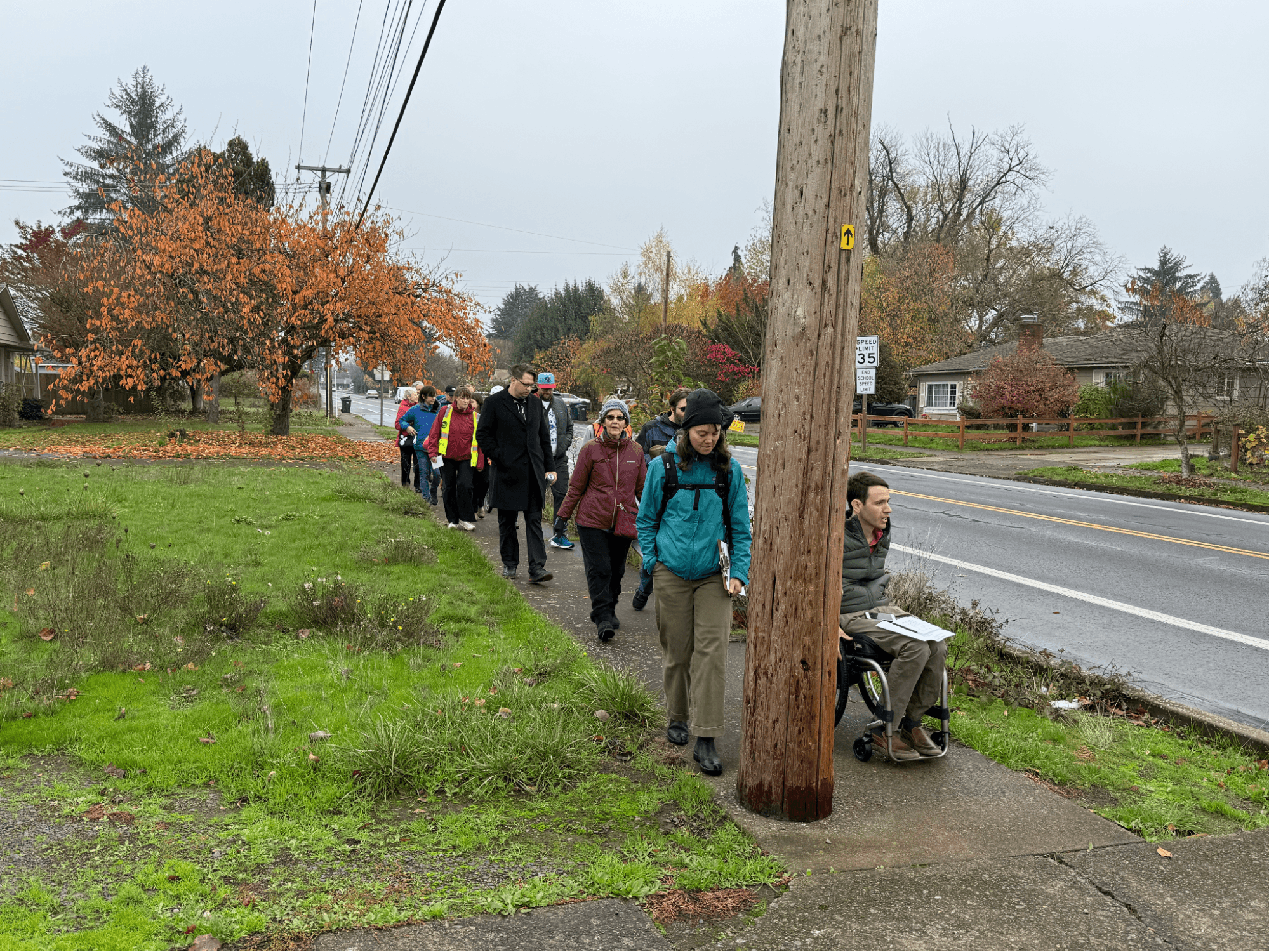
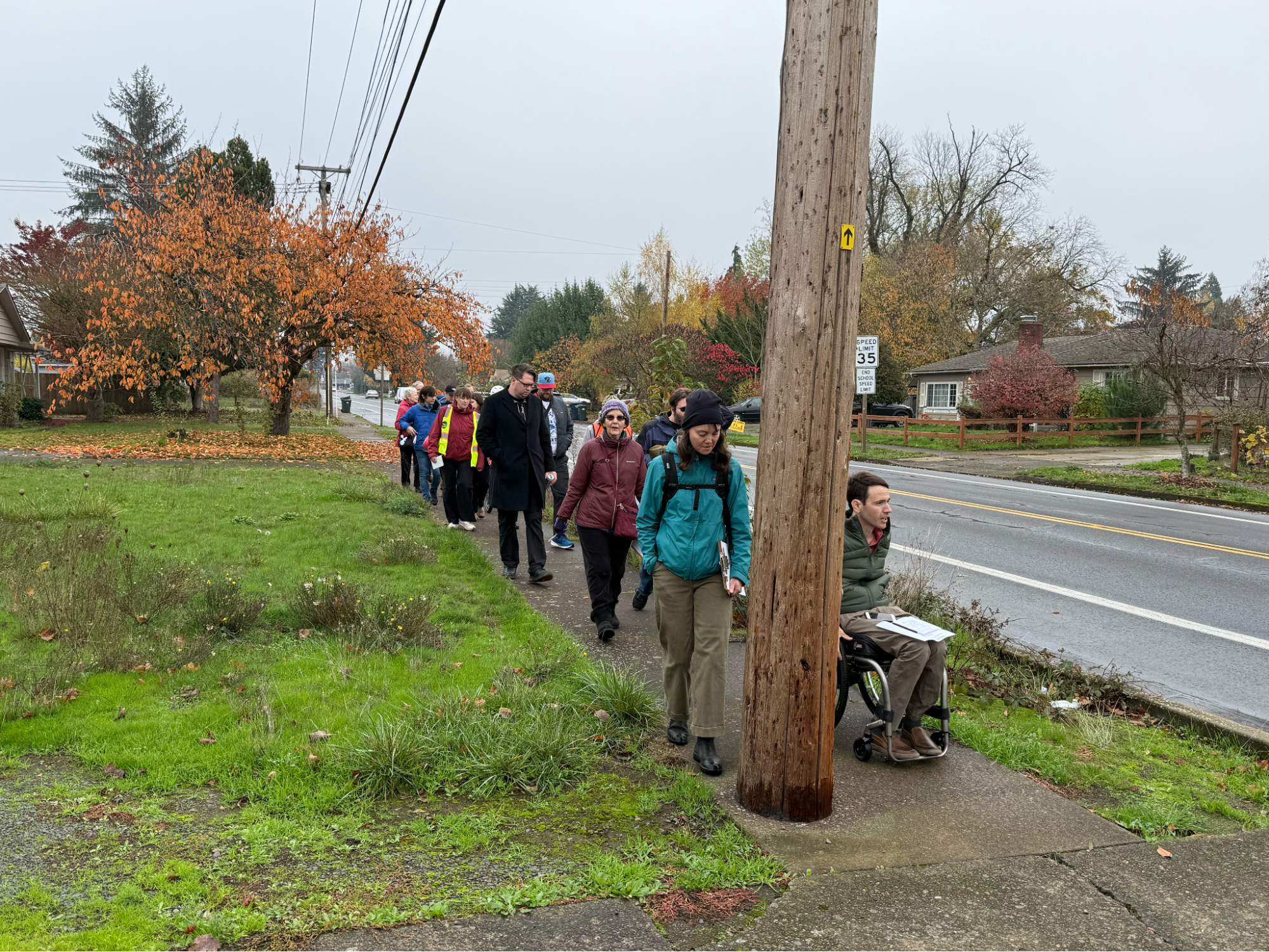
The workshop brought together residents, advocates, local organizations, City of Eugene staff, and elected officials to experience Highway 99 and River Road firsthand and hear directly from the people who use these streets every day. A central component of the workshop was a series of walk audits along Highway 99 and River Road, which took place at the outset of each session. On a characteristically rainy Oregon day, participants experienced the corridors together, often having to shout to be heard over vehicles speeding past. As pedestrians, we felt uncomfortable; the environment was noisy, and we were exposed to the rush of traffic. During the audit, one participant noticed a group of high school students huddled under a bus shelter to shield themselves from the rain. This observation sparked a discussion amongst city staff and neighborhood residents about the need for infrastructure that provides covering and seating for people waiting for transit.
These shared experiences helped ground the conversation in reality. Residents walked the corridors alongside City of Eugene staff, who play a key role in planning and implementing street improvements. Seeing street conditions firsthand shifted the conversation from abstract ideas to specific, tangible challenges for people walking, biking, or taking transit.

Who was in the room, and why it mattered
An important aspect of the workshop was the participation of elected officials and local leaders. City council members and Mayor Kaarin Knudson were invited to take part not as speakers, but as participants alongside community members. They walked the corridors, joined small-group discussions, and listened directly to residents’ experiences.
This approach helped reinforce the workshop’s community-driven nature. By experiencing the same conditions and hearing the same conversations, decision-makers who can shape policies and funding were able to gain a deeper understanding of community concerns and priorities.
Community voices shaping the conversation
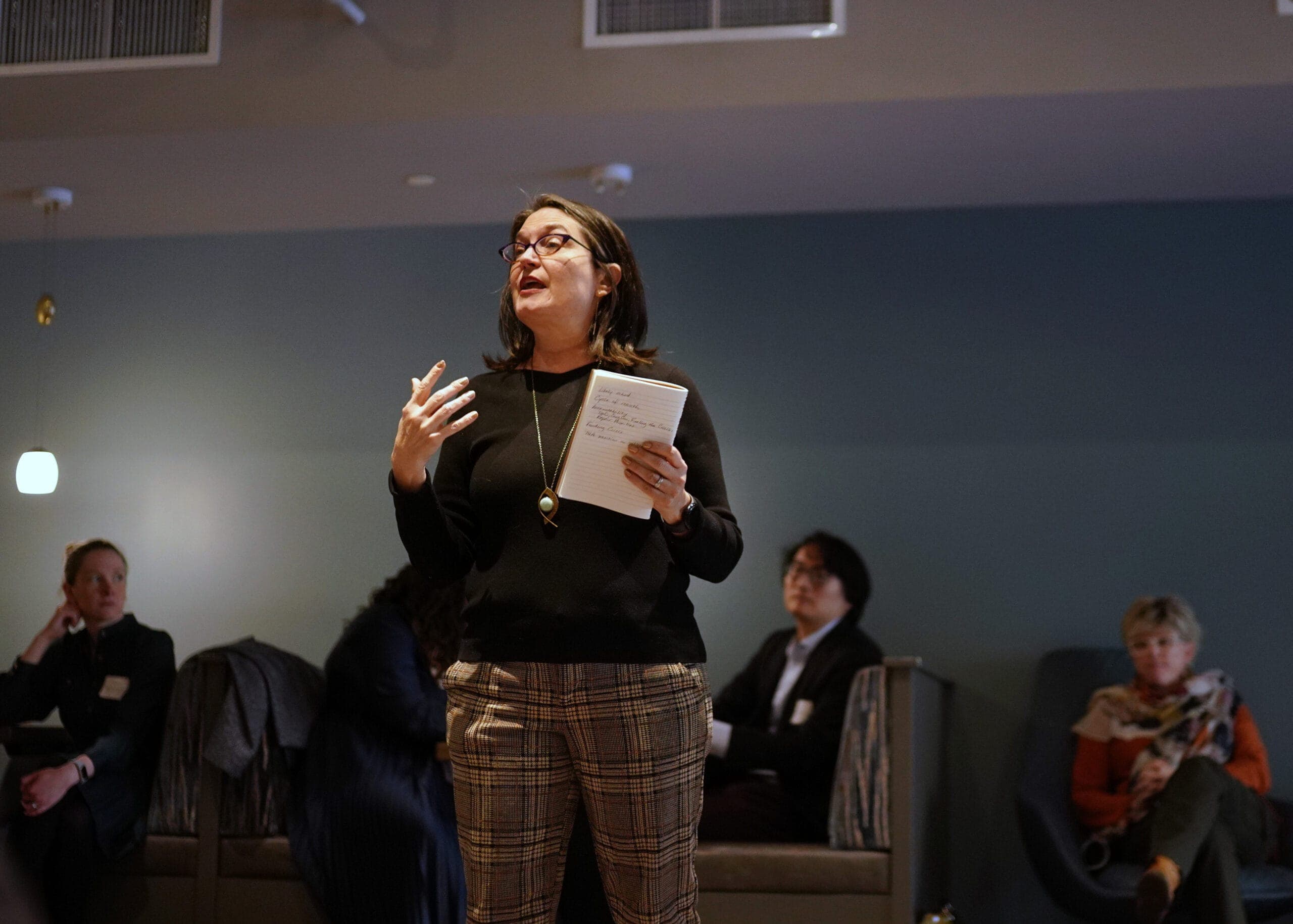
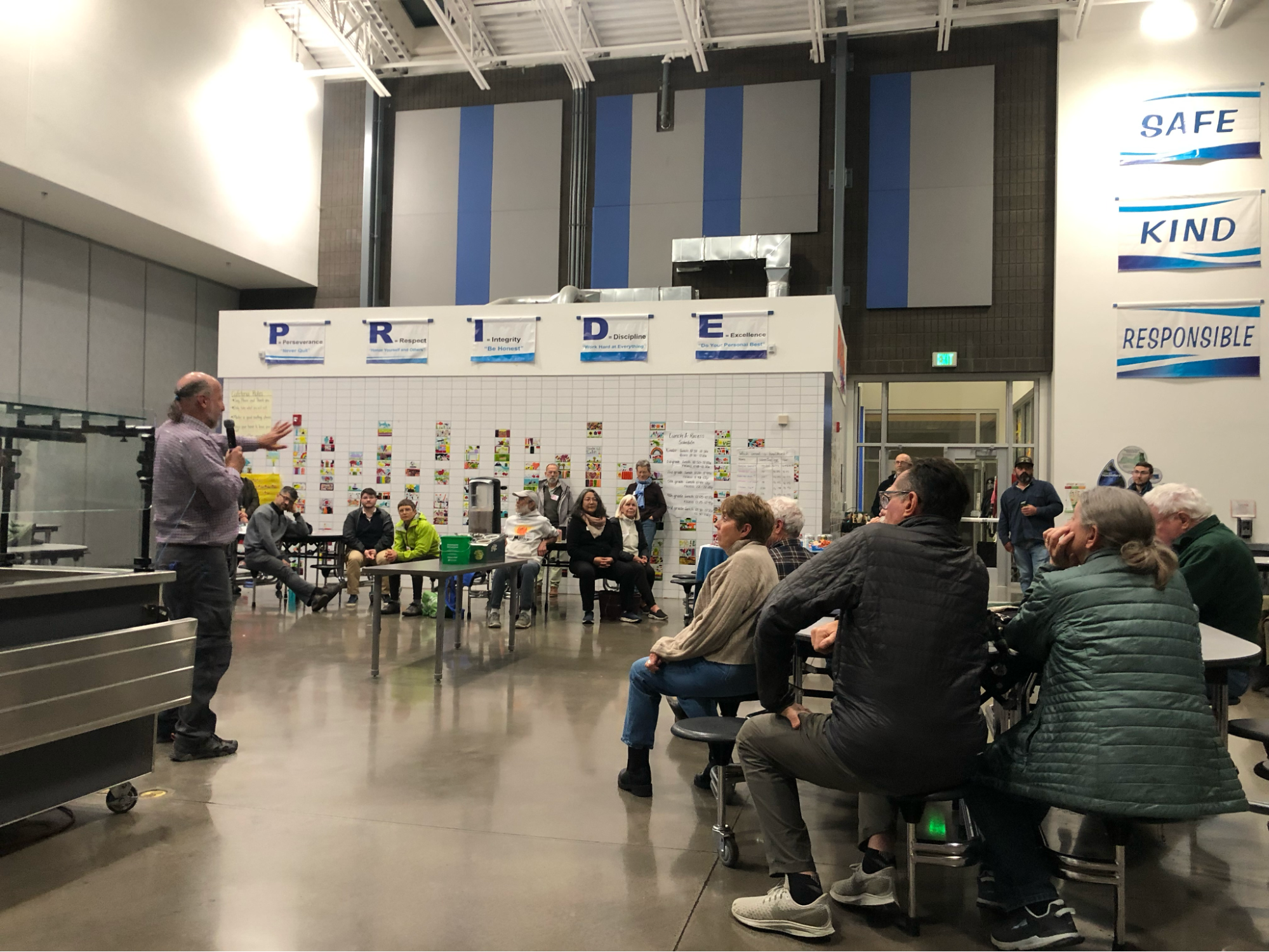
Following the walk audits, community town halls created space for reflection, dialogue, and collaborative brainstorming. Parents arrived with children in tow, seniors rolled in with their bicycles, and neighbors from across the community filled the room. The conversations were candid and often personal, shaped by concern and a shared desire to make the corridors safer. Participants talked through what they had just seen: unsafe crossings, speeding traffic, and inadequate placemaking, and shared how those conditions affect everyday trips. Importantly, this was not a process of reacting to predetermined recommendations for what improvements should be made along the corridors. Instead, community members helped define the issues and elevate priorities based on their experiences.
What’s next?
Workshops like this one are not an endpoint, but a foundation. The insights gathered along Highway 99 and River Road provide valuable context for future planning and policy conversations in Eugene. Continuing to build on this work will require sustained community engagement and ongoing collaboration among partners.
Organizations like BEST, along with their community partners and the City of Eugene, are well-positioned to continue this work of advancing safer streets, building on a strong ecosystem of partnerships and a shared understanding of community priorities.
Related News


Livable places. Healthy people. Shared prosperity.


© 2026 Smart Growth America. All rights reserved
Site By3Lane Marketing
