







News
By Michael Rodriguez, April 13, 2026
Over the past decade, as SGA’s research director, I’ve had the privilege of working alongside communities across the country on issues of housing, transportation, land use, and economic development.
As I step into a new chapter, I’ve been reflecting on what’s actually changed since around 2015, and just as importantly, what hasn’t.
The world of urbanism and planning feels different today. Some ideas that were once niche are now mainstream. We now have enough hindsight to see that some “transformational” innovations didn’t quite transform. And some of the most important shifts happened quietly, at the local level, far from national headlines.
Here are five observations from ten years in the field of smart growth.
1. Local leadership became the center of gravity
One of the biggest shifts over the past decade is where leadership actually happens. When I finished my MPA and MS in urban planning, especially at the start of the Obama administration, it appeared that the locus of urbanism was heading towards more national leadership. Transportation reauthorization seemed to promise a full change in how we approached transportation systems; new federal grant programs like TIGER seemed to be the way to boost local projects; and a reorientation toward transit (and light rail and bus rapid transit) programs was becoming du jour.
Partly because of the pendulum of administration changes and approaches, and partly because of the inherent need for planning as a local matter, we’ve seen the local and state level flex atrophied urbanism muscles.
National policy still matters, but it has become less consistent as a source of direction on housing and transportation. In today’s environment, states, regions, cities, and even counties have taken on a much larger role.
The most meaningful progress I’ve seen has been local. These have included:
- zoning reforms at the state and municipal level, including several states enacting preemption laws on single-family zoning
- transportation investments shaped by regional priorities and less reliance on USDOT, FTA, and federal oversight
- housing strategies tailored to local market conditions, while looking less to HUD
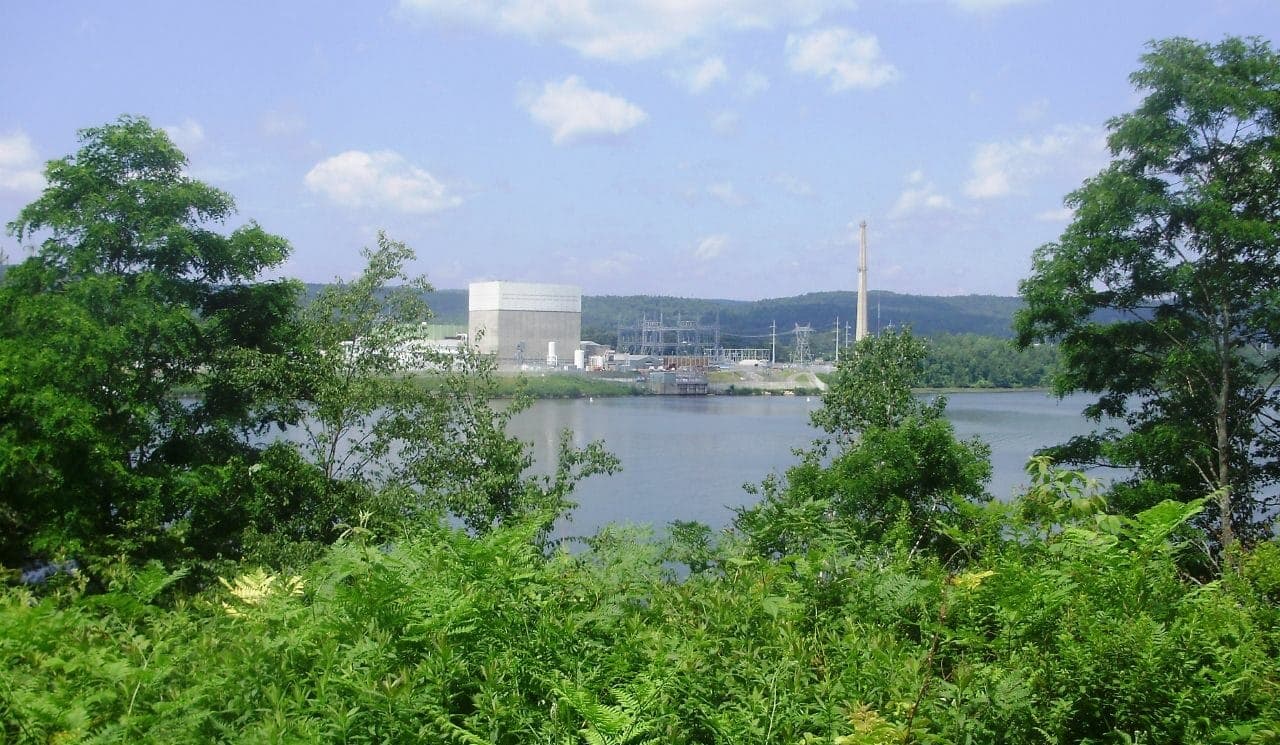
I’ve seen this from leadership in small towns like Ruston, Louisiana, where they led to push development towards downtown rather than more annexations. Huntington, California, was pursuing its own housing policy given the massive infrastructure and transit changes in the Los Angeles region. In Virginia Beach, they weren’t waiting for other levels of government to step up to address climate-informed zoning and were leading on their own. Finally, SGA’s major work in Vermont showed how state-level agencies and the legislature were getting it when it came to linking policy to place in their statewide designation program reform, which the SGA team and I had the pleasure of working on, including seeing legislative results.
But this shift towards local leadership cuts both ways. When leadership is decentralized, outcomes become uneven. We’ve seen some places move forward aggressively and perhaps others stall a bit. Many communities are somewhere in between.
The result is a planning landscape that is more innovative but also more fragmented than it was a decade ago.
2. Zoning moved from obscurity to the mainstream
In 2015, zoning reform was a niche conversation. To say “zoning” was something left for planning students and could possibly make a person on the street think you’re talking about a sport. For decades, zoning has lived mostly among planners, a handful of advocates, and some academic circles, and outside of that, it rarely broke into broader public discourse.
That’s no longer the case. SGA’s Center for Zoning Solutions realizes its salience, and today, zoning is part of the national conversation. Now words like “missing middle housing,” “by-right development,” “single-family zoning,” and “upzoning” appear in local and national newspapers. They are the language of social media debates about place.
In other words, the planner’s obscure language is no longer a set of obscure terms. Zoning has entered the zeitgeist in a way that would have been hard to imagine ten years ago.
And yet, awareness hasn’t made reform easy. If anything, the politics have become more visible, and in many places, more contested.
I had the pleasure of working with Tulsa, Oklahoma, for example, with the newest mayor, Monroe Nichols, on major innovations for zoning reform and permitting process reform. While the ideas seem no-brainers, the local community still has a say, and the idea of additional infill still remains contested locally. In Redmond, Washington, the local team would tell me all about the challenges of retail and residential displacement from the pressures of being outside of Seattle and having a new light-rail line. These debates no longer play out only at local hearings but in the major media and across social media.
Zoning didn’t just enter the conversation; it became the conversation. But turning that conversation into durable change remains the hard part.
3. Be patient with the “Next Big Thing”
Over the past decade, we’ve seen no shortage of bold predictions about how technology would reshape cities. Maybe this is the part where I start to feel old, but how many grand visions have we heard over the past 10 to 15 years that did not come to pass?
Some of those ideas were compelling and even well-funded. A few were genuinely transformative, but most didn’t quite live up to the early hype. Here are a few of those examples:
- Ride-hailing services like Uber were expected to reduce congestion, and the companies made early claims that it was doing exactly that. It didn’t. In many cities, the additional gig-work drivers increased vehicle miles traveled as these neo-taxis spent a significant portion of their miles empty, idling, and waiting for passengers just like taxis of old.
- Fully autonomous vehicles were always just around the corner, any day now. Any day! For real! (We still wait).
- We learned that Hyperloop was a deliberate distraction meant to divert attention and funds away from traditional transit solutions. Its grandest implementation amounts to a tourist ride in a small part of Las Vegas.
- “Moving to opportunity” style housing solutions were seen as a promising way to overhaul housing programs for low-income populations. We eventually learned that the results were more complex, mixed, and tenuous.
- “Smart city” technologies promised integrated, real-time urban management, but often delivered incremental improvements rather than systemic change. The zeitgeist surely moved away from where this topic was in 2010, when “smart city” was all the buzz at APA and TRB conferences.
- Vehicle-to-vehicle and vehicle-to-infrastructure systems remain promising, but not yet widely realized.
- Amazon HQ2. Enough said.
- Co-working, like WeWork, was to revolutionize the entire office industry and displace billions of square feet of occupancy, according to some. Instead, it’s just another niche space for smaller companies and specific users.
The lesson isn’t that innovation doesn’t matter. It does, and we shouldn’t be fully jaded. But technology alone rarely solves structural problems rooted in land use, pricing, and governance.
The biggest impacts on our cities still come from the oldest tools: how we use land, how we price systems, and how we invest in infrastructure.
4. The data revolution raised the ceiling—but not the floor
The last decade has brought an explosion in data. I’ll date myself, but I’m old enough to have used the “Census Transportation Planning Package” as a bundle of 10 CDs to load onto my PC when I was in graduate school in 2008. Data was much harder to come by: the Census Bureau didn’t have APIs until 2012, so these were very new when I started at SGA. I-PUMS’ great web-based user interface was still a new thing, and we were just getting enough ACS 5-year estimates to have a decent time series (the first ACS 3-year estimates didn’t exist until 2010).
We now have access to:
- parcel-level land use data across large geographies via open web portals at most cities
- detailed mobility datasets
- real-time transit and traffic information
- Cell-phone-based mobility data tracking trips, movement, foot traffic, speed, and anything else you can think of
- Most data tools are now web-based and searchable
- Highly-accessible satellite data
- APIs and tools that make complex analysis far more accessible
In many ways, the technical ceiling of what’s possible has risen dramatically in ways I would’ve never expected a junior planner to be capable of running in 2010. We can measure things today that were essentially invisible in 2015. Across dozens of communities that I’ve worked with, I’ve been able to assemble data or receive data from our partners that have enabled things like fiscal impact analysis, hotspot analysis of real estate values, walkability analysis, and other technical approaches that simply would not have been possible just a few years before. I distinctly remember our USDA rural communities work across dozens of small towns where even communities of less than 15,000 people were able to provide me GIS shapefiles of their parcels, and knew what I was talking about when I asked.
But the floor hasn’t risen at the same pace. Many jurisdictions still face limited staff capacity, constrained budgets, and institutional barriers to using data effectively. Also, while the mid 2010s inspired many data urbanists with promises of more open data, we eventually saw some retrenchment with communities and vendors putting more of that data behind paywalls, request requirements, or black boxes.
And even when the data is available, it doesn’t automatically change decisions. We’ve largely solved the problem of not knowing. We have not solved the problem of acting, which requires sound analysis and wise decision-making.
5. Housing became the through-line for everything
Perhaps the most important shift is how central housing has become. Oh, how I feel vindicated by this one! Many of my colleagues and friends recall me saying in planning school and early in my career, in the early 2010s, that despite the global financial crisis, rising housing costs and housing unattainability would be the true problem, as cities were simply not building enough.
A decade ago, housing was often treated as a silo. It was a niche affordability issue, perhaps even disappeared by what seemed like a housing crash that would endure. It was a programmatic concern, or something separate from transportation or economic development
That framing no longer holds.
Today, housing sits at the center of nearly every major planning conversation:
- economic growth and labor markets
- transportation demand and system performance
- climate goals and emissions
- equity and access to opportunity
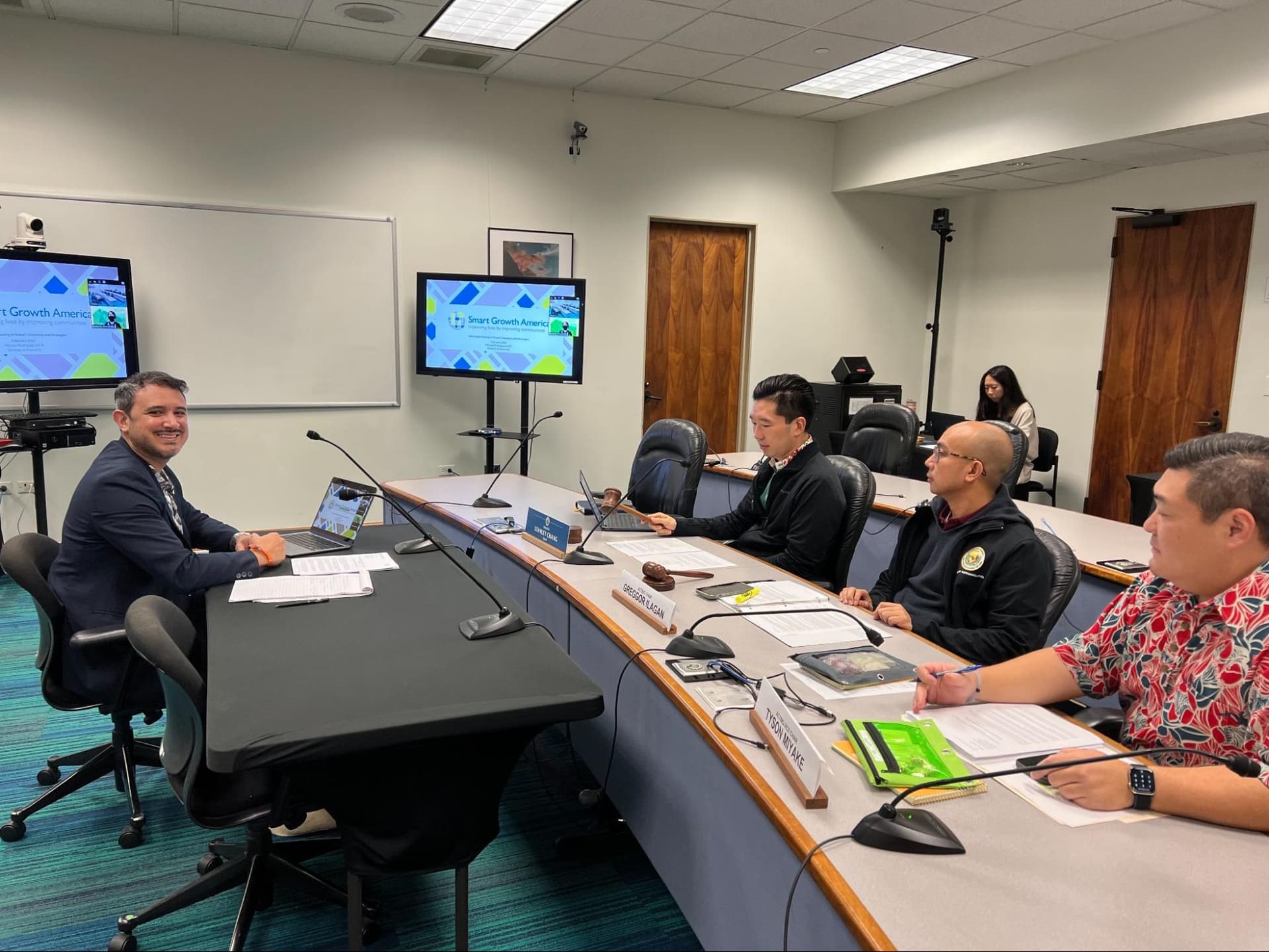
Just as importantly, the conversation itself has evolved. There is now a much broader recognition that supply matters a lot, that land-use constraints matter, and that systems (not just programs!) drive outcomes. I had the great opportunity to work with Hawaii AARP, which is now recognizing that housing is a major issue for seniors, and I briefed their enthusiastic state legislator on the issues and approaches to housing in the Aloha State. Our friends at the National Association of Realtors are on top of the housing supply question, realizing that this is not just a question of Realtor transaction volume but one of true policy initiatives. They have a standing smart growth group that I had the privilege to speak to about smart growth, and I am inspired by their leadership here.
This is all to say that more groups are understanding the housing salience question, and this now permeates policy discussions. Housing is no longer just a sector. It’s the system through which many other outcomes are determined.
A final thought
After ten years at SGA, one lesson stands out more than any other:
We don’t lack ideas.
We understand the problems, and we have tested solutions and continue to innovate on more. We now have more data than ever before. But what we struggle with is alignment, patience, and follow-through.
Progress in planning and urbanism is rarely about discovering something entirely new. Even writing a whole dissertation doesn’t make one a wise wizard of the planning keys. This is because change requires doing the hard work of implementing what we already know, consistently, over time, and at scale.
That work is slower than we’d like, but it’s also where real change happens.
I’ll miss my friends and amazing colleagues at SGA, who I am confident will continue to work with communities across the country to continue to do this very work and help make this real change happen.
Onward!
Related News






Livable places. Healthy people. Shared prosperity.


© 2026 Smart Growth America. All rights reserved
Site By3Lane Marketing
