





News
By Raveena John, April 6, 2026
USDOT has made the final round of grants from the Safe Streets and Roads for All (SS4A) grant program available. This final guaranteed round of funding for SS4A looks a bit different from the original version of the program. Here’s what you need to know:
SS4A’s historic inclusion in the 2021 Infrastructure Investment and Jobs Act (IIJA) allowed local communities to apply directly for federal funds to address the urgent safety and accessibility issues they see on a daily basis, instead of having to go through their state DOTs. SS4A funds provided communities of all sizes with opportunities to establish safety action plans and programs, gather necessary data, and explore new designs and materials through the use of quick-build demonstration projects. But to win a grant from this year’s pool of funds, your approach to describing your safety efforts may need to change.
This year, about $1 billion is available for SS4A awards: $305 million for Planning & Demonstration and $688 million for Implementation. The program’s priorities have shifted to focus more on “Public Safety Infrastructure” (response and enforcement) than street design improvements that may inconvenience drivers (prevention), but you can still use these funds to make positive change in your community. Here are five things to know:
1. The basic structure of the grant program is the same
The two types of grants available are Planning & Demonstration and Implementation (we will focus mostly on Planning & Demonstration here). Eligible activities are still: develop a new Action Plan, conduct supplemental planning to update an Action Plan, and inform an Action Plan with demonstration activities, all of which can be bundled together to best fit your community’s needs. As you can tell, the SS4A activities are all centered on the Safety Action Plan, which is meant to help your community implement the Safe System Approach. Merits of this wheel aside (we prefer the pyramid!), Safe Systems continues to be at the core of SS4A.
2. Priorities in the program have (unsurprisingly) changed
With all the anti-pedestrian, anti-bike, and anti-safety moves from the current administration, it is no surprise that SS4A's priorities have changed this year. There’s a notable new priority of “Public Safety Infrastructure.” This nebulous category includes “hardware, software, systems, technologies, equipment, protocols, facilities, and coordination models” for medical services, fire, and law enforcement to “prevent, respond to, or reduce the severity of roadway crashes.” While adding these elements introduces a new layer of complexity, we strongly recommend obtaining letters of support from public safety partners—including EMS, fire services, law enforcement, trauma system partners, and first responder labor unions—to elevate this priority in your application. Prevention is key to safety, and we hope applicants can be creative in partnering with their emergency response teams to test road designs that support public safety by preventing dangerous crashes before they happen.
This Notice of Funding Opportunity (NOFO) also includes a list of “favorable considerations” and “less favorable considerations.” A few favorable considerations that stand out are:
- Letters of support, especially from relevant stakeholders and Public Safety Agencies and associated Labor Unions representing First Responders
- Applicants in a rural area
- Beautifying transportation infrastructure with context-appropriate design and/or child-friendly elements
Rural areas in particular should not overlook this opportunity for safety funding. Keep these considerations in mind when putting together your application: work with many stakeholders and prioritize children's safety. (For example: automated traffic enforcement is not favorable unless it’s within school zones, so focus on your school zones!).
The “less favorable considerations” in this year’s NOFO are similarly unsurprising. Any perception of taking away space from cars, impeding vehicular flow, or generally harshing on drivers’ vibe is not going to be well received. When you propose strategies that make roads safer by slowing down cars, be sure to emphasize the known safety benefits for everyone on the road. Check back soon for more ideas to keep safety at the heart of your application.
3. You should apply for a Planning & Demonstration grant!
USDOT anticipates awarding a little over $305 million in this category, which will be somewhere between 400 and 700 awards ranging from $100,000 to $5 million each. SS4A is unique in that federal funds go directly to cities and other local jurisdictions, bypassing state DOTs, which usually are in charge of funneling transportation money down from the feds. This is also the easiest federal grant application you will ever see: a two-page narrative if you’re requesting less than $1 million in Planning & Demonstration funds, a three-page narrative if you’re requesting $1 million or more. Prior awardees in either category are eligible to apply for additional funds, even if an Action Plan is still in development. There is still a lot of funding available in this program, and the 20 percent local match can be made in cash or in-kind. Go for it!
4. Quick-builds are still eligible demonstration projects
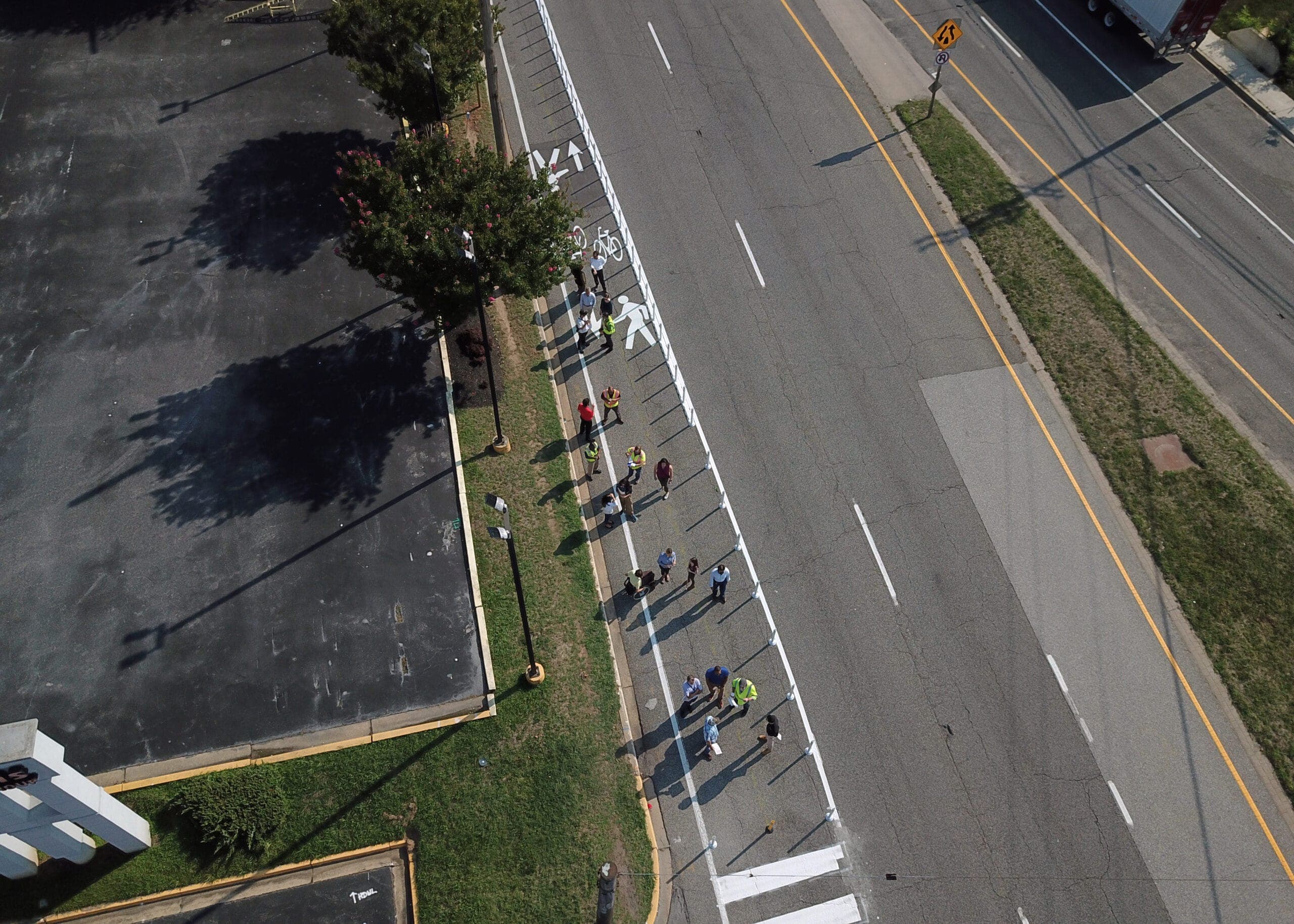
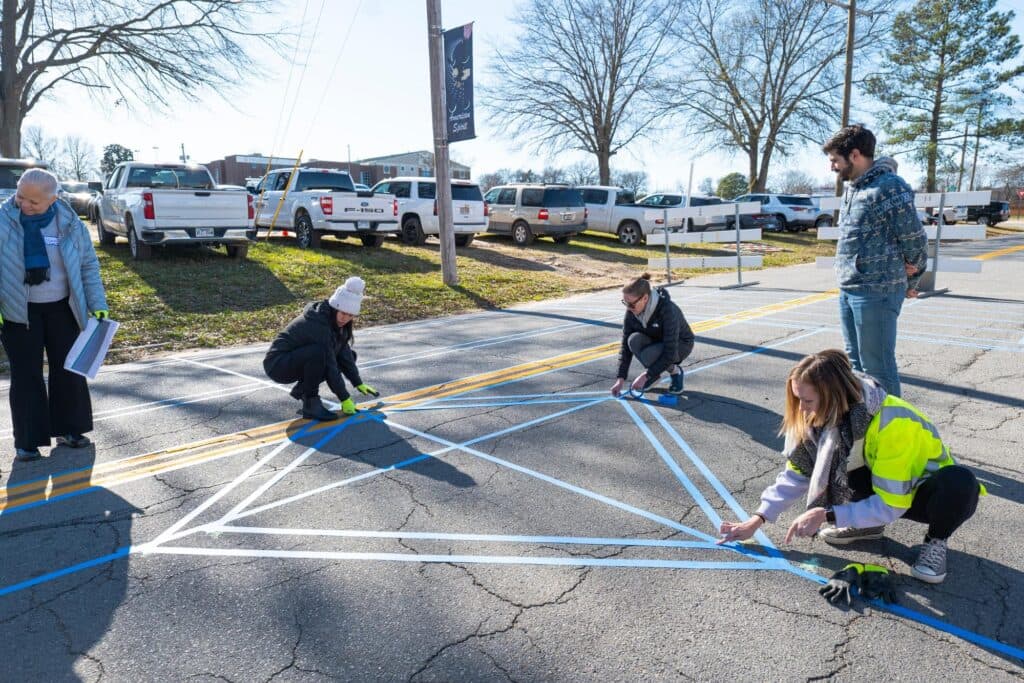
Even with the less favorable considerations for projects that could be perceived as anti-car, quick-builds and temporary street installations were referenced in the NOFO and should still be included in your applications. We know that street design is the most effective strategy to improve safety for everyone, and quick-build projects are a way to get near-term improvements to your community through an SS4A Planning & Demonstration grant. Your application doesn’t have to go into your demonstration project proposal in great detail—you can determine the specific sites and designs as part of the work if your project is awarded. Just be sure to frame your project in terms of the priorities described above and use the data you collect for your project to inform or update a Safety Action Plan.
5. These are (still) not serious people
USDOT is demonstrating once again that it is still clearly not serious about actual safety improvements that will result in fewer deaths and injuries. The way that safety improvements must take a back seat to preserving vehicle capacity at all costs is just yet another perfect example of how safety is a priority in words only, and regularly loses out when it has to compete with other “priorities.” The slow roll of grant agreements and the threat of existing grants being pulled show as much, but that doesn’t mean we shouldn't keep safety at the center of our applications. With “beautifying transportation infrastructure” and “child-friendly elements” listed as favorable SS4A considerations, you might expect they’d mean murals, street trees, narrow lanes, protected crosswalks, and separated bike lanes, but we see USDOT cutting funding for and removing these truly wonderful parts of street design across the U.S.
We will see how the DOT’s incongruous priorities lead to actual safety improvements, but that won’t stop us from putting together great plans for real outcomes.
Applications are due Tuesday, May 26, 2026, at 5 pm EDT.
Related News


Livable places. Healthy people. Shared prosperity.


© 2026 Smart Growth America. All rights reserved
Site By3Lane Marketing
