




Resource
Three strategies to help you win 2026 SS4A grants
Three strategies to help you win 2026 SS4A grants
This year's Safe Streets and Roads for All (SS4A) Notice of Funding Opportunity (NOFO) reflects the Trump administration’s changing “safety” priorities, but it’s still a worthwhile opportunity to advance proven safety solutions in your community. We’ve highlighted three project strategies that can work under the updated NOFO.
Our recent blog highlighted changes to the 2026 Safe Streets and Roads for All (SS4A) program priorities, which focus more on truck parking and vehicle access than on genuine safety interventions, as they have in the past. These changes are not a surprise given this administration’s pro-car, anti-everything-else transportation strategy. But all is not lost: Demonstration projects are still eligible for funding, and creatively using these funds can lead to actual safety improvements. Here are some ideas for how to frame your ideas to align with SS4A priorities this year:
Strategy 1: Test how cars are (or aren’t) impacted
The SS4A program description specifies “reducing level of service for vehicles,” “reducing access for emergency vehicles, delivery vehicles, and vehicles serving the disabled,” and “new dedicated bicycle lanes that reduce vehicular capacity or impair movements” as less favorable considerations for application review. This guidance is clearly based on outdated, incorrect assumptions that the level of service—an overrated metric of vehicle flow and delay—is king, and that capacity for cars is more important than anything else. So why not put these assumptions to the test?
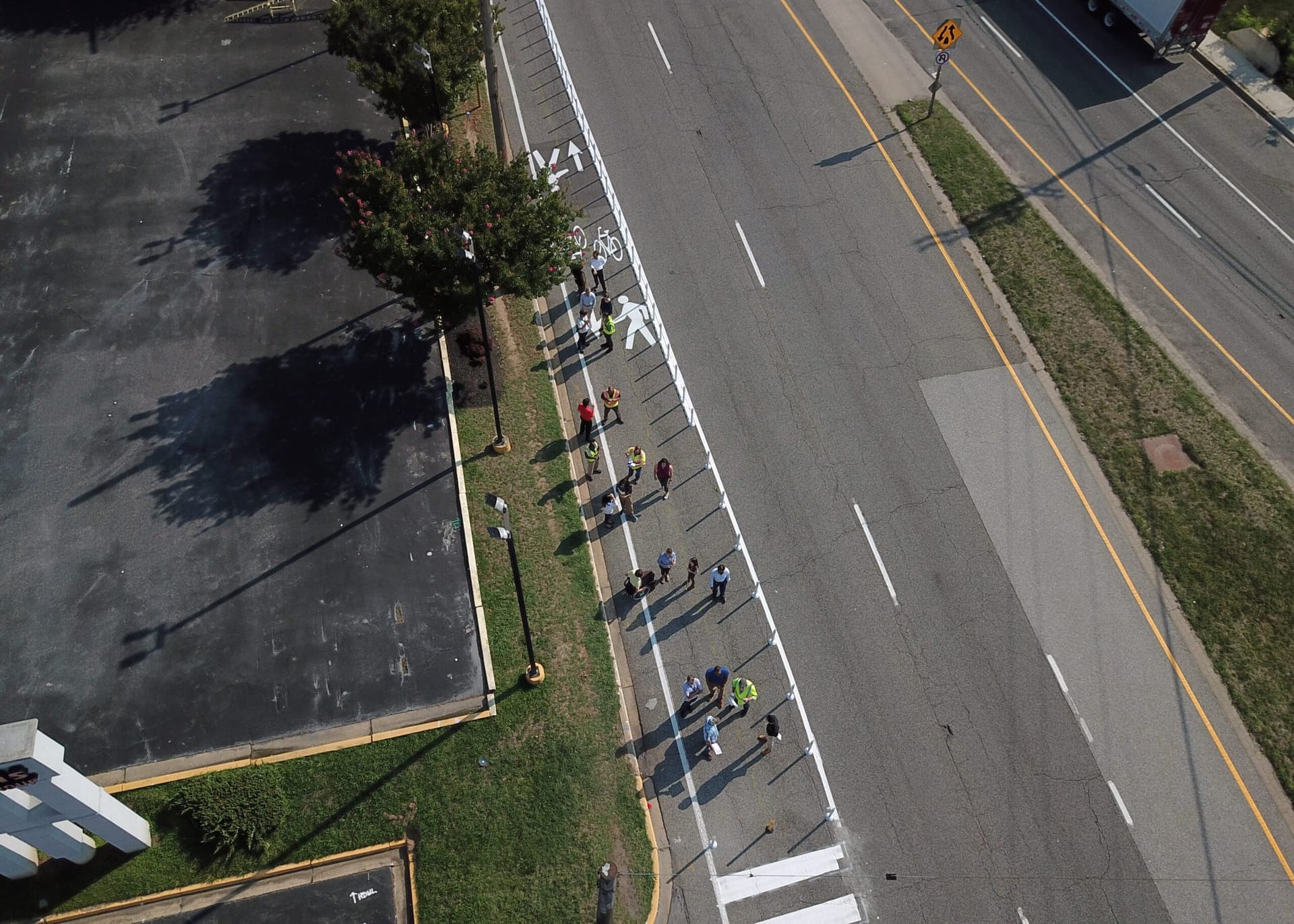
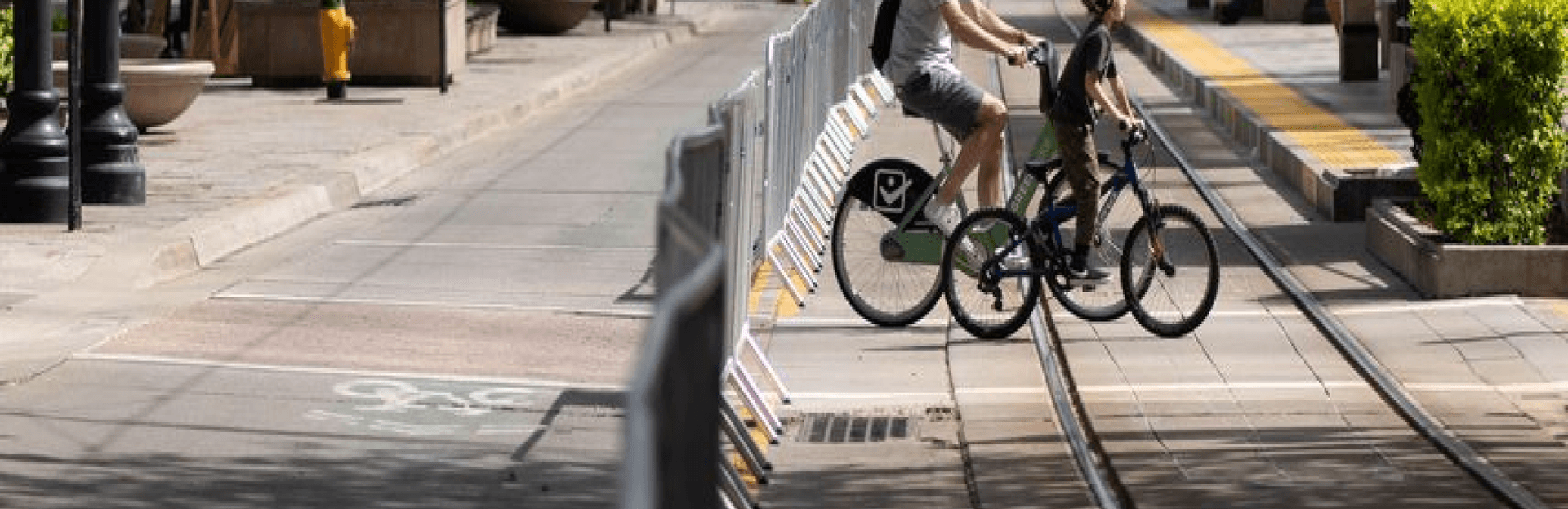
Propose a temporary road design improvement (make sure to mention if the proposal is part of the Federal Highway Administration’s proven safety countermeasures) and frame the pilot as a way to measure the impact of the roadway design on vehicles. Does the change impact travel time for drivers or the number of cars on the road? Can you work with emergency vehicle operators to see how they are affected? We know certain strategies, like road diets, improve safety for everyone without delaying emergency response time. Considering the context of this year’s SS4A priorities, it doesn’t hurt to pitch your road design idea as an opportunity to double-check. Just be a bit cautious about word choice: “road diet,” “bike lane,” and “traffic calming” may raise red flags, whereas “roadway space” and “right-sizing” are less likely to draw scrutiny.
Strategy 2: Work closely with public safety partners
Public safety infrastructure, a new priority for SS4A, is defined as: “Physical and digital hardware, software, systems, technologies, equipment, protocols, facilities, and coordination models used by public safety agencies such as 9-1-1, emergency medical services (EMS), fire services, law enforcement, and trauma system partners to either prevent, respond to, or reduce the severity of roadway crashes.”
Since this definition of public safety infrastructure specifically includes crash prevention and severity reduction, partnering with your local public safety agencies will make a strong case for your proposed interventions. Support from public safety agencies and first responders is also emphasized in the NOFO. Definitely seek letters of support from these partners, but an even better strategy is to bring them in on the project itself. Here are a few project ideas:
Improve your data collection practices. We know a lot gets missed in typical crash reports. Work with law enforcement, emergency responders, and hospitals to pilot updated crash-reporting strategies to produce a better measure of road safety in your community. Pilot a new approach to coordinate reporting across agencies to accelerate data synthesis. You could even develop near-miss reporting technology to capture close calls that often go uncollected.
Test new trainings and practices. Propose a pilot training initiative to help public safety officers understand and incorporate roadway design issues in their assessment of crashes. Pedestrian-blaming can start in the crash report, so training officers to evaluate the full environment at a crash site could result in recommendations better than “wear bright colors.” Another approach could be implementing cross-sector post-crash evaluations, such as Strong Town’s Crash Analysis Studio or Emergency Streets, that bring departments together to identify ways to prevent crashes from happening again.
Assess the existing vehicle fleets and assets. Communities are constantly evolving, and so is technology. You could propose using supplemental planning funds to help public safety agencies plan for future needs. This planning could include examining more nimble (that is, smaller) vehicles to improve access for emergency response. This project could potentially lead to reassessing design standards, such as lane widths, due to the newfound flexibility of smaller—more nimble—trucks. We wouldn’t want to predict where these conversations will go or what road design recommendations they could lead to, but starting this conversation may be a good pitch for your community to use SS4A.
Strategy 3: Focus on kids
Despite the pro-car stance in this year’s priorities, there is a clear focus on children’s safety. For example, automated traffic enforcement is viewed unfavorably unless it’s in school zones or on school buses (or in work zones), and “child-friendly elements” are among the favorable considerations for application review. Whatever you’re proposing, focus on the benefits for children. If you want to propose a traffic-calming design strategy that may seem to deprioritize cars, start with pilots in school zones. In your application narrative, remind reviewers to think of the children. Here are a few creative ways to improve safety through this focus on kids:
Start with school zones. Use these designated areas to test proven safety countermeasures or to pilot automated enforcement. Improve connections between school zones and other key destinations for children, such as parks and libraries, using safe sidewalks, pedestrian crossings, and bike paths. If you don’t already have one, definitely pilot a Safe Routes to School program.
Get kids moving! Organize walking school buses or a bike bus to provide active transportation options for children and their families to get to school. Host a series of traffic gardens to help kids get comfortable on bikes and learn to ride safely. You could even use these events as opportunities to start working with kids on their ideas for safer street design—it’s never too early to become a champion for safe streets! These strategies will involve parents, too, so consider partnering with your local parent-teacher organizations to support your application. You could even propose community engagement pilots focused on parents, children, and schools for long-term capacity building.
This list is by no means comprehensive. Start with your community’s needs, frame them in terms of this administration’s SS4A priorities, and don’t be afraid to ask for more. There is a lot of good work to be done!
Smart Growth America has already helped communities secure more than $8 million in SS4A funding and is now offering limited support to help more communities succeed in what may be the final round. Learn more about these services.
Livable places. Healthy people. Shared prosperity.


© 2026 Smart Growth America. All rights reserved
Site By3Lane Marketing
