






Divided by Design
Introduction
This introduction highlights the ways in which our current transportation system reinforces existing inequalities. It discusses the challenges faced by those without cars, the role of sprawling development in exacerbating these problems, and the need for a fundamental shift in our approach to transportation planning and policy.

The divisions aren’t felt equally
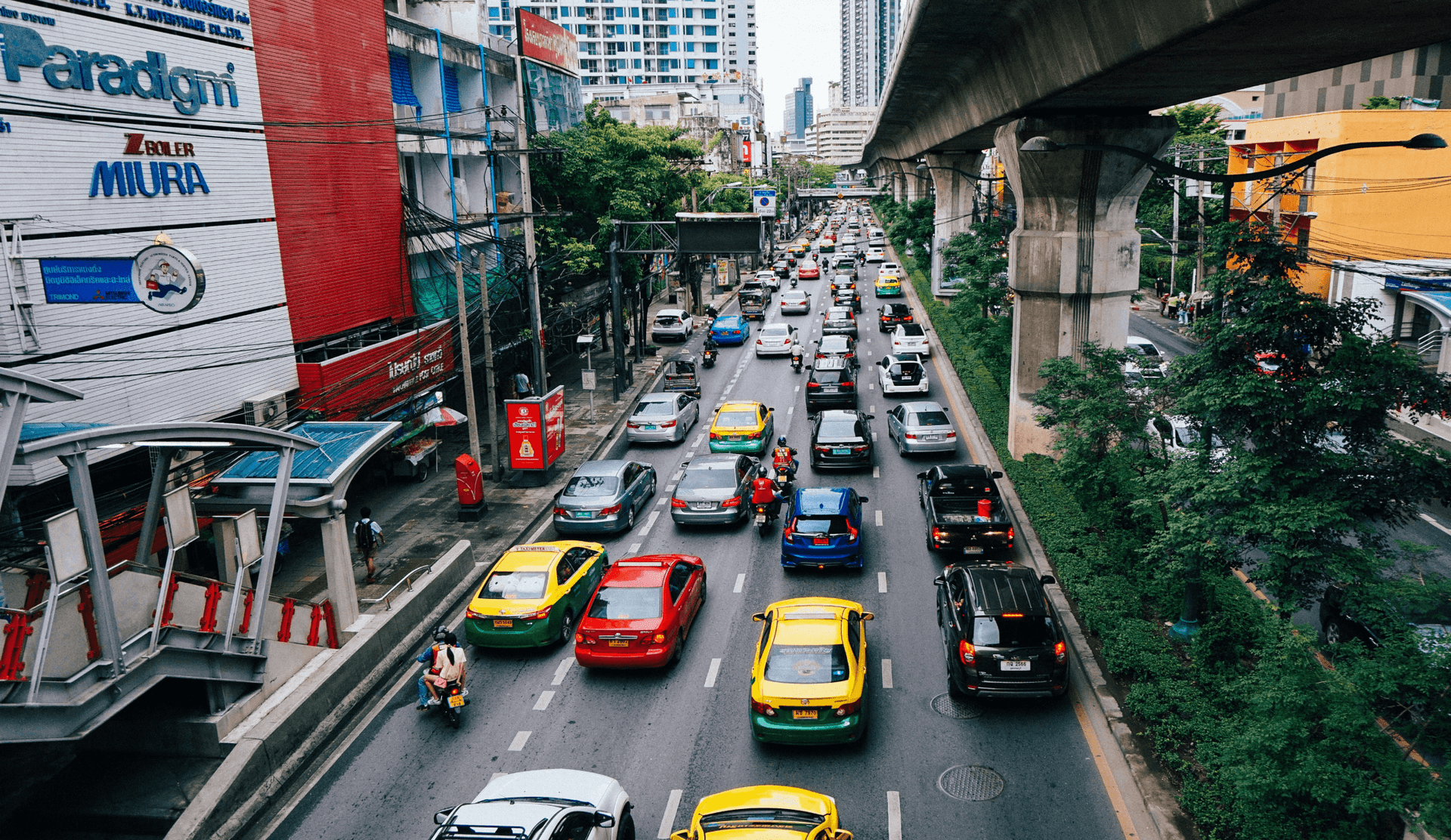
Because it is difficult and unsafe to reach daily needs without a vehicle in much of the United States, transportation has long acted as an economic barrier in the United States. Owning a car has become a prerequisite for accessing jobs, food, health care, and other necessities. Homes are located far from major job centers, services, and stores, requiring multiple car trips daily to reach essential needs.
This spread-out, sprawling form of development makes public transportation inefficient to operate, producing infrequent, inconvenient, and unreliable service

These two systems reinforce each other: sprawling development requires wider roads to move people, almost all of whom have to drive between spread-out destinations; and wide, fast roads require so much space to move and store the cars that development is forced to sprawl even further apart. The result is both predictable and expensive: necessities move further away and reaching them costs more in terms of money and time.
Approximately 28 million Americans (about nine percent of the population) do not have access to a car, and lower-income people and people of color are more likely to not have access to a car. This is not just an urban issue. In fact, the majority of counties in the U.S. with high rates of zero-car households are rural. And too often policymakers dismiss the transportation needs of rural Americans by assuming that everyone has cars and is happy to spend vast amounts of their time and money on driving.
We can and must do better.
Merely making tweaks to our approach will fail to correct fundamental problems
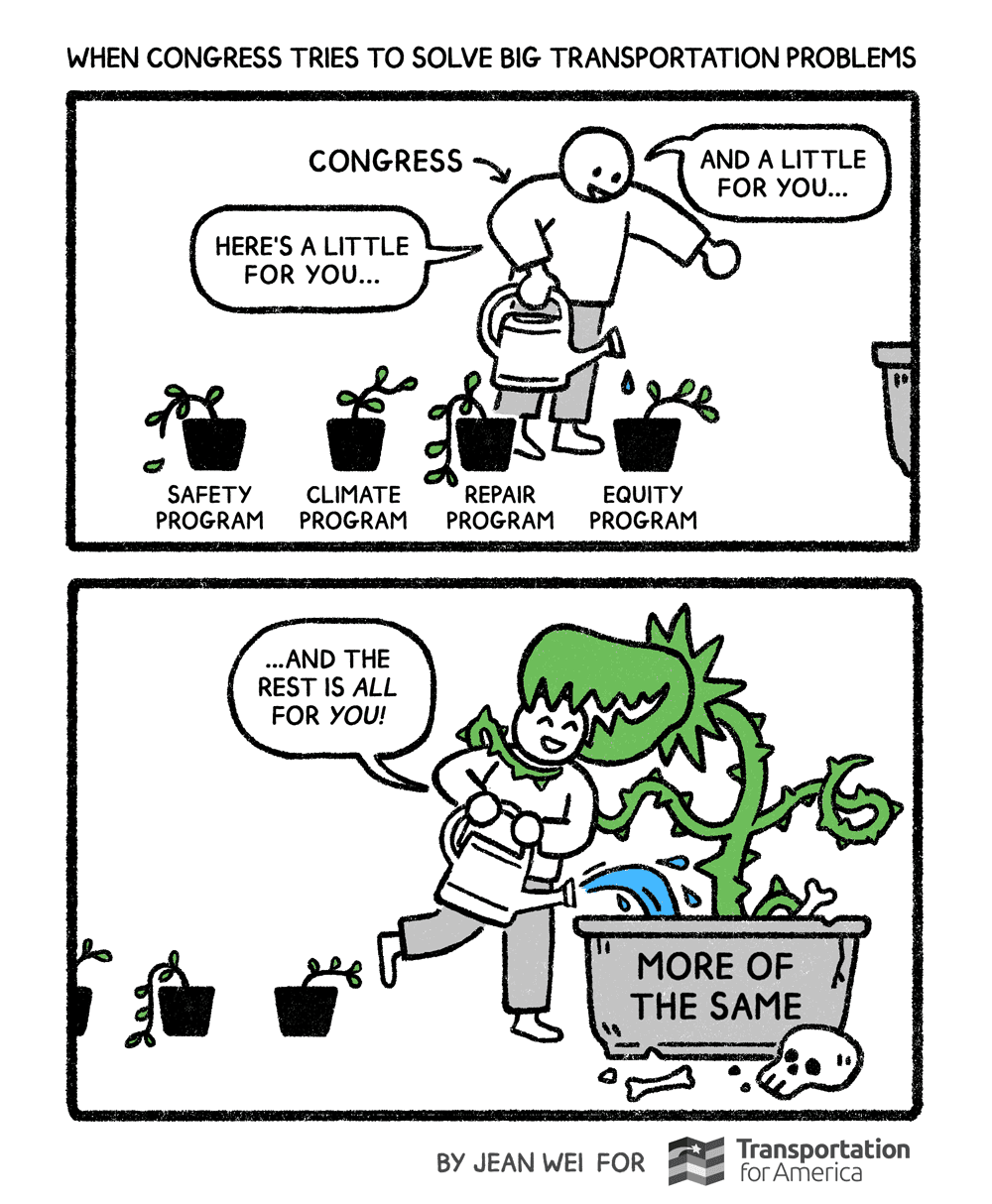
The widely accepted approach to addressing the destructive flaws in our transportation system has been the same for years now: make small, additive reforms, while failing to change the underlying program, standards, or practices. On the project level, this is akin to adding a bike lane and sidewalk along a dangerous road that is never changed.
On the program level, it’s done by routinely creating small new programs to improve problems that are being actively reinforced by the billions contained in the conventional federal transportation program.

A Patchwork Solution Won't Cut It
A System in Need of a Reboot
While the federal government has direct control over only a small amount of discretionary funding, they do control roadway design standards, models and tools, and performance targets that states rely on every single day.
States, which control the lion’s share of all transportation dollars, have immense flexibility to try something new that might get better results. The question now is whether elected leaders at the state and federal level will settle for more of the same or demand that USDOT and state DOTs reorient the transportation program to provide all people access to jobs and services no matter their location, financial means, or physical ability.
If our elected, appointed, and civil transportation decision-makers fail to understand how current USDOT guidance and state DOT actions are still actively harming low-income people, people of color, older people, and people with disabilities, they cannot begin to truly rectify these injustices. (As spelled out in Part II)
Their intent to do things differently or better than their publicly racist forebears in the 1950s and 1960s is irrelevant when many of those previous practices are still deeply embedded in the transportation policies and standards of today. Today’s leaders must understand how the past is still shaping current practices. They must reevaluate how their decisions are made and who their decisions serve.
Congress and the federal government are right in part: it is time to fix the harms of our transportation system, but creating tiny new programs will fail to address the damage.
We need a new approach.




Livable places. Healthy people. Shared prosperity.


© 2026 Smart Growth America. All rights reserved
Site By3Lane Marketing
