





What is rural? Defining rural typologies
There is no one all-encompassing definition of rural. The U.S. government has at least 15 different official definitions of the word rural, including 11 at the Agriculture Department alone. The diverse history, cultures, and needs of people that make up rural communities vary from place to place—rural areas are different from suburban and urban areas and different from other rural areas. Understanding these differences is essential to support evidence-based decision-making at the local, state, and federal levels.
Among the most misunderstood rural areas are rural Tribal and Native American communities
A careful understanding of the appropriate definition of a “rural” area, helps bring rural Native America into focus. A majority of Native people live in rural and small-town areas; the Housing Assistance Council (HAC) provided an analysis of race and ethnicity in America in a 2012 report and found that 54% of the nation’s American Indian and Alaska Native (AIAN) population resides in rural or small-town areas. While this report includes Tribal and Native American communities as one of the typologies in the next section, it recognizes that not all Native American communities are rural, and not all rural typologies describe places where Native Americans exist.
Rural community typologies
SGA’s work in numerous communities across the country over the past couple of decades has positioned us to identify seven general typologies of rural communities. These typologies are a way to identify and describe similarities and differences across diverse rural communities.
It is important to note that these typologies are not mutually exclusive as rural communities may and often do exhibit characteristics of more than one typology. Additionally, some rural areas do not fit within these typologies (in particular, those rural areas that are most spread out and least densely populated); however, these typologies help categorize the most common rural community characteristics.
Gateway communities
Gateway communities are those adjacent to public lands including but not limited to national parks, state parks, wildlife refuges, forests, and historic sites. These communities rely on visitation as a primary economic driver and provide support to the nation’s public lands and parks.

Resource-dependent communities
Resource-dependent communities are those established around a single natural resource that their economic base relies on or used to rely on. Examples of this typology include agricultural, trade, or mining communities. In some cases, the resource in question is no longer a major economic driver, prompting a need for new economic development strategies.

Retirement, second-home communities
Retirement, second-home communities typically contain a relatively large share of the population that lives there full or part-time but does not work there—for example, because it is their vacation home. In many cases, these communities are those that are set up particularly for serving the needs of older adults.
Traditional main street communities
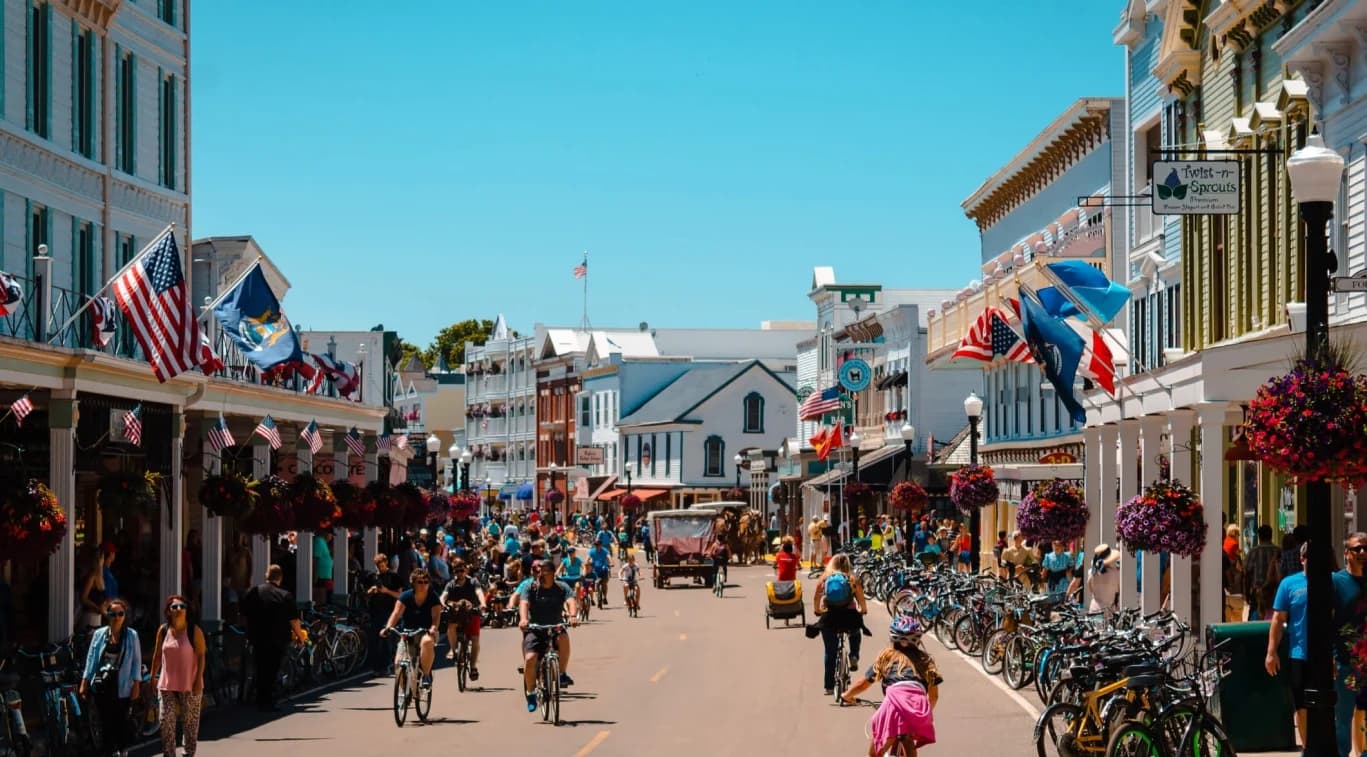
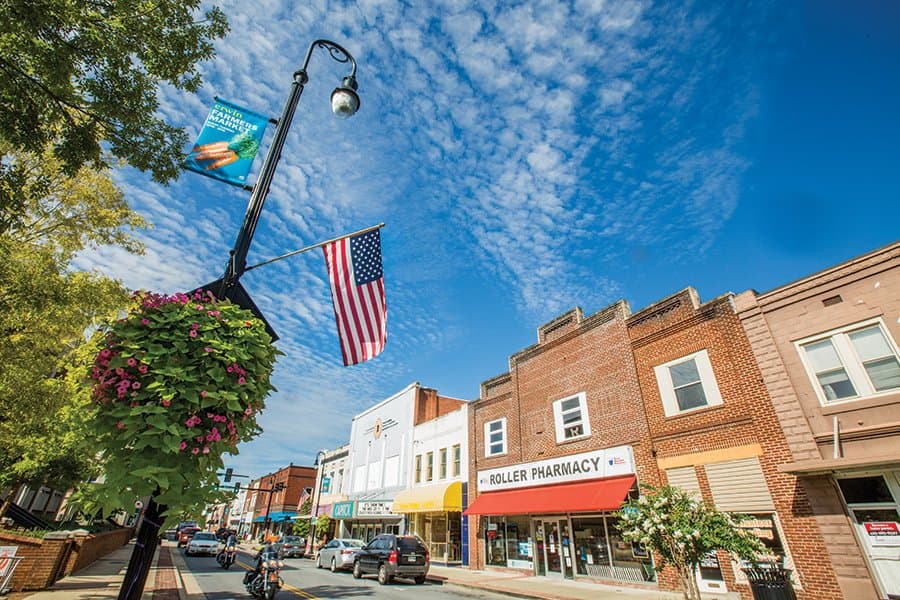
Traditional main street communities have a walkable, centrally located downtown core with a tightly knit urban fabric and a “main street” with buildings that are often small-scale, with narrow frontages and set close to and addressing the street.

College communities
College communities are towns and cities that have a large university-associated population, including students, faculty, and staff. As a result, these communities tend to have major fluctuations in population size coinciding with school breaks.

Edge communities
Edge communities are those that are rural but on the edge of a Metropolitan Statistical Area (MSA). These have concentrations of businesses and shopping just outside or on the “edge” of traditional downtown or MSA areas and business/shopping districts that are not suburban.

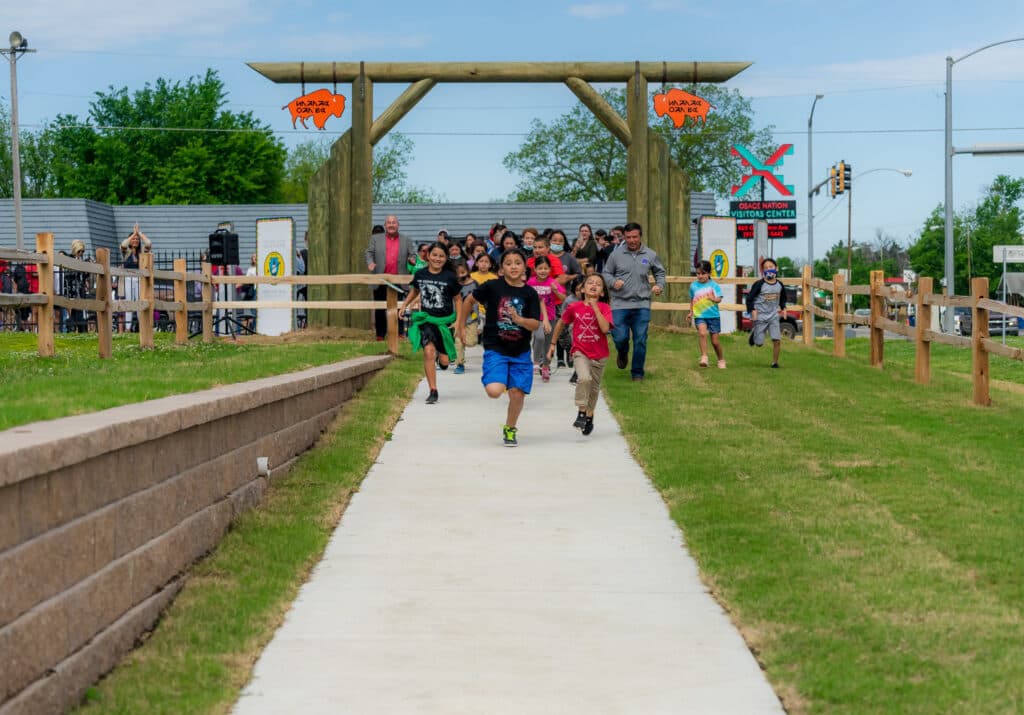
Tribal and Native American communities
Tribal and Native American communities are those that are located on tribal lands with sovereign tribal governments. Tribal communities vary greatly across the country—and not all are rural—but many share some common experiences, such as large expanses of tribal land and seclusion from other population centers, that make it more challenging to access health care and services.
Each of these typologies is unique and requires strategies designed to meet the specific needs and to capitalize on their strengths. Strategies may also depend on whether the community is stable in population, growing, or declining. See our case studies for strategies and real-life examples of their implementation in communities that fit into these various typologies.

Livable places. Healthy people. Shared prosperity.


© 2026 Smart Growth America. All rights reserved
Site By3Lane Marketing
