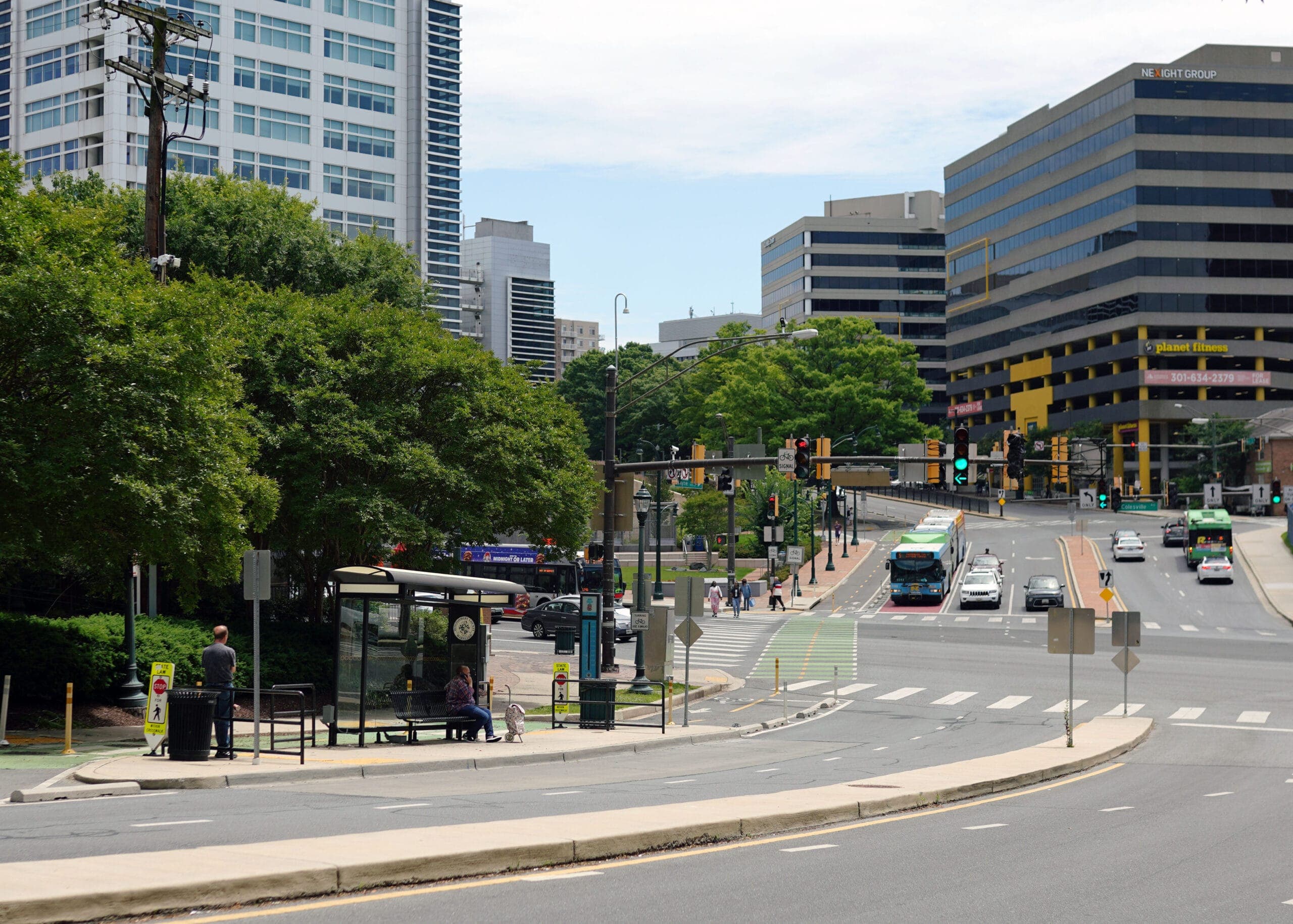
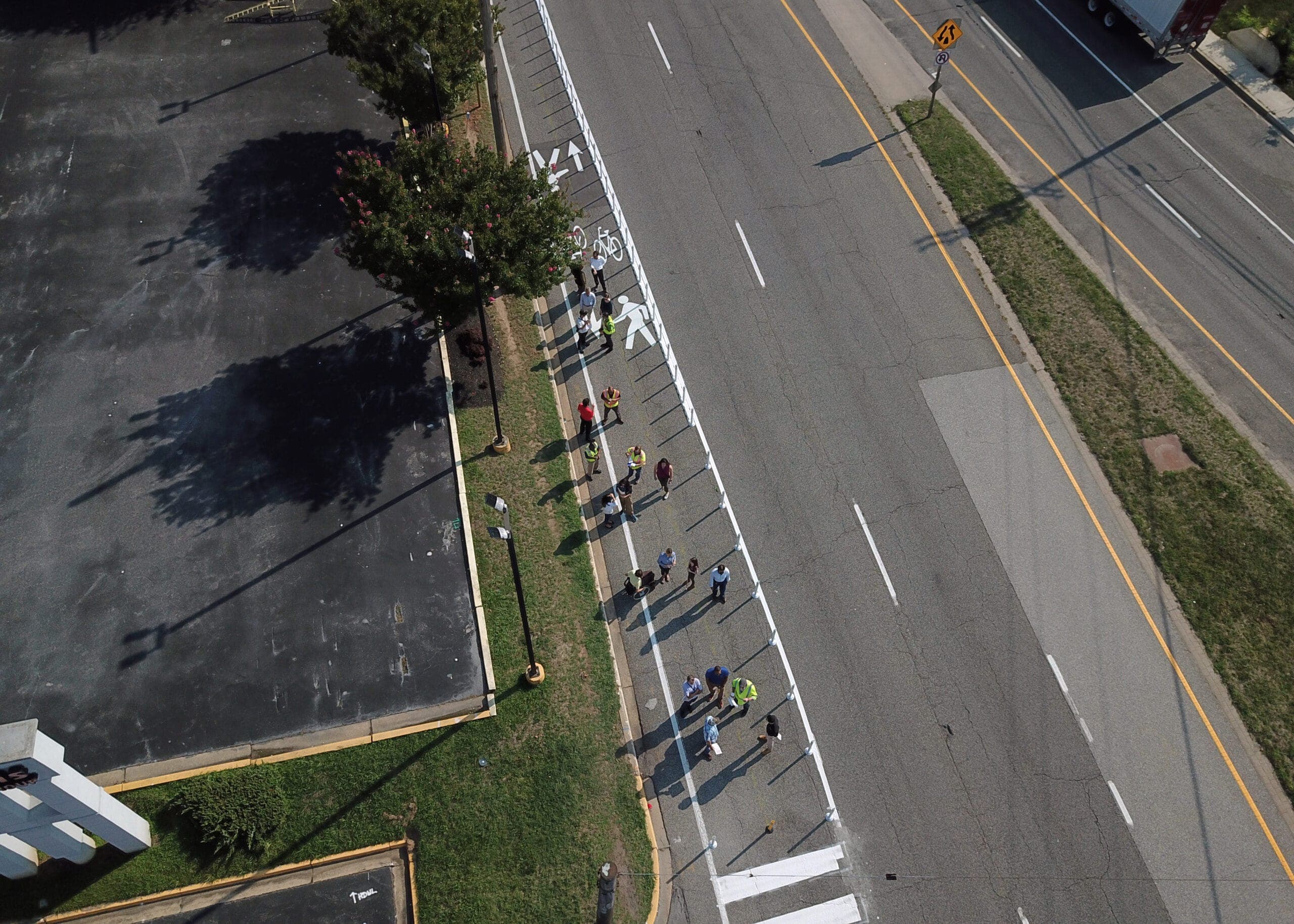
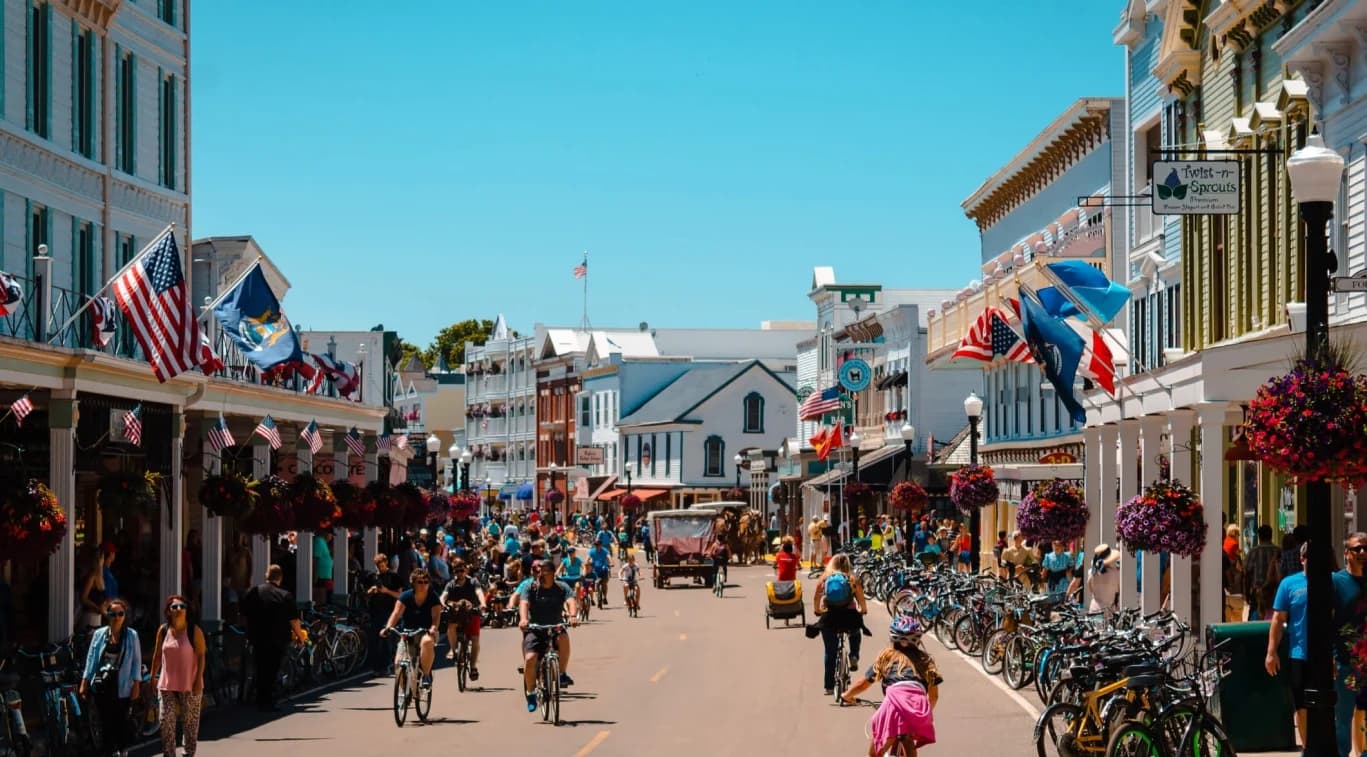
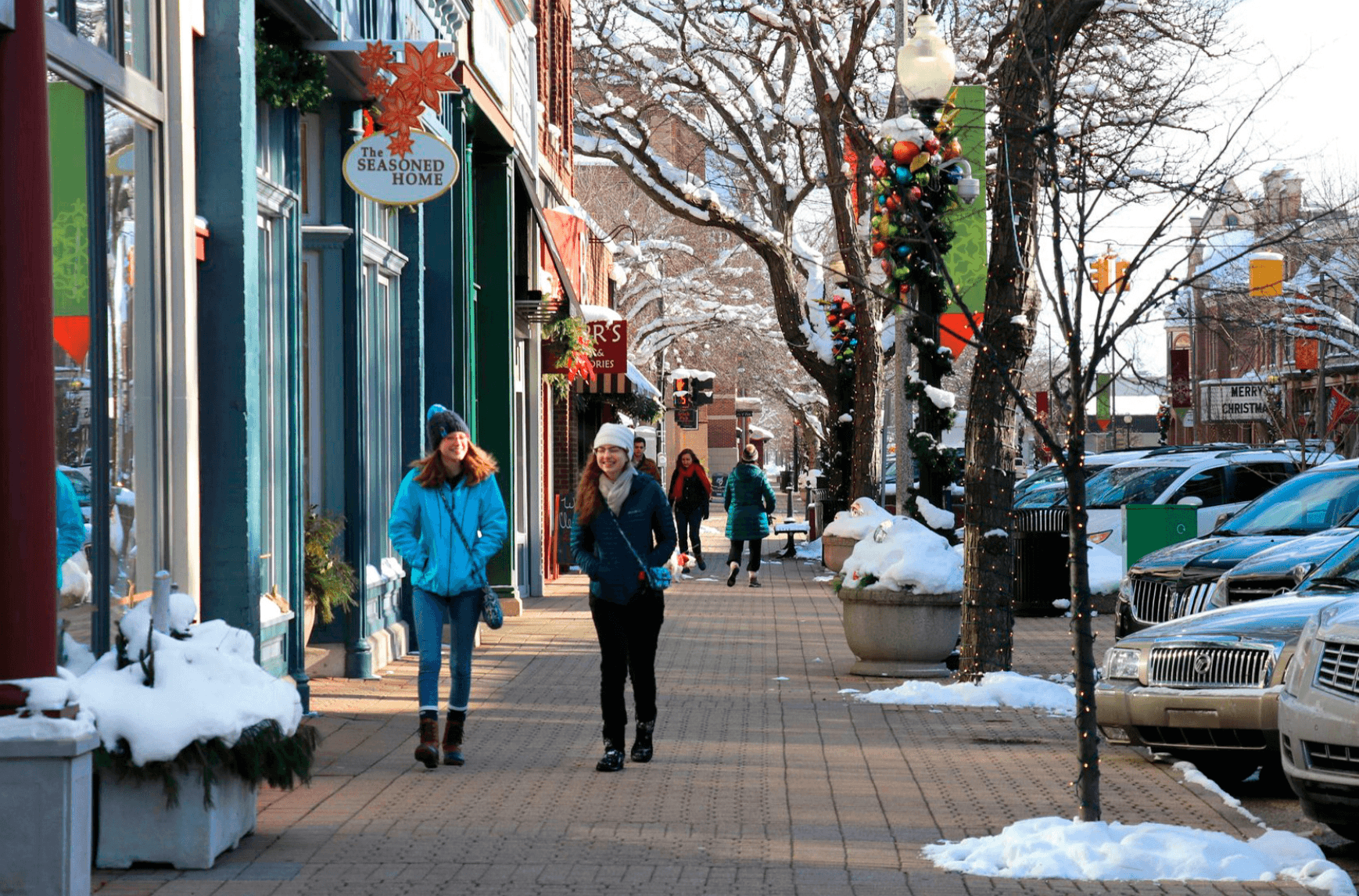
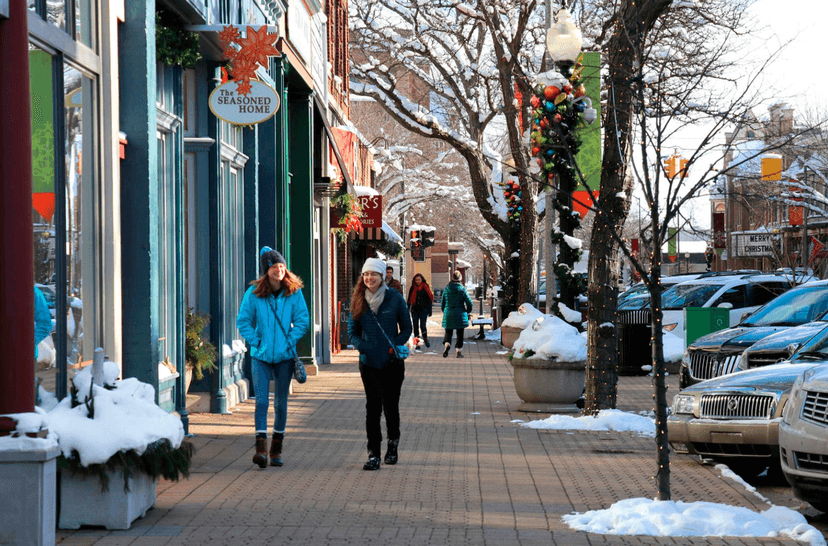
Active travel and smart growth—that is, land-use development practices that create more resource-efficient and livable communities, with more accessible land-use patterns—will look different in different types of rural communities. It can mean putting a new post office near the elementary school, creating more affordable homes near existing job centers, or reinvesting in historic downtowns. Making streets safe for active travel will also look different in different types of rural communities. Many small and rural communities are located on State and county roadways that were built to design standards that favor high-speed motorized traffic, resulting in a system that makes walking and bicycling less safe and uncomfortable. Local communities might be limited in the direct changes they can make to roads controlled by other jurisdictions or find it difficult to collaborate across levels of government to improve conditions in a timely fashion.
An isolated rural road may be a “Complete Street” if it has wide shoulders or a separated shared-use path for walking and biking, while a rural community with denser downtown or residential areas might benefit from features like wide sidewalks, frequent crossings, or bicycle lanes. In this section, we explore strategies that lead to the development of healthier, connected, and safer rural communities.
Healthy, stable communities
For the many rural communities that have experienced a decline, stabilizing or reversing population loss will require many strategies. Such strategies are complex and reviewing what has made other rural communities successful can be used as a basis for consideration:
- Attract higher-paying jobs: Improved economic opportunities can attract new, and keep existing, residents.
- Attract former residents to return: Residents who moved away in the past can often be enticed to return through their attachment to the community.
- Attract retirees: Retired people are not as sensitive to the local job market and can boost the local economy if enticed. Retirees can also build a market to keep local healthcare services.
- Invest in rural broadband internet: High-quality internet provides opportunities for remote work and increased access to critical educational and health services for residents.
- Focus on quality of life: This is an umbrella term for outdoor recreation opportunities, active transportation facilities, and local amenities. Investing in this strategy can improve the competitiveness of the community.
- Develop tourism and tourist-based experiences: Providing reasons for external visitation can bolster the economic viability of local businesses and create jobs funded by visitation.
- Invest in schools and workforce development: Good local schools and other educational opportunities are an investment in young families and keep them in the community.
Policy changes
Policy changes at the local level can guide how and where new development projects occur. Land use, neighborhood and site design, roadway design, and other elements can be guided through local policy. The following subsections provide more specific strategies.