










News
By Beth Osborne, September 3, 2026
While the housing affordability conversation is focused squarely on the need to build more housing, we should also focus on the types of housing people are looking for and the places they want to live. A shortage of one kind of home in one place won’t necessarily be solved by building a different kind of home somewhere else.
We’re short 4.7 million homes, and across the country, housing is increasingly out of reach for too many people. That’s no accident! Our rules, policies, and choices have created today’s housing crisis, making it difficult to build housing, especially in the places where people most want to live.
The need to build more housing is well understood today. Many organizations are engaged in the fight to build more housing, including mine. The press is covering the issue across the country. Several states and Congress have passed legislation to build more housing. But building more housing is only part of the conversation. What is often missing is the need to focus efforts to build more housing on the types of housing needed in the places they are needed most. Making sure that housing is at an attainable price is also essential, especially since efforts to build more housing are usually presented as a solution to the lack of housing affordability. But for the purposes of this article, I’m going to set price aside and focus on type and place.
A home has to meet a lot of different needs. And those needs change for different people at different stages of their lives. Not every kind of home in any one place can meet all of those different needs.
By way of example, when my husband and I started looking for our first home, we knew we wanted something small, in the city, close to the Metro. During that search, people told us we could get a “lot more house” if we looked further from the Metro or outside the city. We knew that. We also knew a bigger house farther out wouldn’t meet our needs. We didn’t need the extra space or the cost and time of maintaining it (I grew up mowing lawns and was not interested in starting that again). And we knew that moving out there would mean buying a car—maybe two—to get us to work, the grocery, restaurants, etc., which would eat up whatever we’d saved by paying less per square foot. I’m not saying that’s a bad choice for everyone. It just wasn’t what we wanted.

The problem we ran into was that a century of zoning rules—pushed by the federal government in the early 20th century to address the concerns of that era—had made it illegal to build the kind of housing we wanted in the places we wanted to live in. That made the type of housing in the places we wanted that housing rare, which made it more expensive.
Flip that around for a second. Imagine telling someone who wants a three-bedroom starter home with a big yard outside the city that we can’t build that because of constraints we faced a hundred years ago, but we’d be happy to build them a one-bedroom condo downtown instead. People would be outraged. That’s exactly what we’ve been doing in reverse: demand for small homes in walkable places has been rising since the 1990s, and it has been illegal for developers to meet it, because of rules written in the 1920s—before the Great Depression.
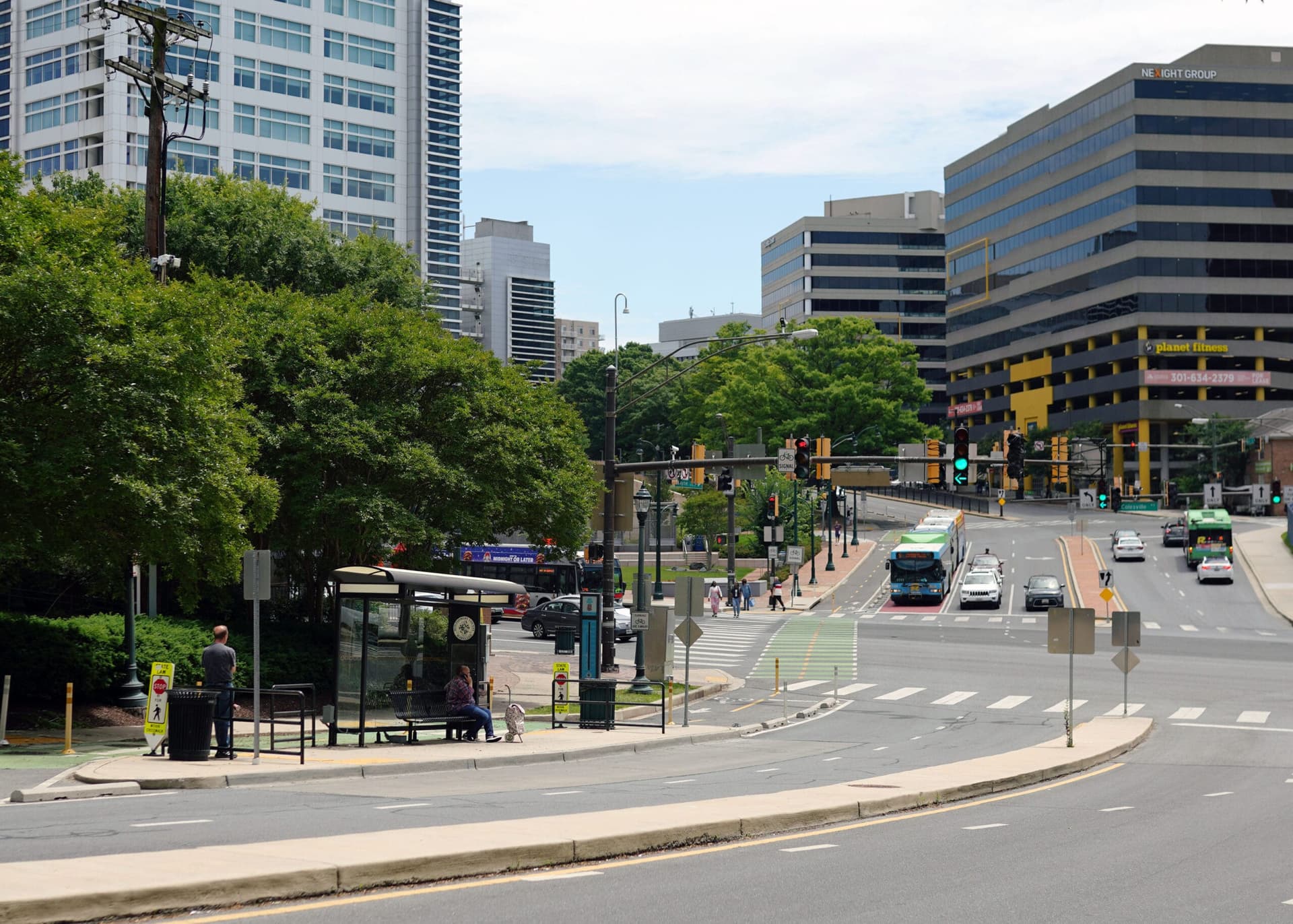
The point is that we don’t just need to build homes, and lots of them. We need to build the types of homes people are looking for, in the places they’re looking for them. Right now we’re good at building larger homes outside the city in places that aren’t walkable, aren’t served by transit, and aren’t near job centers. Want something else? Too bad — the government decided a century ago that you shouldn’t.
In fairness, there is a logic to the “just build more, anywhere” argument. If you build more housing in the second-ring suburbs, someone who would have bought a house in the first-ring suburbs might instead buy one a little further out, freeing up that first-ring house for someone moving out from the city—which in turn frees up space in the city itself. Size can work the same way: someone looking for a four-bedroom buys a five-bedroom house further out because it costs about the same and gets them a little extra room, which frees up a four-bedroom for someone else, and so on down the chain.
That’s the theory, anyway—a long chain of moves, each one opening up a little room for the next. And while that can help increase housing availability, for a housing shortage that functions like an emergency for most people living through it, relying on a slow chain reaction like that is a tepid, half-hearted response. More importantly, it does not even attempt to address market demand for the different kinds of homes people want to live in in well-connected places. That means it’s not going to meet the need on any timeframe that matters, if ever.
Let’s look at this a different way. What if someone proposed bringing down the cost of flying to Los Angeles by adding more buses to Miami? Or fixing the shortage in primary care physicians by adding more specialists? Oh wait, we actually do that last one. So it isn’t only housing.
This connects to something I’ve written about before: you have to build housing in actual, existing neighborhoods to really be a YIMBY. Building more housing can’t just mean building wherever is easiest while leaving the most in-demand neighborhoods largely untouched. Those are the places where prices are highest — and they’re also the places where we’ve made it hardest to meet the demand.
So the next time you hear someone talk about building more housing to bring down costs, ask them: what kind of housing should be built and where? If you get a puzzled look back, it means they don’t understand that people need different kinds of housing and that the shortage might be affecting one type of housing more than another. Nor have they fully absorbed the famous saying that the three most important things in property are location, location, location. Until these things are understood and put at the center of housing policy to fix the housing shortage, we’re unlikely to do much to address the affordability crisis.
Want to hear more from SGA President and CEO Beth Osborne? Follow her on Substack for regular commentary on transportation, housing, smart growth, and the policies shaping our communities.
Related News












Livable places. Healthy people. Shared prosperity.


© 2026 Smart Growth America. All rights reserved
Site By3Lane Marketing
