


News
By Dustin Robertson, Raveena John, October 28, 2026
With midterm elections next week, we’re looking back at successful Complete Streets ballot measures in recent years. These wins show that safer, more accessible streets are a winning issue across the country and offer lessons for candidates and advocates on how to build a successful campaign. Learn more about our Complete Streets work here.
With elections happening across the country next week, we thought it would be a good time to let everyone know that Complete Streets can be a political winner. Political topics and election issues shift over time, but we have seen time and time again that Complete Streets (or its components) can be very successful in local elections. You don’t have to take our word for it, though.
Here are four recent wins by Complete Streets candidates and Complete Streets ballot measures. From these successes, readers should feel inspired to think about how they might be applied in their own communities.
Satya Rhodes-Conway, Mayor of Madison, WI (2023)
First elected in 2019, Mayor Rhodes-Conway ran for reelection in 2023 on a campaign that highlighted the transformation of the city’s transit networks under her leadership, including safe and accessible streets, bus rapid transit, and electric buses.
“ was politically risky,” Rhodes-Conway said in a local news source. “I staked a lot on it. Like I told voters in the last election, I make decisions based on good public policy — not what’s politically expedient.” According to our recent research, Madison is one of the safest cities in the country for pedestrians. Rhodes-Conway was reelected with 55.2 percent of the vote.
Lesson for candidates: Take risks, let results speak for themselves, and celebrate them. Transformative changes are daunting, but stand by strong policy choices so constituents can experience the positive results.
Lesson for advocates: It’s easy to point out what a political leader is doing wrong, but if they do something you like, celebrate it and encourage them to do more!

Choose How You Move referendum in Nashville, TN (2024)
In 2024, Nashville passed a transportation referendum that created $3.1 billion in dedicated funding for transit service, sidewalk projects, street improvements, signal upgrades, and other improvements. With 66 percent of the vote, the strong support for this initiative was a significant reversal from a previously attempted transportation referendum, “Let’s Move Nashville,” which lost by 64 percent in 2018.
This piece from Transportation for America shows the key factors that made Choose How You Move successful, including strong leadership from the mayor and a broad coalition of supportive organizations and community groups. Choose How You Move includes investments in 39 miles of Complete Streets projects, with a focus on the streets most in need of safety improvements.
Lesson for candidates: Think broad and build strong coalitions. One of the reasons the 2018 referendum failed was that there was not enough public engagement, including with Nashville’s Black faith community. It’s important to think of all the stakeholders who could benefit from Complete Streets initiatives, and engage them early and often.
Lesson for advocates: Previous setbacks should not inhibit your efforts. Nashville showed that within just a few years, voters’ minds can change. Learn from previous efforts and keep building!
Carol Myers, District 8 Commissioner in Athens-Clarke County, GA (2024)
Four years after she was first elected District 8 County Commissioner in 2020, Myers ran for reelection on a platform based on her support for Complete Streets. Building on her work co-writing the Athens Complete Streets Ordinance, supporting a residential traffic management program, and advocating for Vision Zero funding, among other actions, her reelection platform included “Walkability! Bike lanes! Better buses! Safer streets!” She won reelection with 72.5 percent of the vote.
Lesson for candidates: Build on your success–Complete Streets can help champions win elections and get reelected.
Lesson for advocates: Support candidates who champion and deliver on Complete Streets. The energy, enthusiasm, and exclamation points in Commissioner Myers’ campaign show how popular these issues likely are within the community.
Denver Deserves Sidewalks in Denver, CO (2022)
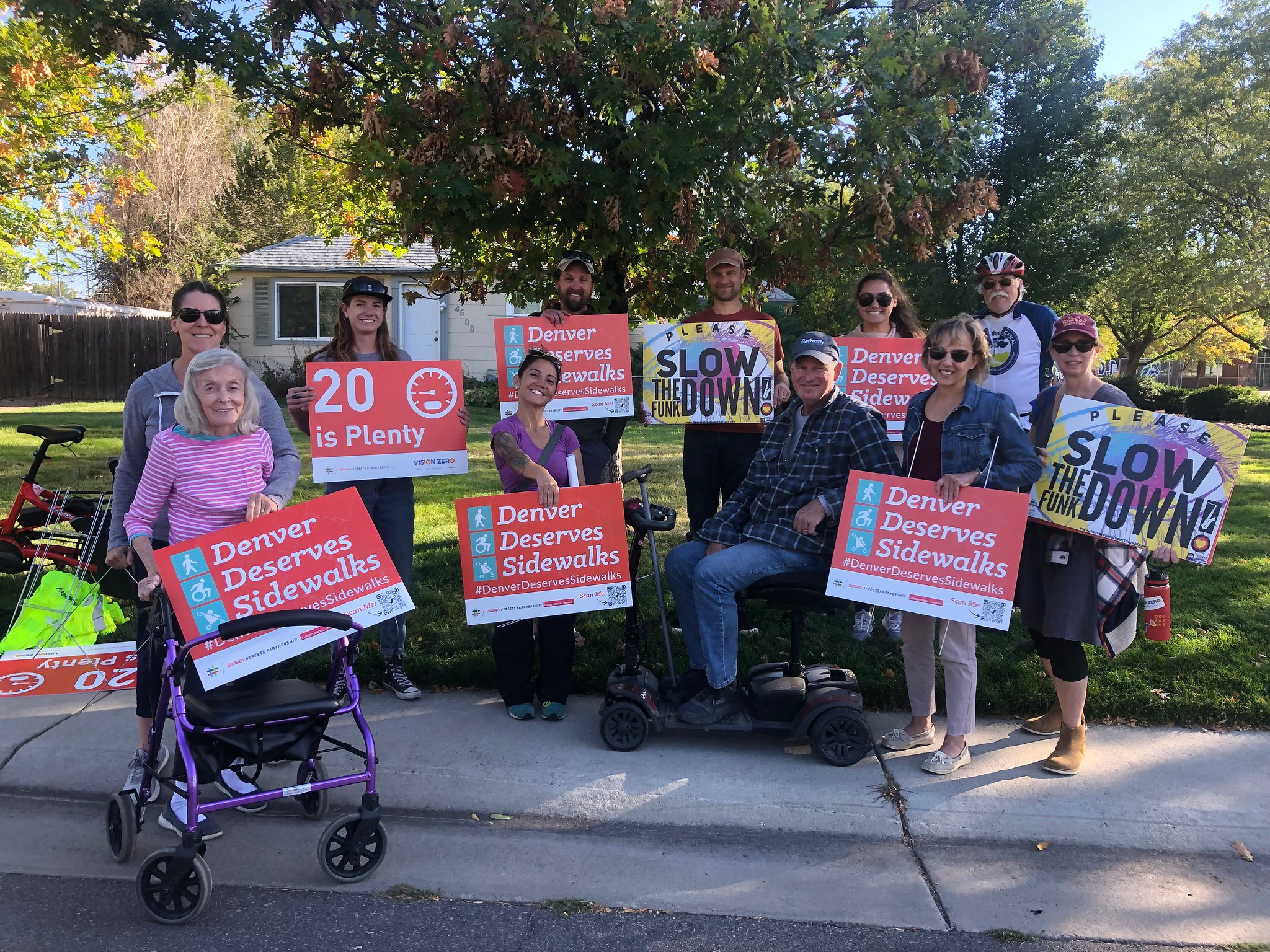
Thanks to strong advocacy by Denver Streets Partnership, the people of Denver said “yes” in 2022 to building a safe and complete sidewalk network. Passing with 56 percent of the vote, Citizen-Initiated Ordinance 307 moved the responsibility and cost of building and maintaining sidewalks from property owners to the city. It also sped up the timeline for sidewalk expansion and ongoing maintenance through a dedicated annual property fee.
But this victory did not happen easily or overnight: Denver Streets Partnership worked for years to improve the city’s sidewalks. After incremental gains from earlier efforts, the organization decided to take the issue directly to voters. They collected 20,000 signatures to get Denver Deserves Sidewalks on the ballot and gathered endorsements from a wide variety of organizations and groups. Now, the city is developing its first Sidewalk Implementation Plan, a roadmap to carrying out these popular, much-needed improvements.
Lesson for candidates: Complete Streets can win elections, even if it will cost voters money. By presenting the numerous benefits of a truly complete and connected sidewalk network, Denver Deserves Sidewalks supporters were able to convince voters to support the ordinance.
Lesson for advocates: Persistence pays off. Denver Deserves Sidewalks was the result of years of advocacy and work by Denver Streets Partnership and other Complete Streets champions. Changing minds of both voters and decisionmakers can take time, but consistent efforts make Complete Streets victories possible.

Across the country, there’s broad consensus and support for Complete Streets because of their role in creating safe, healthy, and prosperous communities. They have proven to be an election winner in red states, blue states, and coast to coast. It’s true that a few vocal opponents (e.g., NIMBYs) can disrupt important projects, but the beauty of democracy is that everyone has a voice, and safer, more walkable communities are something that most people agree on.
SGA intern Jim Lam contributed valuable research for this piece.
Related News


Livable places. Healthy people. Shared prosperity.


© 2026 Smart Growth America. All rights reserved
Site By3Lane Marketing
