






News
By Heidi Simon, February 13, 2026
High-quality transit is essential to making Complete Streets work, expanding access, and giving people real options beyond driving. Building the communities we want will require decisive leadership and sustained investment in transit, safer streets, and transportation choices that connect people to everyday destinations.
The type of communities we want to immerse ourselves in do not happen by accident. A connected sidewalk network requires dedicated funding. Housing near schools, jobs, and other key destinations is likely the result of updating a zoning code. Activating spaces for people to come together to create memories may mean relaxing some permitting restrictions. A state-of-the-art transit system will require the same overhaul of how we fund, plan for, and regulate it. Without this commitment to transit, the communities we want to live in and those the National Complete Streets Coalition works so hard to create will never be fully realized.
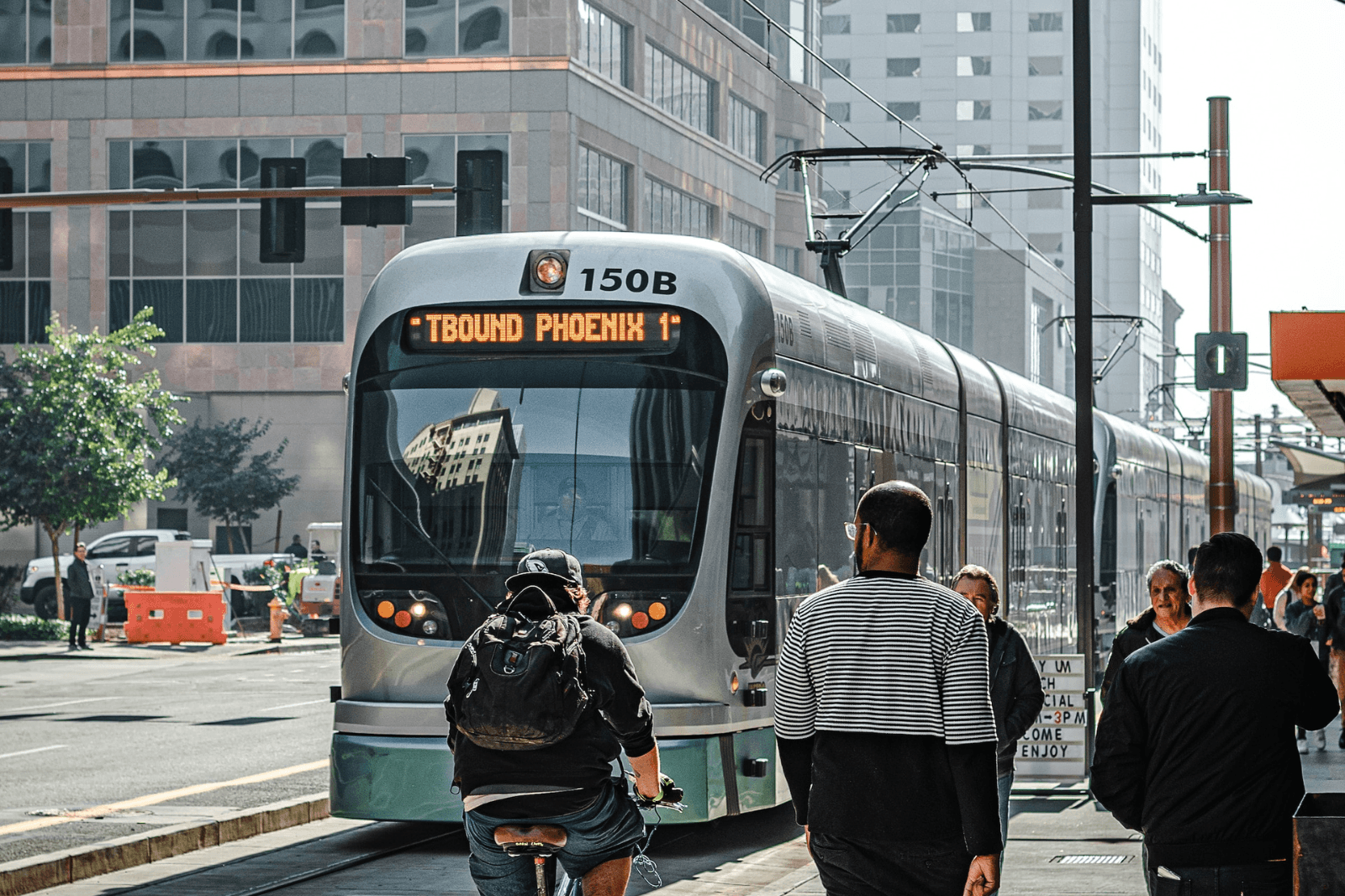
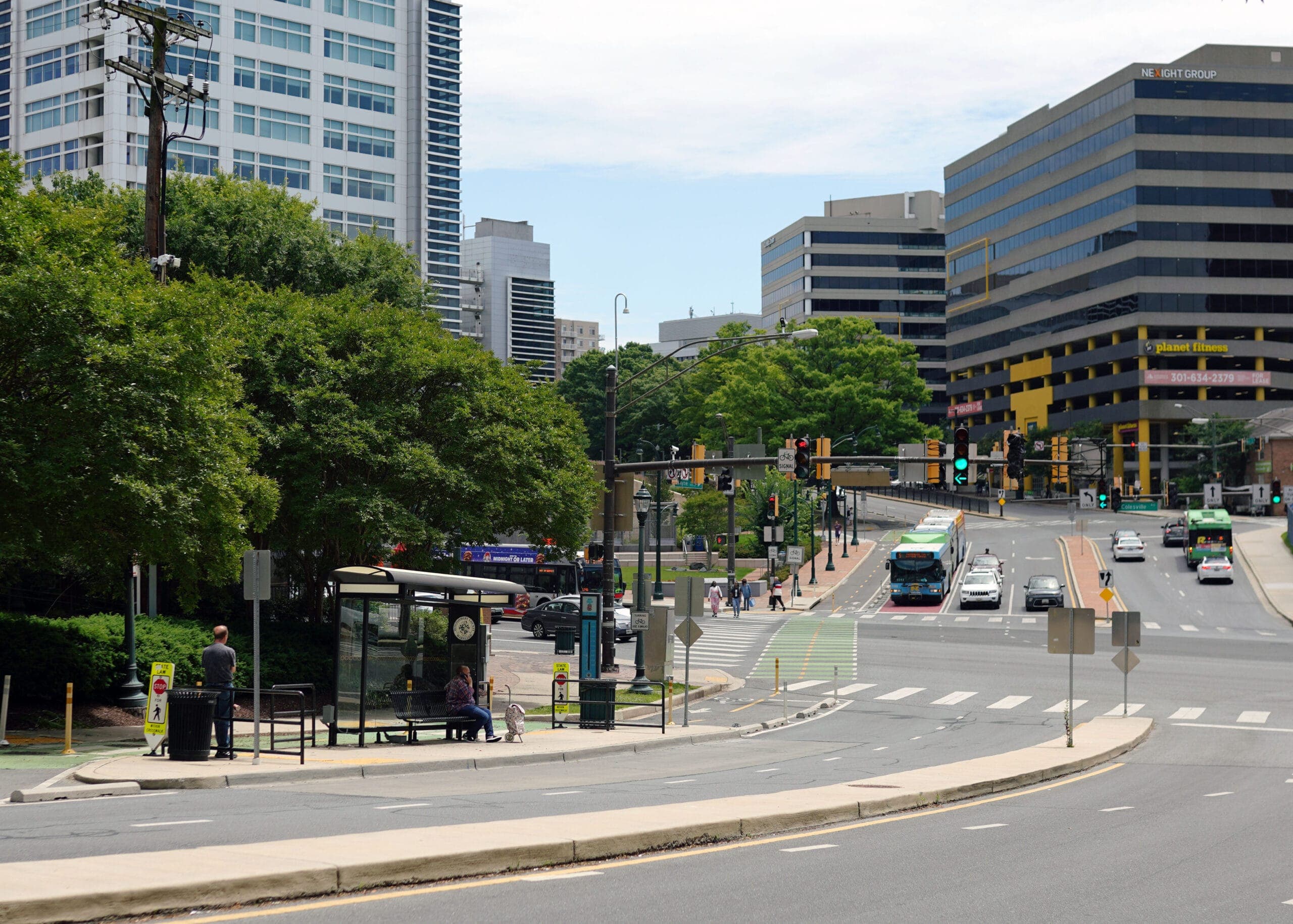
Transit is a key part of a successful Complete Streets strategy in communities of all sizes. It can increase the distance someone is able to travel without a vehicle, turning a too-long walk or bike ride into a manageable trip. It can also provide a non-driving option for those who are unable to drive or choose not to. One of the most common concerns we hear about implementing Complete Streets is “but the traffic!” Despite the fact that research regularly shows that adding elements such as bike lanes or dedicated pedestrian crossings does not significantly increase travel time, change is hard. But regular and reliable transit can provide alternatives to driving, reducing the number of vehicles on roads and creating opportunities to reprioritize public space for people. Whether it’s a fully fledged bus network in a major city or consistent on-demand transit in a small town, transit should be integrated into any implementation of Complete Streets.
A new report from Transportation for America, World-Class American Transit, explores just what would be needed to make this kind of transit a reality. In the report overview, T4America describes the “moonshot” needed to achieve a comparable level of transit service in the United States to what’s already enjoyed in so many global cities. While the price tag is hefty ($4.6 trillion across all levels of government over a twenty-year timeline), the report clearly demonstrates that this is an investment in the future of our country and how we achieve our vision for a new chapter in transportation. It’s also an investment in Complete Streets, allowing places to reinvest and reprioritize funds that might otherwise have been devoted to highways. This report challenges the status quo, as the National Complete Streets Coalition regularly does through its own programming, research, and advocacy.
Safe, healthy, and active places do not happen without dedicated investment and commitment to a vision. In the same way that communities need to continuously commit and recommit to Complete Streets through revised policies, improved project prioritization, and stronger accountability measures, communities across the country need to take this moment to think about how they might recommit to transit. We need the federal government, alongside local and state-level transportation leaders, to make the serious investment called for in the new World-Class American Transit report to help us achieve the Complete Streets vision.
World-Class American Transit
Transportation for America's new report, World-Class American Transit, details the level of investment needed to create world-class transit service in each of the 452 U.S. urbanized areas with populations over 50,000. These communities are home to more than 230 million people, representing nearly 65 percent of the U.S. population. Read the report
Related News



Livable places. Healthy people. Shared prosperity.


© 2026 Smart Growth America. All rights reserved
Site By3Lane Marketing
