









News
By Dustin Robertson, April 2, 2026
They say that “What gets measured, gets managed.” How about something that gets mis-measured, then shared out in a misleading press release 16 months after the counting is done…? That’s what happened with the 2024 Fatality Analysis Reporting System (FARS) data released yesterday by the National Highway Traffic Safety Administration (NHTSA). The 2024 data was overshadowed in a press release with a bold headline claiming “Record-Low Traffic Deaths & Fatality Rates in 2025.” In reality, that claim is only true if you use a dubious metric and look sideways with one eye closed.
To be clear, only the 2024 data is finalized. The 2025 data is an estimate. Although we are glad to see data being released, we are disappointed to note that there remains a huge delay (about 16 months since the end of the year). There has always been a delay, but it used to be less than a year. In a world of increasingly sophisticated data collection and analysis, one would expect the gap to shrink, not grow.
Let’s talk about the data (spoiler alert: the news isn’t as great as the headline suggests)
First and foremost, the number of people dying on America’s roadways is still at historic highs, not lows. It is true that there is a small dip in the number of people killed from 2023 to 2024. If you only looked at these two years (the data release for overall deaths only includes two years), it might look like things are improving. And we are glad to see progress, but this is no time for a victory lap.
If we look at data from the last ten years (from the NHTSA website), the actual story is less uplifting. Rather than hitting record lows, fatalities are actually back to the approximate 2019-2020 levels and far above 2014. There was a spike in road deaths during the COVID-19 pandemic, and we may be coming down from that, but the numbers (representing people's lives) are still unacceptable.
| Year | 2024 | 2023 | 2022 | 2021 | 2020 | 2019 | 2018 | 2017 | 2016 | 2015 | 2014 |
|---|---|---|---|---|---|---|---|---|---|---|---|
| Total Occupants and Nonoccupants Killed in Traffic Crashes | 39,254 | 40,901 | 42,721 | 43,230 | 39,007 | 36,355 | 36,835 | 37,473 | 37,806 | 35,484 | 32,744 |
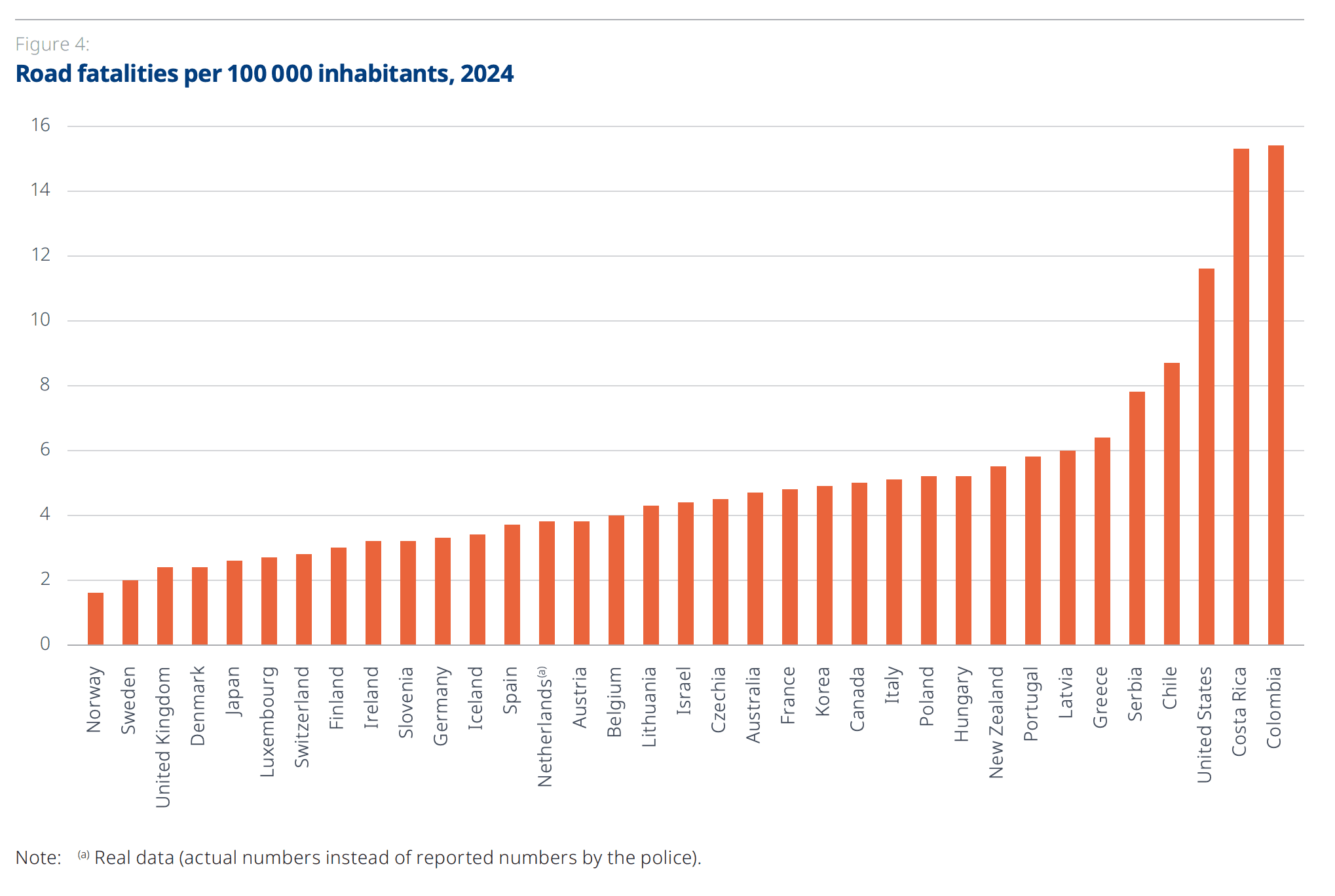
Even with this latest decrease, the number of fatalities and rate per 100,000 people is still way above any country that we would consider a peer. We don’t have to live like this, people!
Finally, the research note released by NHTSA indicates that they use Vehicle Miles Traveled (VMT) to calculate fatality rates, which is inappropriate and misleading. David Zipper has brilliantly pointed out the faults in this ludicrous metric (which he likens to “...trying to reduce the number of cancer deaths per cigarette smoked). We haven’t crunched the numbers to fact check yet, but it’s likely that much of the “decrease” that the press release brags about for 2025 data is actually due to an increase of miles being driven rather than lives being saved. Progress?
Other ridiculous points from the press release

To explain the supposed improvements in road safety, the press release points to crackdowns on “unqualified truckers” and “making newer and safer cars more affordable for American families.”
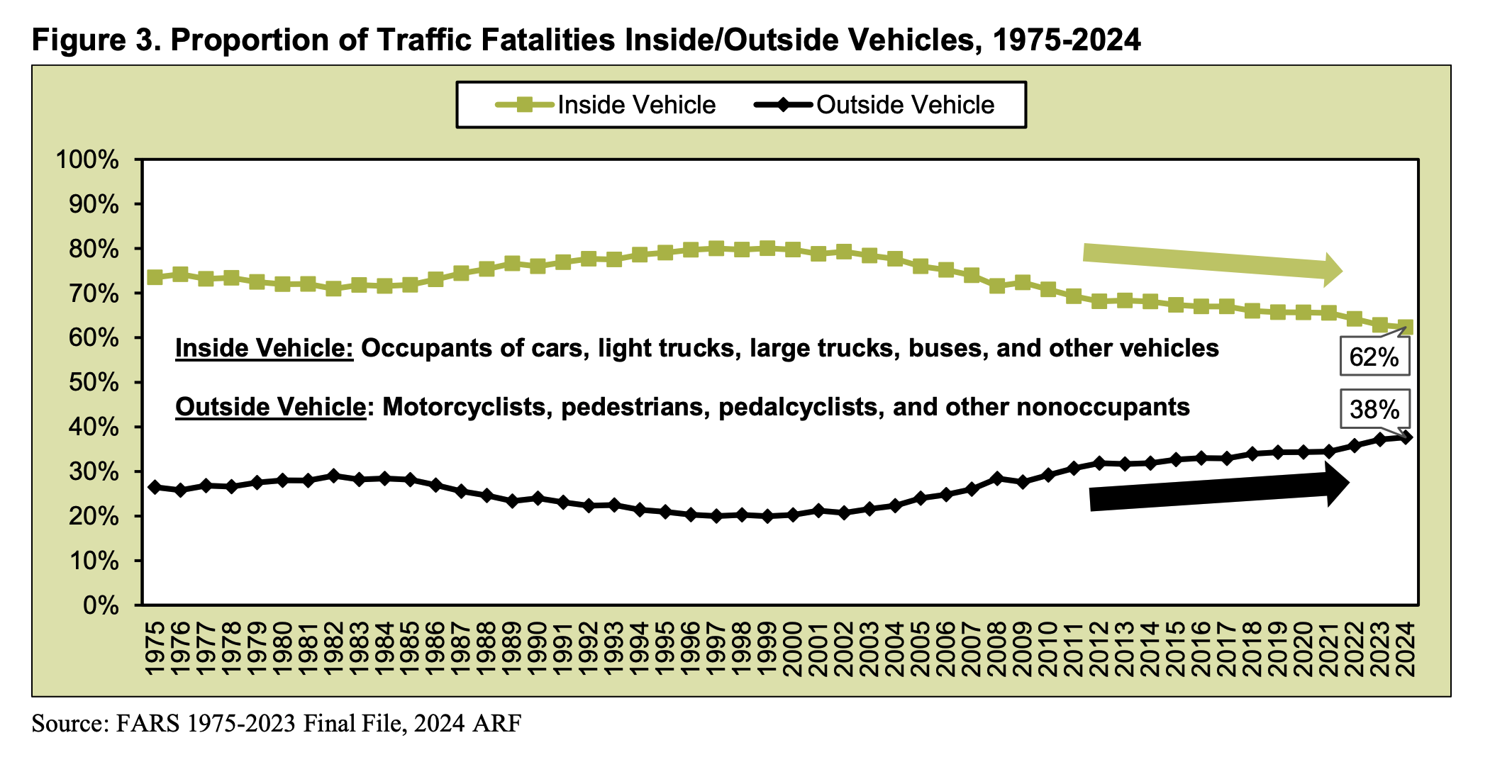
Safer—for whom? The NHTSA press release doesn’t even mention people walking, biking, or rolling. At SGA, we constantly point out that America’s streets are Dangerous by Design, especially for people outside of cars. There are multiple reasons for this. For example, as you may have heard (or seen and felt), American vehicles are getting bigger and bigger.
More affordable—Is that true? Looking at the latest numbers from Kelly Blue Book, they still look pretty high to me. And even if the purchase price is slightly lower, what about other costs (like the currently skyrocketing gas prices)?
And truckers?—I’m skeptical that efforts on large trucks (responsible for about 14% of overall deaths) made much of a difference, but I guess we will find out a year from now when last year's data gets released (confusing, I know).
What happens now?
Here at Smart Growth America, we will be digging into the data to really understand the trends and patterns. Our analysis and key findings will be released later this year in our Dangerous by Design report.
The federal government knows the solutions to making roads safer. Unfortunately, the current administration seems more interested in undermining safety efforts. NHTSA and the federal government should take safety seriously. Focus on doing things that make people safe, not score political points with divisive actions like removing a popular bike lane on the National Mall that has reduced fatal crashes.
Everyone else—keep pressure up. Pay attention to these numbers: even if there’s a dip, they are still far higher than any of our peer countries. We don’t have to live like this!
Related News









Livable places. Healthy people. Shared prosperity.


© 2026 Smart Growth America. All rights reserved
Site By3Lane Marketing
