







News
By Eileen Pomeroy, October 12, 2026
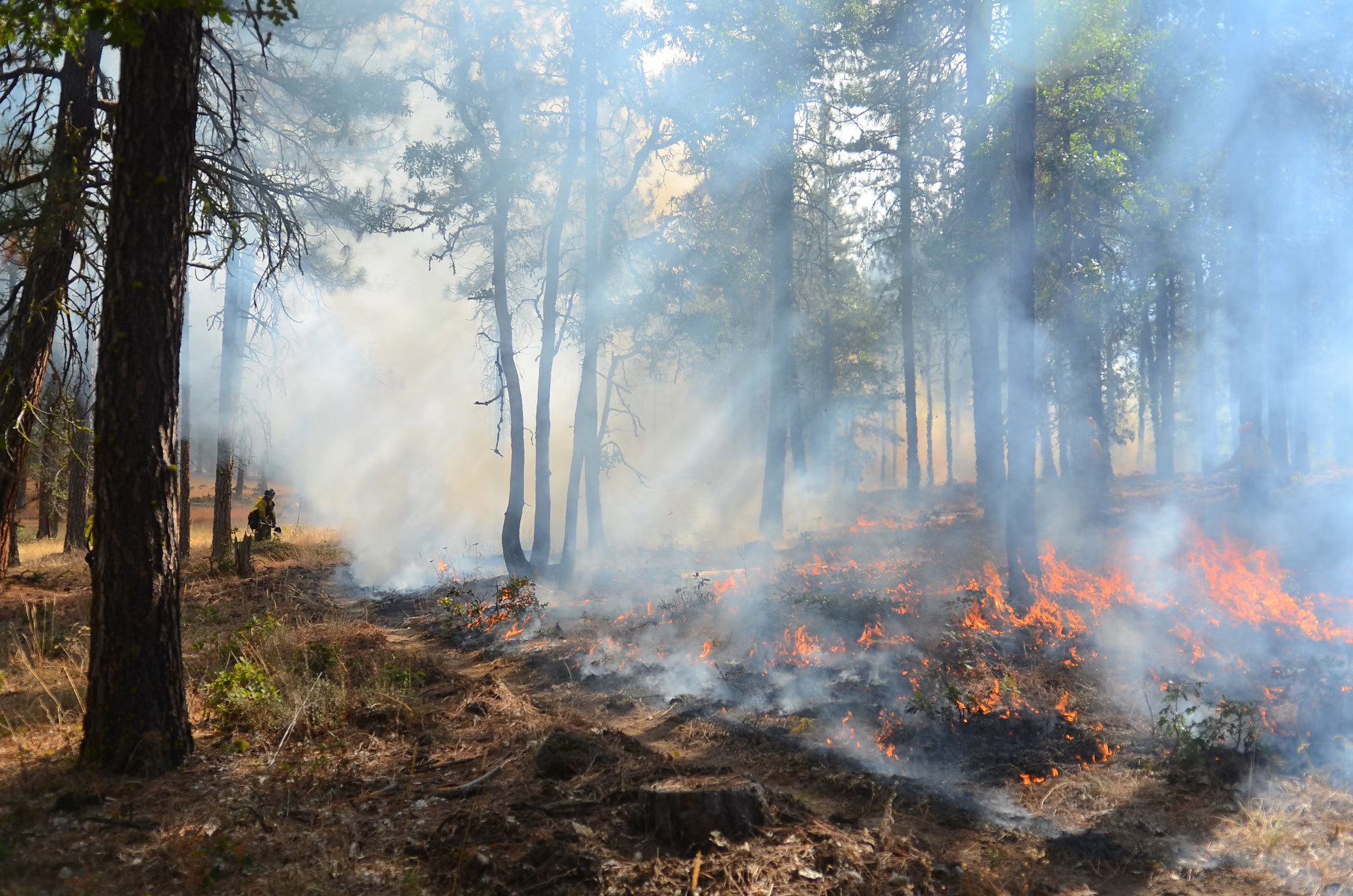
Another devastating wildfire season underscores the connection between where we choose to build housing and exposure to climate-induced natural disasters. Outdated, restrictive zoning still drives developers to build housing on cheaper land at the edges of existing communities, including areas increasingly vulnerable to wildfires. Smart Growth America (SGA) has consistently called out the costs of sprawl, including increased exposure to more frequent and intense natural disasters. But examples of zoning changes to protect people from climate-induced disasters already exist and can guide urgently needed action.
In July, another round of wildfires across the Western U.S. brought the recurring threat back into the international spotlight. Coverage focused on suburban communities in the Pacific Northwest as fires burned more than 10,000 acres and caused nearly 70,000 residents to evacuate in Spokane, Washington. Drone footage showed entire neighborhoods reduced to rubble.
As climate change brings hotter, drier conditions, what were once occasional seasonal risks have become recurring threats. With that, there’s been more recognition that sprawling development, especially in the Wildland Urban Interface (WUI), puts people and homes in harm’s way. Devastated neighborhoods like Indian Trail are often in the WUI, where homes meet forests, grasses, and other wildfire fuel, but fires like those in Spokane have come even closer to downtown areas.
But continued development into fire zones and floodplains isn’t specific to Spokane and isn’t set to slow down any time soon. Nearly a third of housing nationwide is in the WUI, where homes can face greater fire risk—and supply shortages driving the housing affordability crisis are putting more pressure on development in high-demand suburbs. In the Pacific Northwest, the number of residents living in hazardous areas rose by 8 percent since 2018 alone.
With the urgency to address the housing shortage, it’s more important than ever to build housing in secure places rather than in hazardous areas like the WUI. Selecting relatively safe locations far from climate hazards is a key part of building the right type of housing, at the right prices, and in the right places—and zoning is a tool that can direct housing supply to these preferred locations.
Natural disasters make sprawl even more expensive
Communities are already scrambling to expand housing supply to meet the current affordability crisis, especially in high-demand areas like Washington, where prices have risen faster than any other state over the past decade. As policymakers at every level look for solutions to the crisis, the debate over whether zoning should enable low-density, spread-out development or more dense, mixed-use development has returned.
The costs of sprawl are well-documented. For individuals, sprawling development is linked to higher living costs, poorer health outcomes, worse economic mobility, and more fatal car crashes. The costs for communities are also substantial. Findings from our Building Better Budgets report were reinforced in recent research from Pew; which shows that homes built near jobs, transit, and services require about $21,000 less per home in upfront infrastructure; cut costs of maintaining infrastructure in half; and generate 13 percent more in property tax revenue per acre than homes built at the edge of town.
The U.S. now spends between an estimated $87 billion and $424 billion on wildfires every year. At the federal level, the Federal Emergency Management Agency’s (FEMA) historic role in funding post-disaster recovery is unsustainable amid escalating extreme weather events and ongoing cuts to the agency’s resources. And last month, a letter from a small group of senators raised concerns about resources and preparedness in the U.S. Forest Service and the newly created U.S. Wildland Fire Service.
Along with skyrocketing costs that increasingly fall on cash-strapped state and local governments, wildfires are pricing out locals and longtime residents across the country. Displaced residents who don’t return home are those who can’t afford rebuilding costs—and are often from already disadvantaged communities. Although the 2023 wildfires in Lahaina, Hawaii, drew attention to “climate gentrification,” the 2.5 million people displaced that year included many residents from Arkansas, Louisiana, and Florida. In the next three decades, an estimated 55 million Americans will voluntarily relocate to places less vulnerable to climate risks.
Zoning to prevent flooding, but not wildfires
We already use land-use regulations to limit development in flood-prone areas. But when it comes to wildfires, similar restrictions remain far less common.
Thousands of communities across the country have adopted changes to restrict development in flood zones, partly thanks to the 1968 National Flood Insurance Program’s Community Rating System. Although the federal government maps areas with high flood risk, these maps have serious shortcomings, resulting in a proliferation of private and nonprofit data companies serving the real estate industry, proactive households, and local governments.
The onus put on states and localities to incorporate wildfire preparedness into their building codes has resulted in a patchwork system with mixed levels of preparedness across the country. Only about 200 communities in 24 states have adopted the model building and zoning code outlined in the International Wildland-Urban Interface Code. Oregon and Washington State are among the few states that have attempted to set their own wildfire hazard maps and building codes, but public backlash forced Oregon to repeal its maps and Washington to suspend its code.
Despite these efforts, hardly any rules exist that focus on stopping people from living or rebuilding in, or even farther into, wildfire territory. Oregon and Washington had already encouraged infill development through their urban growth boundaries, and both states require localities to consider wildfires in comprehensive planning. But none of these policies actually move people away from wildfire exposure. Back at the federal level, previous efforts such as the Biden Administration’s Housing Supply Action Plan missed critical opportunities to incentivize or require localities to reduce or eliminate new development in the WUI.
We previously highlighted examples of local zoning policies that aim to restrict development in the riskiest areas, reward development in safer ones, or regulate design in specific places. Norfolk, Virginia, and Boston, Massachusetts, both took action through a 2016 plan and 2021 zoning overlay district to move development away from places with the highest flood risks. In 2023, Charleston, South Carolina, started offering density and height bonuses to incentivize building in high-ground areas with lower flooding risk. In Washington, D.C., development policy doesn’t restrict or reward where people build, but it requires projects in flood-prone areas to include trees, gardens, and other features that absorb rainwater and can reduce flooding.
To mitigate climate risks, we’ve recommended that officials integrate future risks into hazard mitigation plans and land-use policies, avoid investments that increase vulnerability, develop strategies for assets already in high-risk areas, and implement processes that monitor, measure, and report progress on disaster preparedness and prevention efforts. Rather than the dominant approach of adding safety features to dangerous places, states could also use their power to better support, incentivize, or more precisely require communities to plan for and zone for wildfire exposure. As SGA President and CEO Beth Osborne recently pointed out, planning means little without the zoning codes to back it up.
Planning future development to reduce wildfire risk is possible, even if it isn’t easy. It requires making hard choices about where to limit development, even if people might want to live in those places, and accepting that stronger building codes may increase housing costs. Although they aren’t a panacea, smart growth strategies can help prevent damage and danger as stronger fires reach more developed locations, meaning their risks are no longer limited to the WUI. Less disruptive strategies might be politically easiest right now, but they do less to address the rising risks. Delaying these difficult decisions will only raise the human and financial costs in the years ahead.
Related News








Livable places. Healthy people. Shared prosperity.


© 2026 Smart Growth America. All rights reserved
Site By3Lane Marketing
