







News
By Beth Osborne, August 19, 2026
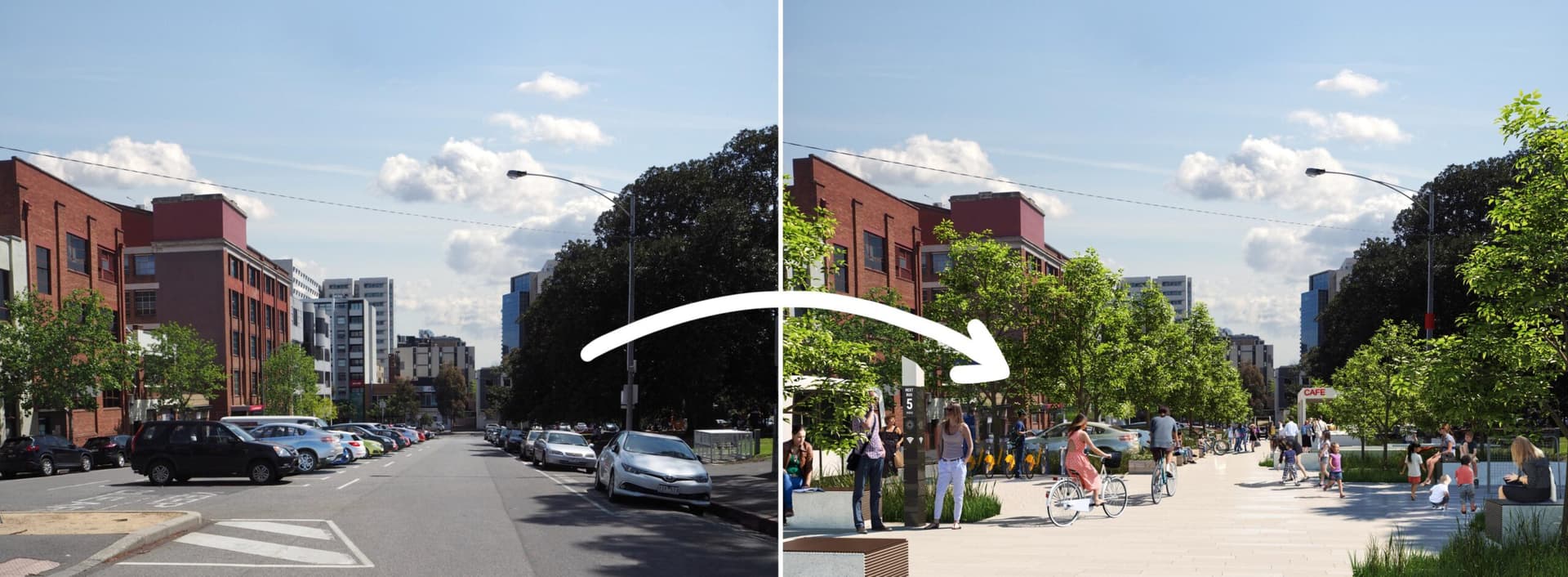
We spend enormous amounts of time and money asking planners to design better communities. But when those grand plans have little bearing on what we actually build, fund, or allow, planning stops being a tool to make places better and starts becoming a distraction while we keep spending money on the same failing strategies.

I work in a field of planners. Planners believe that we need to talk about what a community wants and needs before we start spending money and building things. Planning is meant to manage growth and change, and make sure investments in housing, transportation, economic development, and parks actually reflect a community’s priorities. Done right, planning lets us identify, mitigate, or avoid the negative consequences of decisions before they’re built into concrete. And it lets the community help set that direction in the first place.
That’s powerful. But the way we practice planning in this country undermines the whole premise. It’s disconnected from the investment decisions it’s supposed to guide, and it keeps the people trying to change things at arm’s length from where those decisions actually get made. Worse, it tricks people into investing real time in a process that was never designed to connect priorities to dollars. It’s a distraction, and it breeds mistrust in government.
Take surface transportation. States and regions are required to produce 20-year long-range transportation plans laying out their vision, mobility goals, financial strategy, and multimodal priorities. In theory, this forces regions to justify investments with performance data and public input instead of politics — it’s the main lever advocates have to push agencies toward safety and alternatives to driving.
Read one of these plans, and you’ll find real ambition: safety improvements, coordination with housing and economic development, investment in transit, walking, and biking. Sunshine and rainbows. Then open the document that actually allocates money—the four-year transportation improvement program—and it funds the same things it always has. (There are important exceptions, mostly at the MPO level, but they remain exceptions.)
Zoning and land use follow the same script. Alongside a zoning code, most cities and towns adopt a comprehensive plan — a foundational, 10- to 25-year policy document that covers housing, transportation, economic development, environmental protection, and hazard mitigation. Comprehensive plans, too, are full of good ideas: more housing at more price points, revitalized main streets, walkable town centers, growth steered away from flood zones.
Zoning is supposed to be consistent with the comprehensive plan. In practice, the two rarely resemble each other. The plan calls for apartments, rowhouses, and single-family homes clustered around town centers with groceries, parks, and schools. The zoning code allows single-family homes on large lots, separated from everything else.
If our investment decisions aren’t going to follow our planning, why do we keep doing it? All that creative thinking eats up enormous time from agency staff and the public. It breaks trust when people are asked their opinion on their community’s future and then never see it show up in an actual decision. And it costs money nobody has to waste right now.

I often joke that when groups like mine call for improvements in the transportation program, we’re told to put those priorities into the planning process. I’ve seen people argue for months about how best to do that. But even when we get that change, it doesn’t touch the actual spending decisions, and at some point, we should ask ourselves if that is the point.
Wasting time and money on a process with no teeth is bad. But this is worse: it’s actively damaging to the people who pour themselves into it, pulling them into a long, earnest process while the real decisions get made somewhere else. It’s a misdirection play, and we need to stop falling for it.
Make no mistake. I believe in planning. But I believe in real planning—the kind that actually affects the way the government acts and invests taxpayer money. And that is not what we are doing.
If transportation improvement programs aren’t going to be held to the long-range plans, pick one process and move on. If zoning codes aren’t going to reflect the priorities in the comprehensive plan, skip the comprehensive plan. Then the people trying to change the system could spend their time somewhere it actually counts.
Want to hear more from SGA President and CEO Beth Osborne? Follow her on Substack for regular commentary on transportation, housing, smart growth, and the policies shaping our communities.
Related News








Livable places. Healthy people. Shared prosperity.


© 2026 Smart Growth America. All rights reserved
Site By3Lane Marketing
