




News
By Marian Liou, November 23, 2026
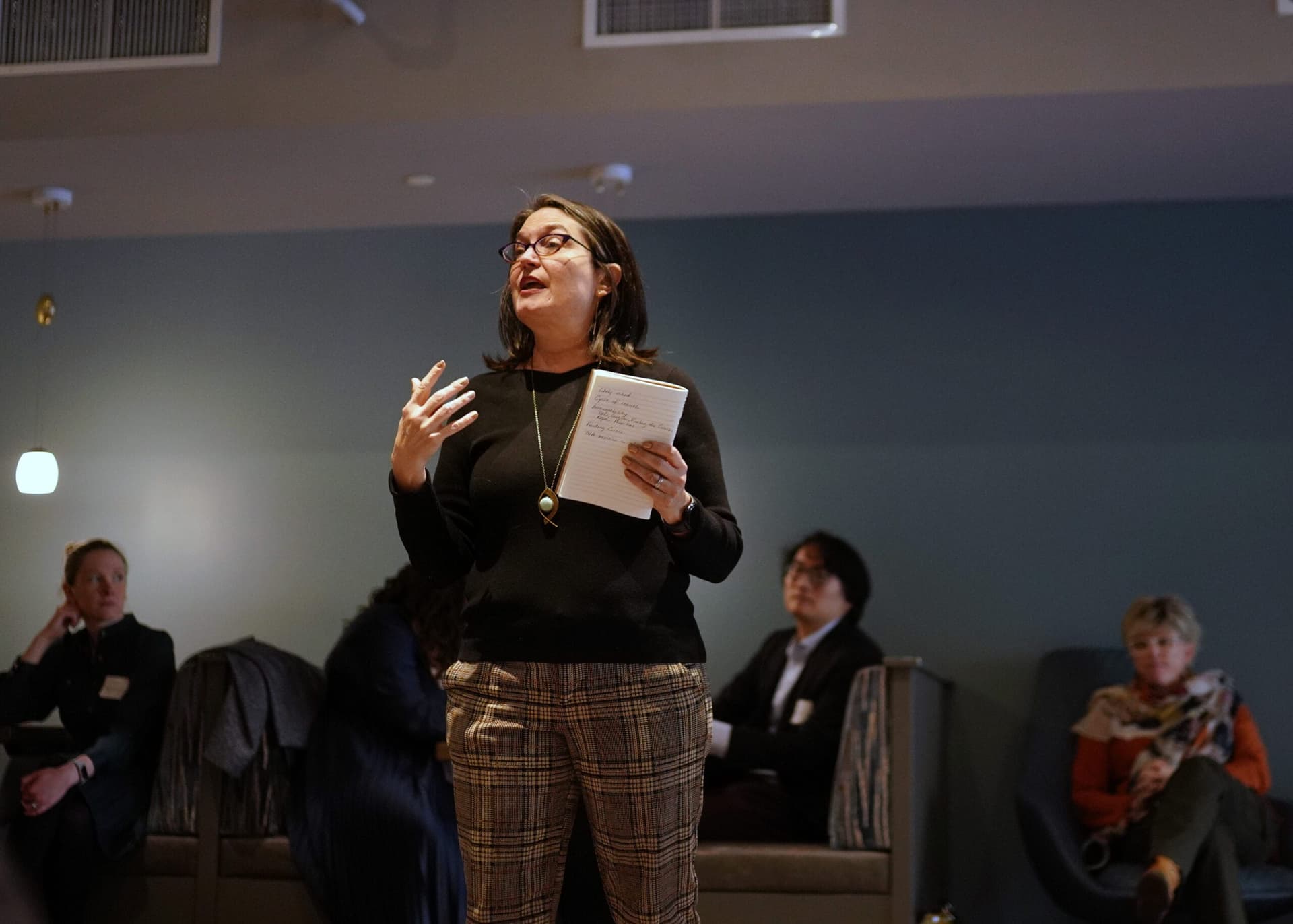
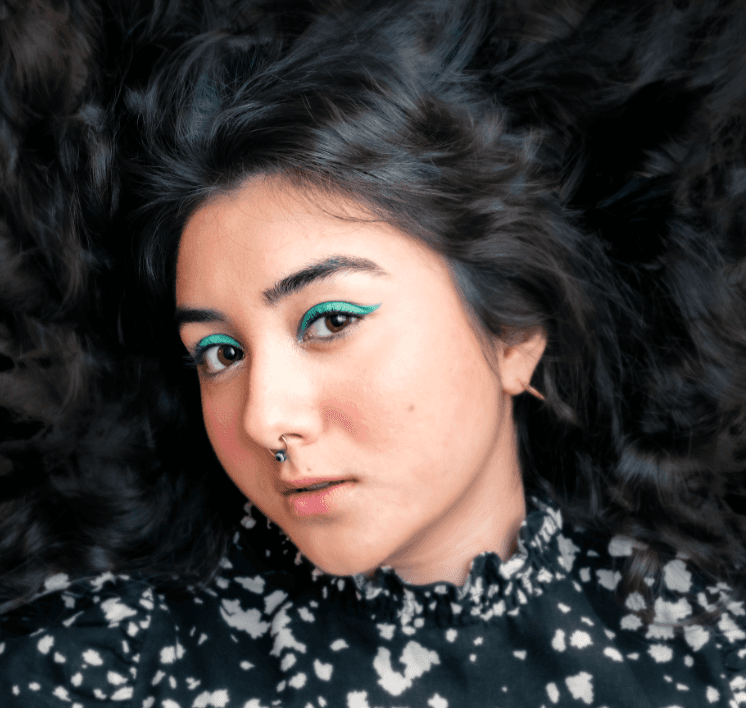
Leili Arai Tavallaei (she/her) is a Persian-Japanese-American visual artist, curator, and cultural organizer based in Dallas, Texas. She is a board member of the Dallas Asian American Art Collective (DAAART) and applied to the fellowship alongside collaborator Christina J. Hahn. Find her at latavallaei.com.
This profile is part of a series featuring the artists and cultural workers in the Outside In Arts and Culture Fellowship, a part of Smart Growth America's Outside In project, which documents the histories and futures of suburban Asian American and Pacific Islander (AAPI) communities across Atlanta, Dallas, and Memphis.

Leili Arai Tavallaei—who is Persian on her father's side, Japanese on her mother's, and Texan by birth—grew up in Spring, a town in North Houston, where no one looked like her or shared her background. For someone who has always felt “in between,” finding community through artistic work as a culture keeper has helped her build a sense of home.
Today, she works as a visual artist whose practice draws on family photographs, spoken memories, and inherited ephemera, and serves as a board member of the Dallas Asian American Art Collective (DAAART). At DAAART, she leads fine arts programming and served as art director for their inaugural Dallas Asian American Film Festival. In both capacities, she rigorously examines memory and place while building cultural infrastructure across North Texas.
The conversation below has been organized and condensed for clarity.
Tell us about your creative practice and how you got to where you are.
My name encapsulates my background and my history. I'm Persian, Japanese, and American, born and raised in Texas. My dad's family immigrated from Iran, and my mom is hafu—of mixed Japanese descent—born in Okinawa. Her grandfather was in the army, so they moved around the U.S. before landing in Utah. Later, my parents moved to Texas, where I was born.
I grew up in North Houston, where there were farms all around me, and I was in a place where no one really looked like me or shared my background. Because I'm a mixed kid, I've had many existential crises related to that, and the way I navigate and understand it has been through my artwork—but also through the community building involved with that work. As someone who has always felt in between places, stepping into the creative community in North Texas immediately felt like home. Some communities are more welcoming than others, and I was very blessed to find the people who wanted to welcome me.
You've talked about not wanting artists to "cannibalize" their culture. What does that mean?
The concept has been with me since college, when one of my professors, Dr. Anila Daulatzai—one of the few professors of color—pulled me aside and cautioned me . She'd seen it happen to so many students who weren't from the dominant culture.
For example, someone might say to them, “This aspect of your culture is so beautiful. Can you show us more of it? Can you embellish it?” To cannibalize your culture is to take the parts of you that you'd want to keep for yourself—the parts that are special, that are sacred, that have difficult conversations behind them—and put them on display for others because that's what's expected of you. You realize all these parts that make up who you are have been put on display and are now separate from you.
So much of what I do is about moving through the world with intention. I'm not saying don't make work about cut fruit or boba—that's still a lived experience, and it's nice that something of our culture is celebrated. But it's also idealized. Let's think a little deeper: What are your ties beyond the thing everyone already knows? The work might still be about your mom showing love through food rather than saying sorry, but now it has a deeper layer, something that speaks more truly to your experience, rather than a veneer of what Asian America is supposed to look like.
How does your creative practice intersect with documentation and community storytelling?
My fine arts practice is rooted in documenting and saving. A lot of first- and second-generation people feel that they’re in an environment where they're left with crumbs and pieces of something . So much of my work looks at family photos and considers how memory has been translated, recontextualized, and passed down—and through each iteration, something changes, whether or not that was intentional.
I used to call myself an archivist, but I've come to think of the difference between archiving and memory keeping. Archiving tries to get to the facts, to the state exactly as something was. Memory keeping is more organic, because it lives in the mind, and the mind is not fixed. Every time we remember something, we create something new from what we once had. So I think of myself not only as a memory keeper and a culture keeper, but also a culture creator, I'm helping define the practices and traditions of the next generation. My partner is Vietnamese, and as we build our family culture, the traditions we create together may look different for our kids .
What has stayed with you from the fellowship sessions?
That we're not alone. I was very familiar with my immediate Texan community and knew it was different, but it's been amazing to see myself and my Asian Texan community fit within the broader Asian Southern community and to see how we're all building infrastructure for ourselves.
I'd also never been in a program that prioritized people living in suburban spaces. So often—not just within Asian America, but in society generally—the suburbs are dismissed. For example, some people think people who live in the suburbs are not a source of cultural capital and that no one wants to go there, so they just happen to live there. No one is recognizing and cataloging what is really, truly something amazing happening in some of these suburban spaces.
Why does Outside In matter?
The power of Outside In is connecting Southern Asians with each other and seeing how we're all figuring out how to build cultural infrastructure, improving on each other's ideas, and making something stronger. And it's naming our identity, because we are different. Our experiences are different, which means the way we go about solving and understanding needs to come from a different place. Outside In pulls all of these community members together and recognizes our parallels and the struggles unique to the Southern Asian experience.
Related News




Livable places. Healthy people. Shared prosperity.


© 2026 Smart Growth America. All rights reserved
Site By3Lane Marketing
