




Signature reports
Dangerous by Design
After decades of preventable deaths, insufficient policy change, and broken promises, our streets are still dangerous by design.
Dangerous by Design 2026 ranks all 50 states and the largest 101 metro areas by pedestrian fatality rates. Every one of them is too dangerous for people walking.
Why we call the report Dangerous by Design
The thesis of this report is that our streets are dangerous by design, built to prioritize the speed and convenience of cars over the safety of everyone who uses them.
This report focuses on street design because it shapes driver behavior in invisible but powerful ways, yet receives far less attention than other aspects of safety, like enforcing the law and teaching and educating people on the rules of the road. Street design informs how fast people drive, where people cross the street, and how to accommodate other modes. While speed limit signs may be posted only every few blocks or miles, the road’s design is always present, providing guidance and visual cues that shape behavior in powerful ways that most people do not realize.
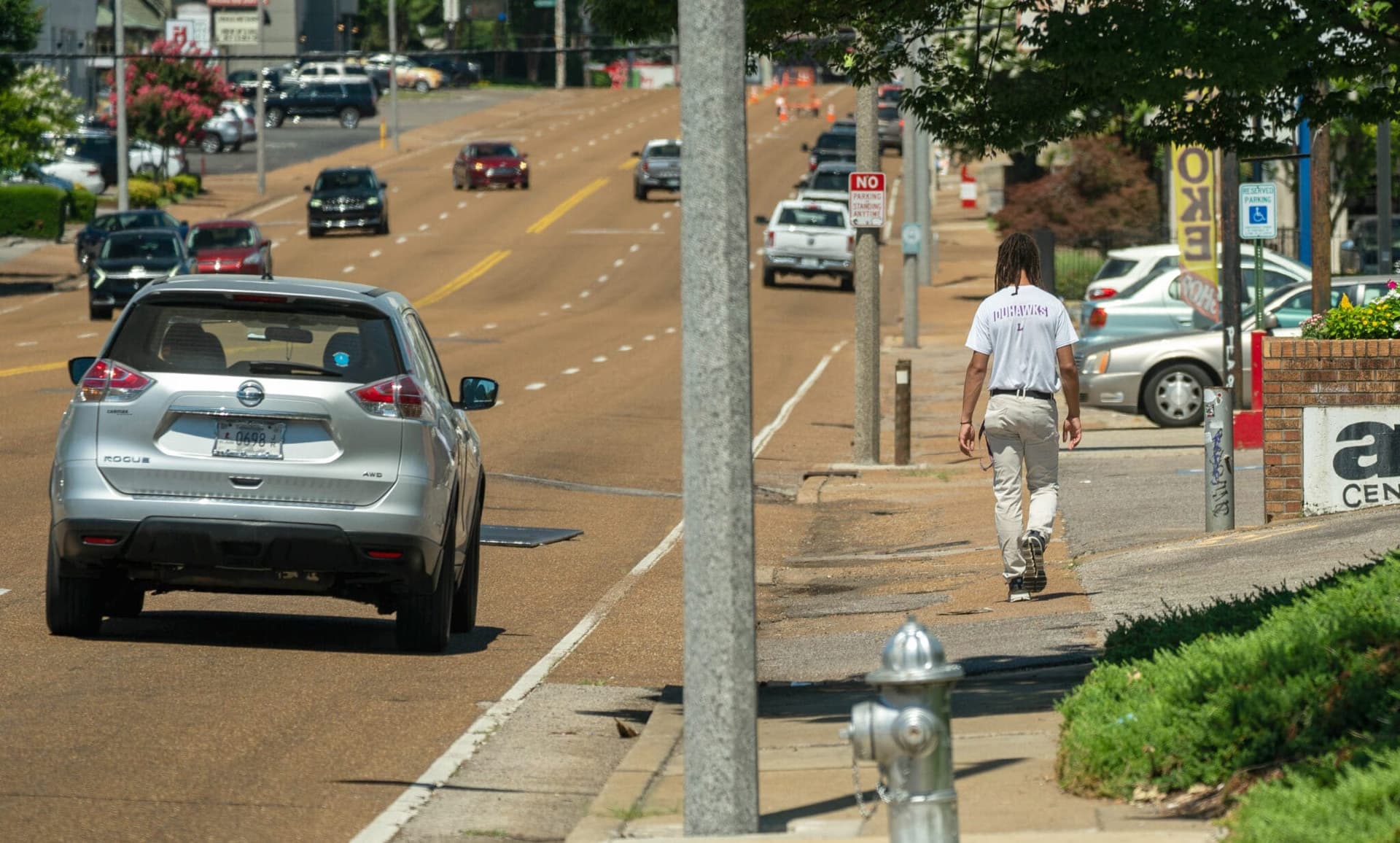
Since the 1950s, the primary goal for transportation has been to move vehicles quickly in nearly all contexts, and 70 years of street design reflects those choices. When roads are wide and straight, lanes are wide and plentiful, and intersections are infrequent or non-signalized, people feel comfortable driving faster—even when the speed limit is low. The result can be streets that are terrifying for people walking. Long crossing distances, infrequent signals, and high-speed turns force pedestrians to take their lives into their hands simply to reach the other side of the street. While marked intersections may try to guide people to cross at those locations, they are not nearly as effective when located far apart. Those who do try to obey the rules of the road find themselves deeply inconvenienced, adding distance and time to their trips.
A transportation system designed primarily for speed will inevitably produce deadly outcomes. And when crashes happen, we blame drivers or pedestrians instead of the transportation agencies and design choices that made those outcomes far more likely in the first place.
VIDEO: Why safety and speed are fundamentally incompatible
Designing streets for high speeds dramatically increases the likelihood that a person struck while walking will be killed. Slower speeds are directly connected to improving safety and reducing deaths. So what does it look like to prioritize safety over speed in practice?
Our goal with design should be to make dangerous behavior difficult and safe behavior easy. We will continue to be stuck in an infinite Groundhog Day loop of ever-increasing deaths until the feds, states, metros and cities begin to unwind this deeply embedded, invisible yet powerful emphasis on speed.
It is completely incompatible with safety.
What dangerous design looks like—and how to make it safer
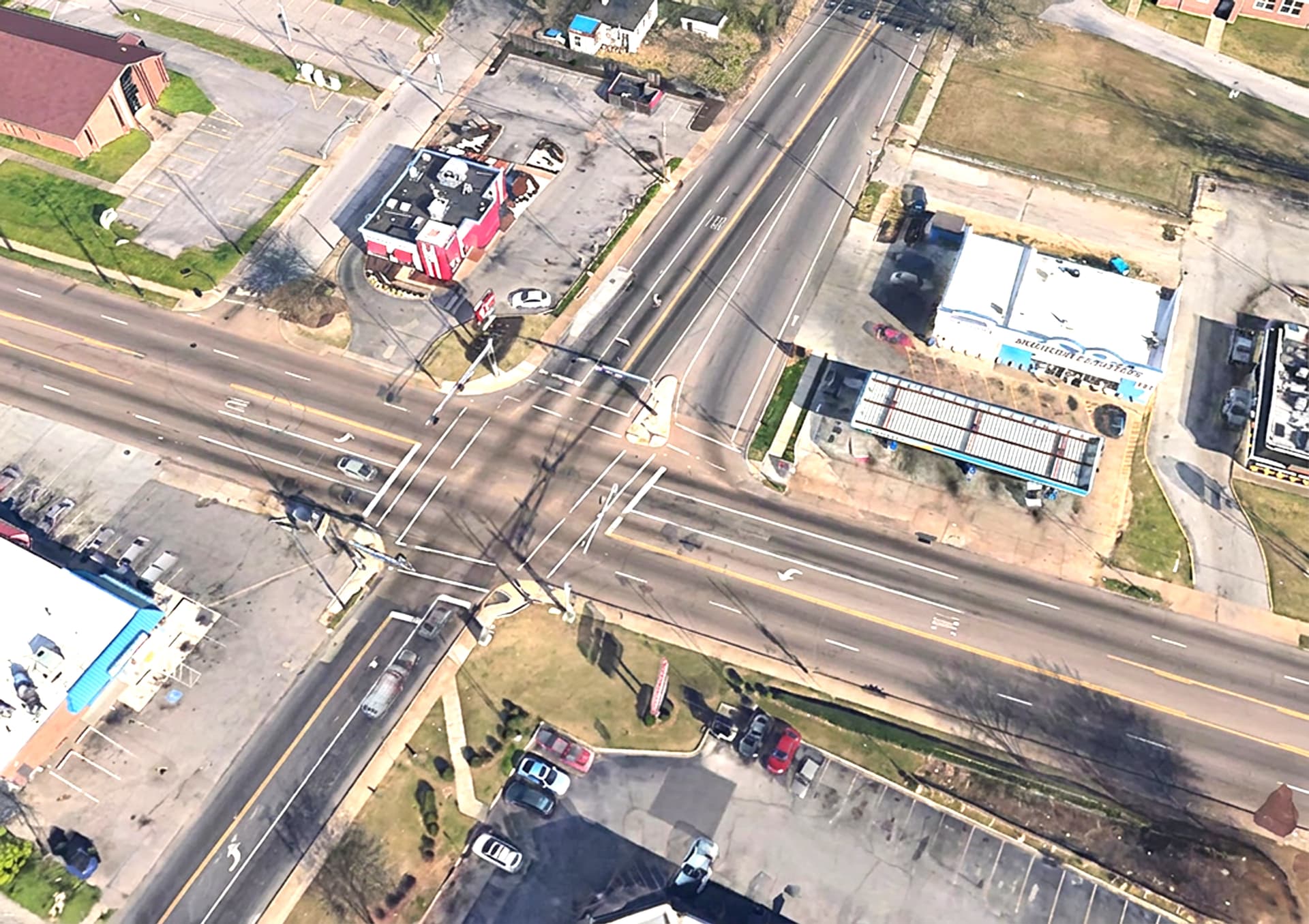
Addressing the roadway safety crisis will require making street design changes to reduce speeds, improve visibility, and create protected space for people walking and biking. Fortunately, we already know how to do this. The images below illustrate how a dangerous intersection in Memphis, TN—the deadliest metro area for pedestrians in the United States—could be redesigned to improve safety
Existing Conditions
The intersection of Jackson Avenue and Hollywood Street in Memphis, TN, has experienced multiple pedestrian fatalities. Wide lanes, frequent driveways, and long crossing distances create challenges for people walking.
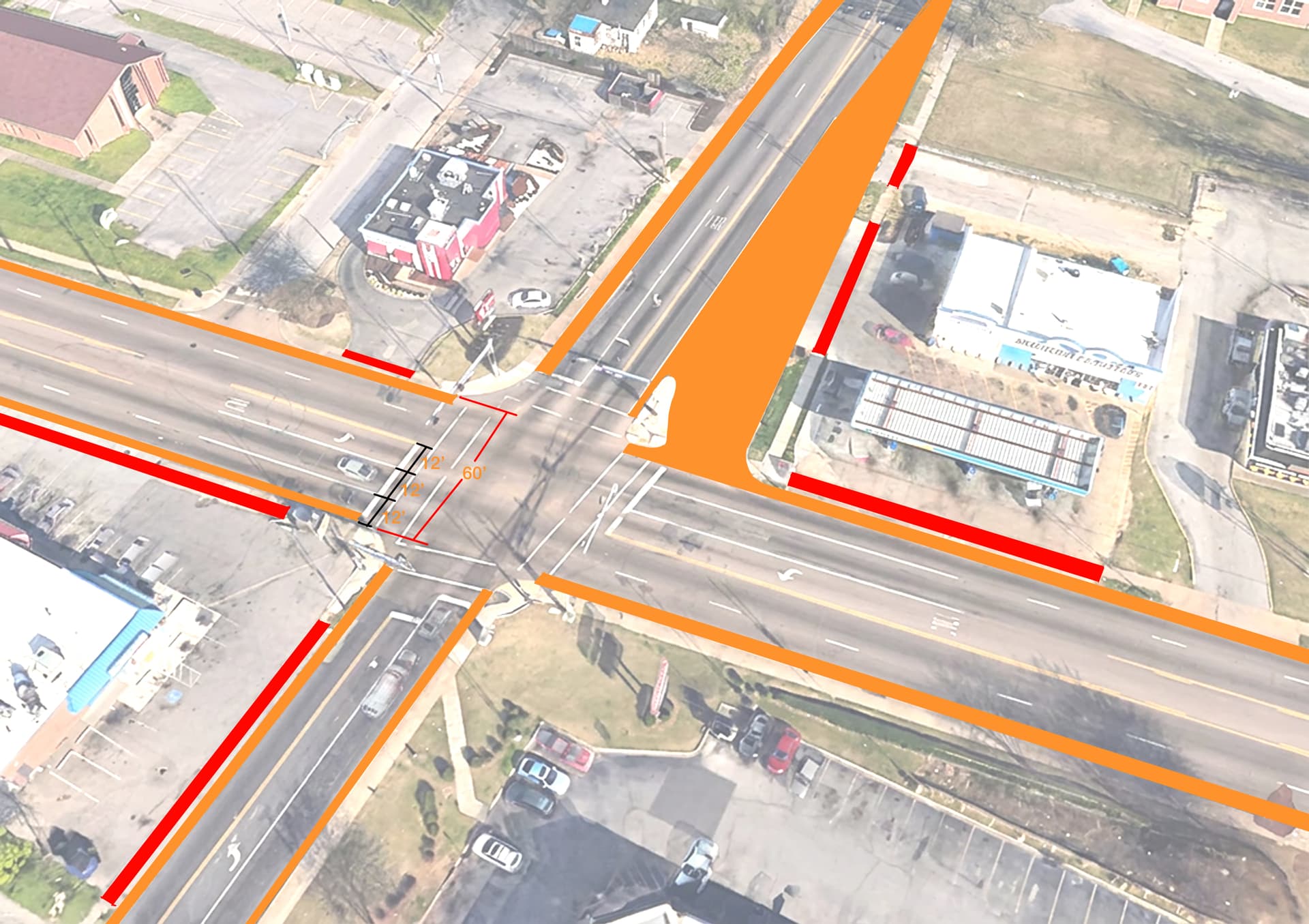
Opportunity for change
The orange and red areas highlight space that could be reallocated to improve safety, visibility, and comfort without impeding traffic flow.
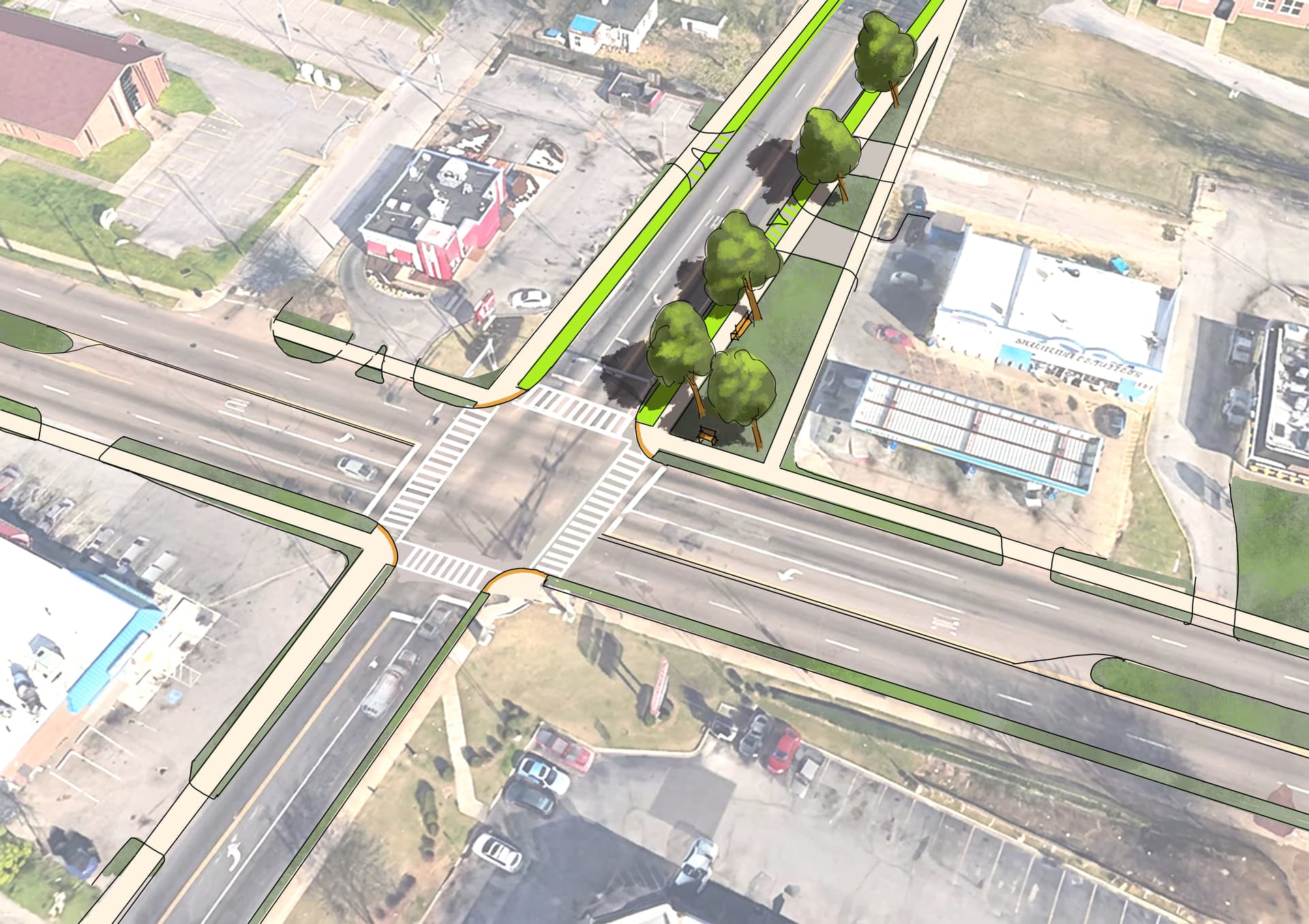
A safer design
The redesigned intersection includes improved crosswalks, shorter driveways, expanded pedestrian space, and street trees. Together, these changes create a safer and more comfortable environment for people walking and biking.


Livable places. Healthy people. Shared prosperity.


© 2026 Smart Growth America. All rights reserved
Site By3Lane Marketing
