




News
By Raveena John, July 13, 2026
Community Connectors brings city staff and community organizations together to repair divisive infrastructure through quick-build demonstration projects. These case studies share the experiences of participants in the 2025-2026 program, highlighting the historical background, local challenges, and community partnerships that shaped their project development and implementation.
Read about the Summit Lake Community Development Corporation’s Community Connectors project along Lakeshore Boulevard in Akron, OH. Applications for our next cohort close Friday, July 17, at 11:59 p.m. ET.
Where waterfronts once attracted heavy industry and waste disposal, post-industrial cities are now reimagining their shorelines as natural assets. In Akron, years of dedicated investment have transformed Summit Lake from a neglected site of pollution into a regionally known destination for both residents and visitors alike. But the challenge is to ensure that recent investments, including new parks and trails along the lake, benefit the entire Summit Lake neighborhood.
Nestled a little more than a mile southwest of downtown Akron along the Ohio and Erie Canal, the Summit Lake neighborhood’s struggles are the direct result of decades of disinvestment. Nearly half of the neighborhood is now vacant. More than a third of the remaining households are below the poverty line.
Recent community engagement and planning efforts have focused on attracting future investment to benefit current residents without displacement. These efforts include a 2021 land use plan, a 2025 Pedestrian Safety Master Plan, and an initiative to revitalize Summit Lake Apartments through the Choice Neighborhoods Transformation Plan. Additionally, a form-based zoning code was implemented to create new housing development opportunities by eliminating barriers to building on vacant lots.
Connecting the neighborhood to recent investment
Throughout this planning work, connection to the lake emerged as a central challenge. Lakeshore Boulevard cuts off most of the Summit Lake neighborhood from the lake itself, and high speeds and a lack of safe crosswalks make it risky for residents to walk across the street. The 2025 Pedestrian Safety Master Plan identified Lakeshore Boulevard as a top concern among the community, making it a clear choice for the team’s Community Connectors project.
Ahead of a scheduled road resurfacing in 2027, the city implemented a temporary road diet to reduce the number of lanes and to test the safer design before making permanent changes. In partnership with the Summit Lake Community Development Corporation (SLCDC), the City of Akron implemented a quick-build project aimed at making crossing the street safer and more comfortable for neighbors walking to the lake and its amenities.
Building on past collaborations for NorthShore Park and Civic Commons, city officials partnered with Summit Lake CDC on their Community Connectors project to test additional safety features, incorporate artistic elements, and foster closer community engagement, turning a typical road diet project into an opportunity for deeper partnership.
The team:
City of Akron
Department of Planning and Urban Development
Engineering Bureau
Summit Lake Community Development Corporation
Learn more about the team co-leads: Joe Tucker and Dylan Garritano
The project: safer crossings, slower speeds
The city’s restriping efforts aimed to slow vehicles down by reducing the lanes from four to two and adding bike lanes that narrowed the driving lanes further. These changes also create a consistent street section along the entire length of Lakeshore Boulevard, making it a less confusing road to drive.
Through Community Connectors, the team designed more intensive traffic-calming strategies at intersections to make crossing the street more comfortable and installed temporary posts along specific portions of the new bike lanes. The traffic-calming strategies included painted crosswalks with signage to improve visibility and quick curbs to add protection from turning vehicles.
The proposed design strategies the city is still considering include temporary curb ramps and planter boxes within buffers to make crossings more visible. The project will also include fence decorations in partnership with a local artist.

Working together
Some members of the team had worked together in previous projects related to the planning and development taking place in Summit Lake, but city officials had never worked so closely with a community-based organization (CBO). This project was an opportunity to bring staff face-to-face with residents outside of public meetings, strengthening working relationships between partners and building familiarity on the ground. The general strategy was for the city to lead on the traffic elements and for SLCDC and community members to lead on artistic elements and engagement.
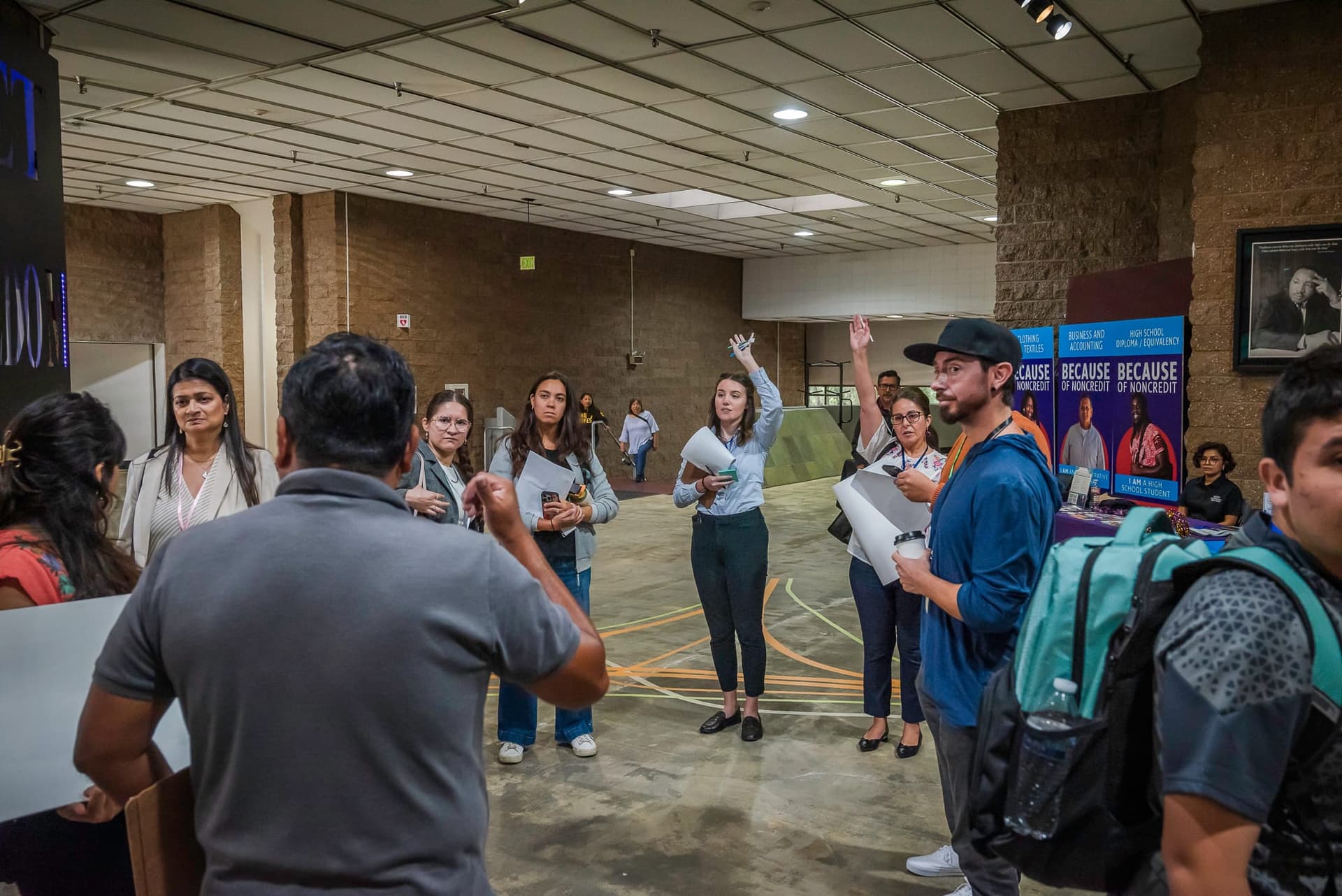
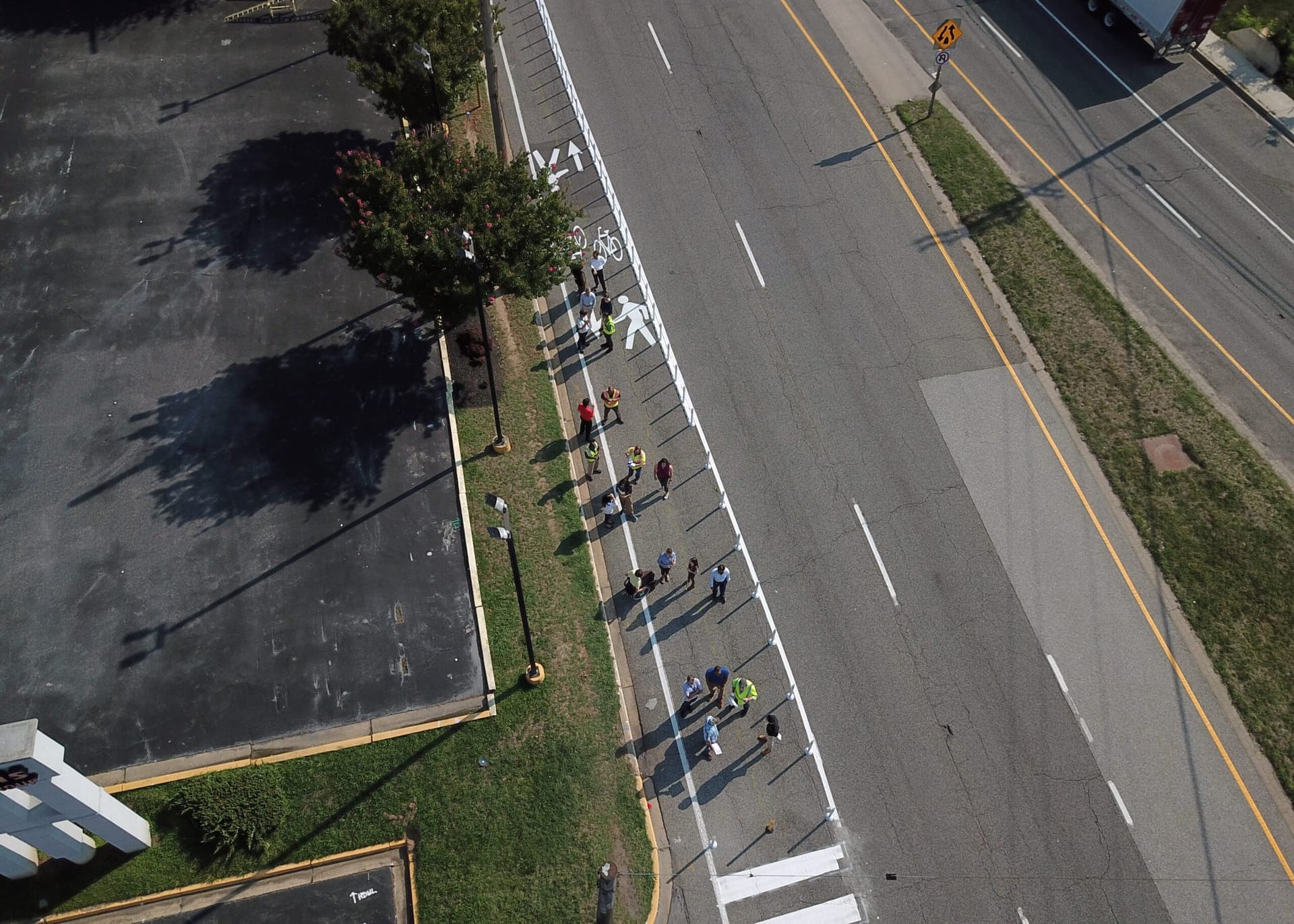
A March 2026 walk audit brought together representatives from the Akron Metropolitan Housing Authority, local police, neighborhood residents, and other nonprofit partners on site to observe road conditions. Armed with wagons, strollers, and clipboards, the group noticed overgrown foliage on the sidewalk, frequent crossings to reach a corner store, and young entrepreneurs selling water. Feedback after the walk audit highlighted fear and anxiety due to the speed and volume of cars and the lack of safe places to walk and cross the street, exacerbated by overgrown vegetation that blocks the sidewalk.
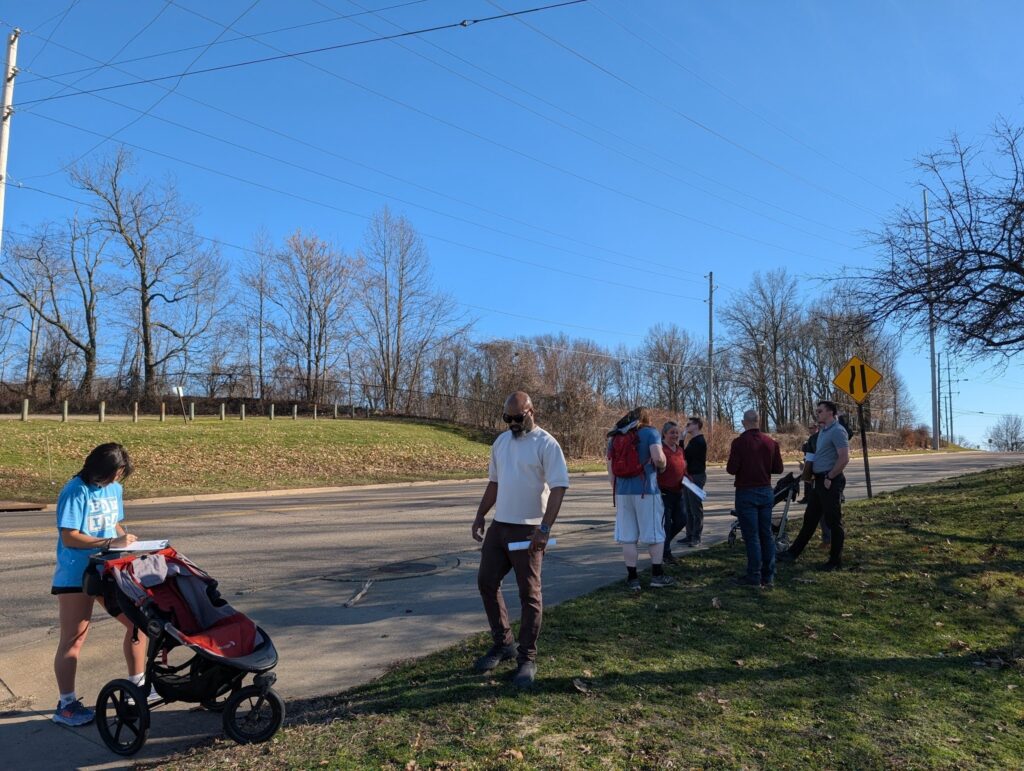
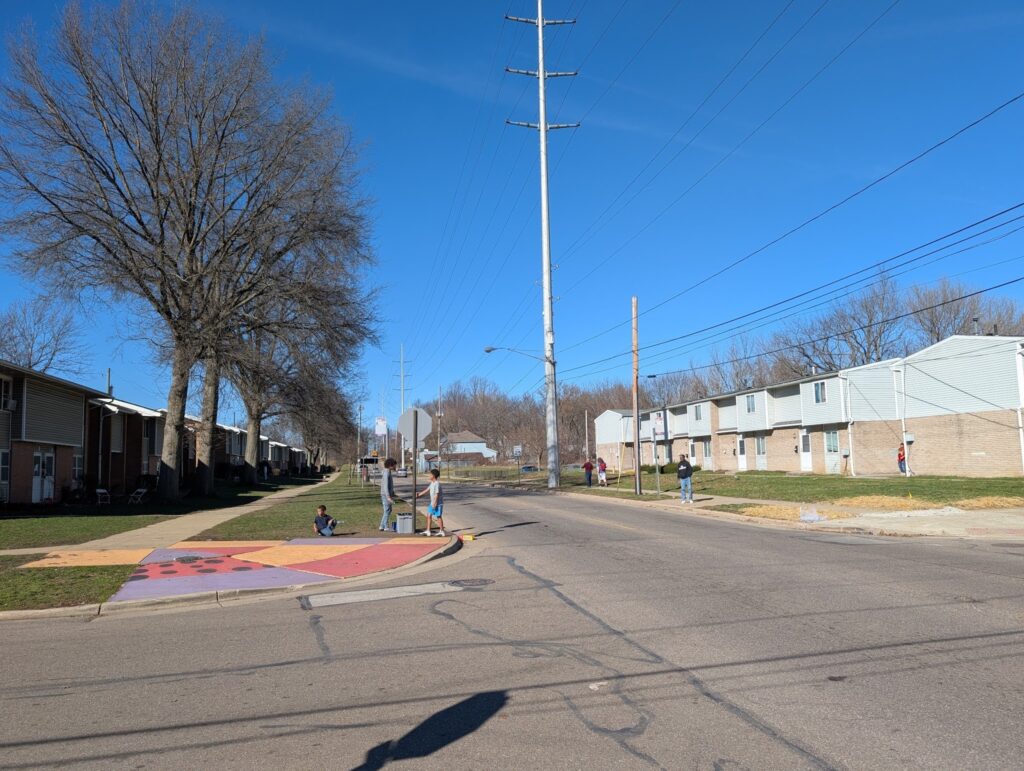
People assess pedestrian conditions during a walk audit along Lakeshore Drive. Photo courtesy of Joe Tucker.
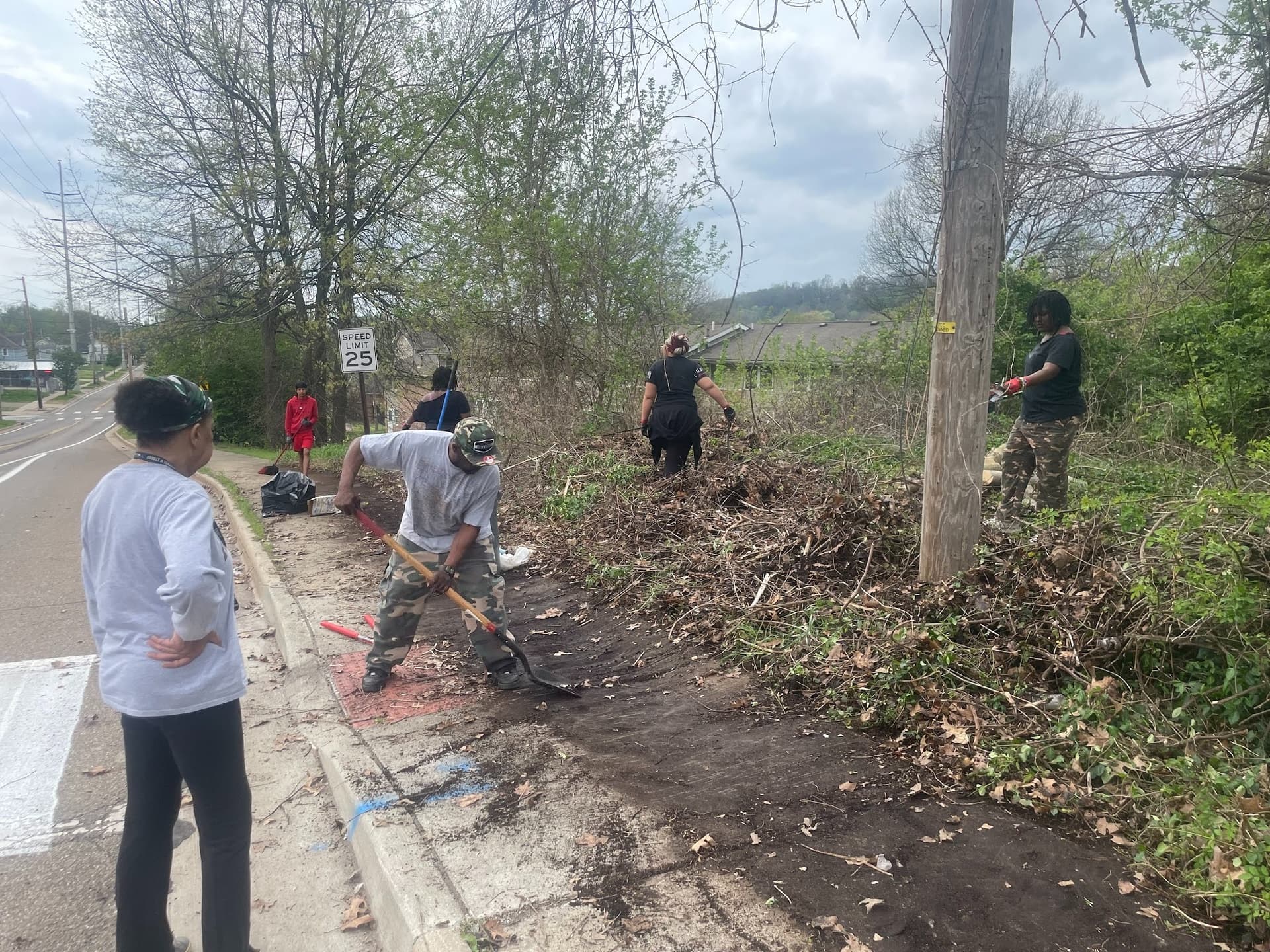
In addition to the walk audit, volunteers conducted pedestrian counts at multiple points throughout the day to capture a snapshot of the number of pedestrians on Lakeshore Boulevard. Later in the spring, local high schoolers and junior high students, supported by stipends, canvassed the neighborhood to reach over 800 homes to talk about the project. An Earth Day clean-up event brought even more youth volunteers to clear the sidewalk, which had been nearly buried by plants and debris.
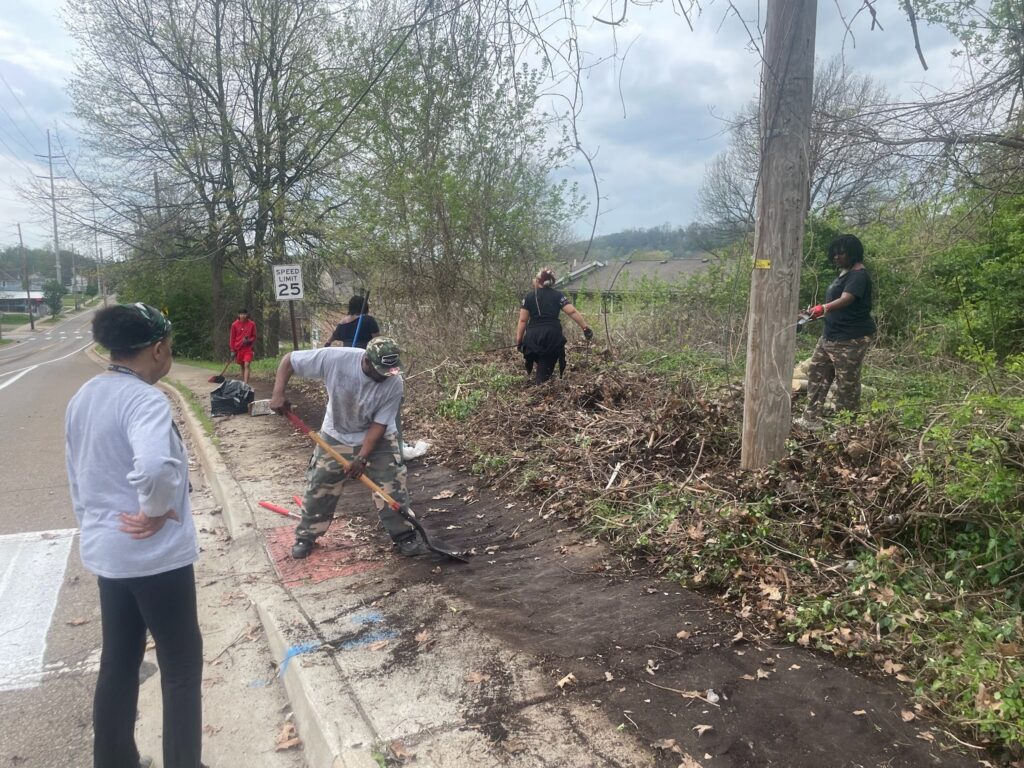
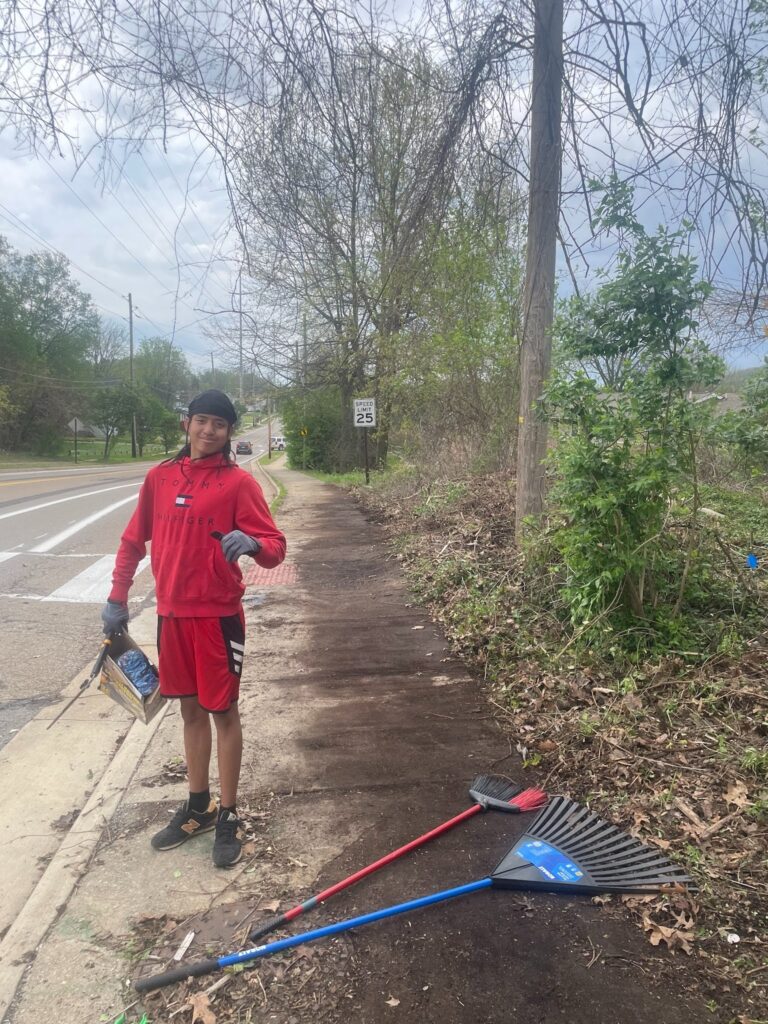
Volunteers clear overgrown vegetation from the sidewalk. Photo courtesy of Joe Tucker.
The team also held a community dinner in April to discuss the road diet in detail, which nearly 50 local residents attended. Though road diets are not a topic that typically generates large turnout to a meeting, they benefited from personal connections through SLCDC leaders Joe Tucker and Grace Hudson. At the dinner, residents said they found the transition from the highway offramp to the narrowed lanes confusing, which city staff realized could be quickly resolved with barrels. Along with soliciting feedback and sharing next steps, the team also shared upcoming summer activities in the neighborhood.
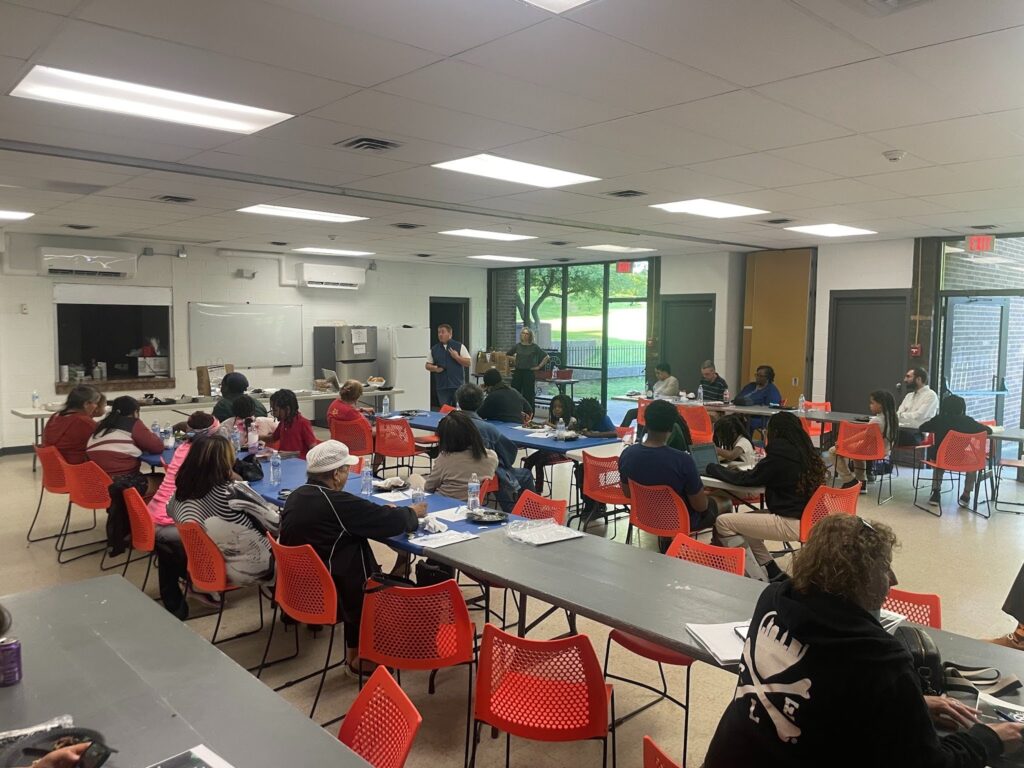
“I think the relationship that I have with Joe definitely greatly improved. He knows that he can reach out to me and I can reach out to him, regardless of what’s going on at Summit Lake. That’s a good thing to have moving forward, at least from our team.”
– Dylan Garritano, City of Akron
SLCDC’s deep connections within the community gave this project much closer ties to the neighborhood than city resurfacing projects typically receive, and the team’s work with volunteers brought immediate improvements to Lakeshore Boulevard, even before any temporary materials were installed.
Challenges
Two major challenges for this team were different timeline expectations and traffic engineering pushback. City processes typically take place at a slower timeline than Community Connectors and SLCDC. These different expectations were compounded by the weather during an Ohio winter. As installation progresses, communication and coordination between partners and within the city remain an ongoing challenge, further exacerbating timeline issues.
Restrictive standards followed by the city traffic engineers also limited the scope of the quick-build project. Constraints on signage, asphalt art, and other materials restricted the team’s initial ideas. During the design process, Dylan Garritano, the project co-lead from the city, acted as a mediator in the dialog between the residents and the traffic engineers. Including traffic engineering staff on the team might have helped move beyond these boundaries, particularly if they could learn from the program technical expert or peers in the cohort. If this team pursues similar work in the future, they’ll know to include traffic in conversations from the beginning.
Budget:
$20,000 for city – time, materials
$5,000 for CDC – time, canvassing stipends, food, and materials for community meeting
A strong start toward safer streets
Though the project is still being installed, the initial results are promising. Feedback showed the restriping effort isn’t a perfect solution, but further adjustments can make it one. The change noticeably slows drivers down, and delineators will help ensure drivers follow the new traffic pattern.
Residents’ attendance at the community dinner demonstrated the community’s interest in more speed-reduction measures that create safer crossings, including speed bumps and speed tables implemented through the city’s traffic calming program. And in the shorter term, findings of this quick-build will inform the upcoming resurfacing initiative, and successful elements may be installed permanently.
Alongside the quick-build project, the city has already started installing some permanent improvements. These changes include curb cuts at the intersection of Crosier Street and Lakeshore Boulevard, which make it easier for Summit Lake residents to access the local community center and Towpath Trail, setting the city up for future sidewalk improvements.
The project’s initial success has even inspired agencies not involved in the project to take action. Akron Metro, the regional transit authority with a facility in Summit Lake, is now reviewing its bus stops along the corridor to relocate them to more precise locations that better serve neighborhood residents.
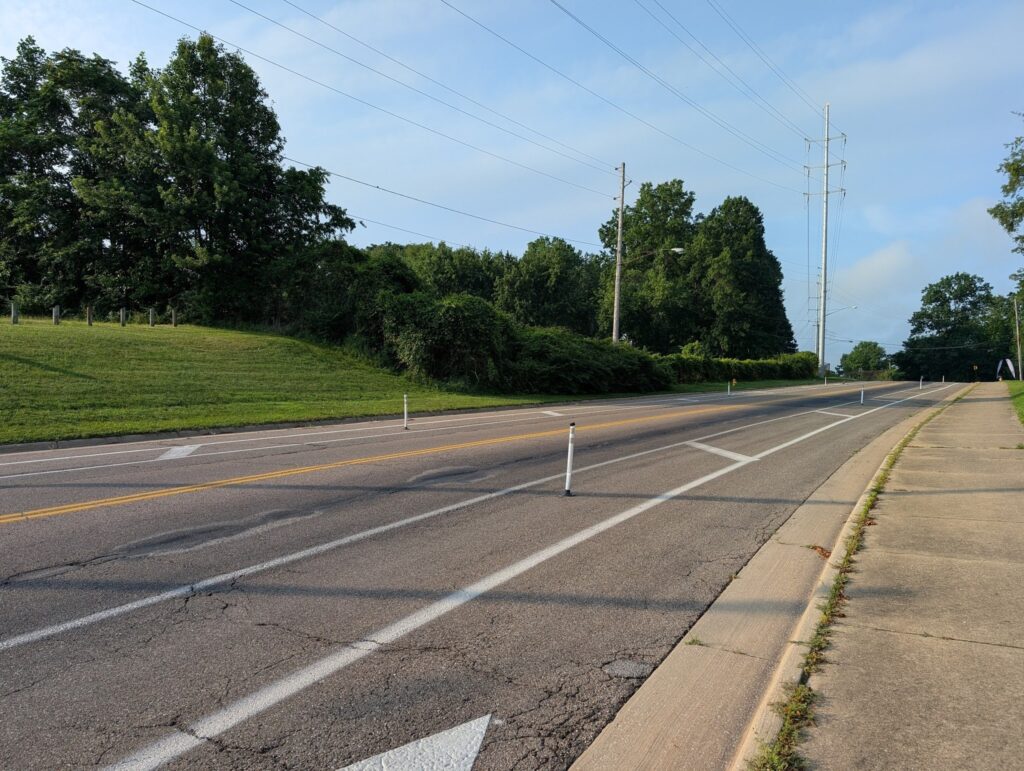
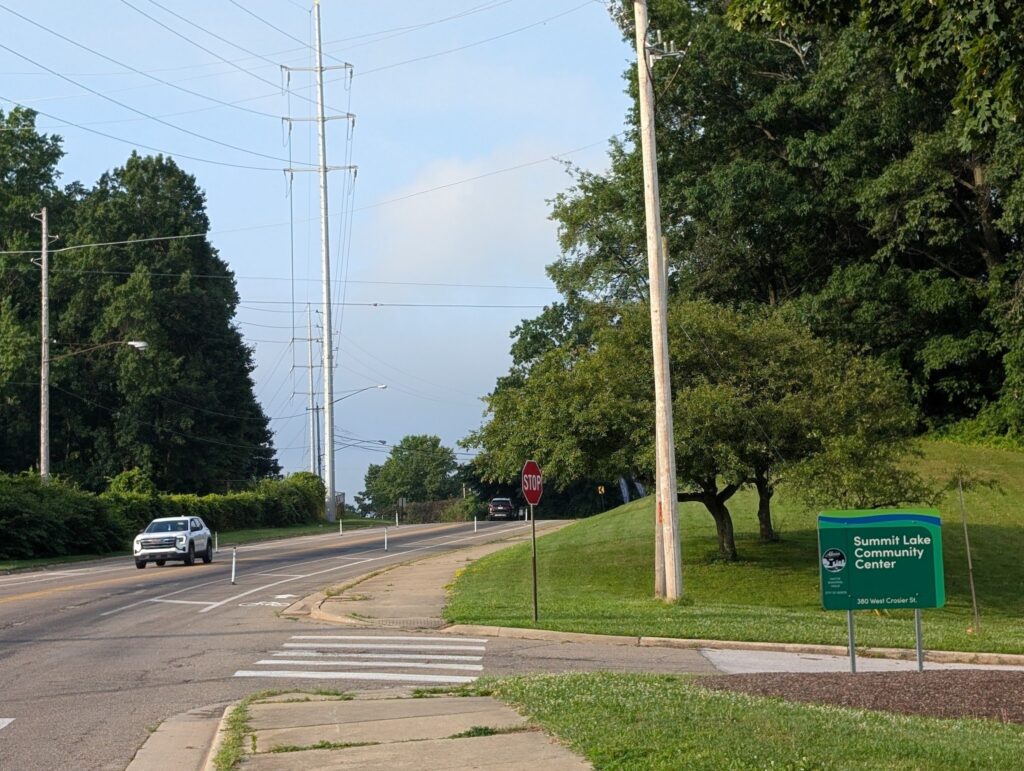
Photos courtesy of Dylan Garritano.
|
Timeline | |
|
November 2025 |
Initial data collection Initial community engagement |
|
December 2025 – January 2026 |
Project design |
|
February 2026 |
Finalize project design Permitting |
|
March 2026 |
Walk audits Initial data collection Procurement |
|
April 2026 |
Road diet installation Earth Day clean-up event Community meeting and dinner |
|
May-July 2026 |
Vertical element installation Art development and installation Data collection |
Thank you to the Akron team for your dedication to your community and your insights throughout this process: Joe Tucker and Grace Hudson, Summit Lake CDC; Dylan Garritano, Matt Neff, Slade Blizzard, Kyle Julian, Christine Jonke, and Tessa Smith, City of Akron.
Related News





Livable places. Healthy people. Shared prosperity.


© 2026 Smart Growth America. All rights reserved
Site By3Lane Marketing
