




News
By Raveena John, July 13, 2026
Community Connectors brings city staff and community organizations together to repair divisive infrastructure through quick-build demonstration projects. These case studies share the experiences of participants in the 2025-2026 program, highlighting the historical background, local challenges, and community partnerships that shaped their project development and implementation.
Read about studioMAIN’s Community Connectors project on West Ninth Street in Little Rock, AR. Applications for our next cohort close Friday, July 17, at 11:59 p.m. ET.
West Ninth Street was once the heart of Black life in downtown Little Rock, with more than 100 Black-owned businesses on the corridor in 1959. However, like other cities across the U.S., this thriving neighborhood was devastated by the interstate highway system, which was built straight through its downtown.
Segregation by Design’s feature on Little Rock illustrates how this highway is “a textbook example of how highway construction has been used as a tool of segregation through suburbanization.” Interstate 630 displaced hundreds of businesses and thousands of residents, enabled white flight to the surrounding suburbs, and reinforced segregation, the legacy of which is still clear today.
Today, a few cultural anchors remain on West Ninth Street: Mosaic Templars Cultural Center and Taborian Hall with Dreamland Ballroom are historic structures that still serve the community as a heritage museum and as an event space, respectively, and The Hall is a newer concert venue. Beyond these legacy institutions, this part of downtown has remained underdeveloped, with vacant land, large parking lots, and little else that regularly attracts people to the area.
But there are passionate groups of people working together on downtown revitalization, civic pride, and neighborhood connections—and a strength of cities this size is that it just takes a small group of people to make a big difference.
A longstanding issue with a new priority
The first Downtown Little Rock Master Plan, published in 2024, identified West Ninth Street as a focus area to attract investment and realize the community’s overall vision for downtown. The city’s 2022 Complete Streets Bicycle Plan also identified a connection across I-630 at West Ninth Street as a priority. Those earlier efforts helped the team of local nonprofits and city staff decide that this was the ideal place for a Community Connectors quick-build project that would address the past and build for the future.
The project team brought extensive experience in demonstration projects to the Community Connectors program. studioMAIN’s annual community revitalization quick-build projects, Pop Up in the Rock, bring imagination to different parts of the city each year, including West Ninth Street back in 2015. Building on that experience, Community Connectors enabled the team to scale these efforts into a months-long endeavor named Beyond the Divide.
The team:
studioMAIN
Our Little Rock
City of Little Rock Public Works Department
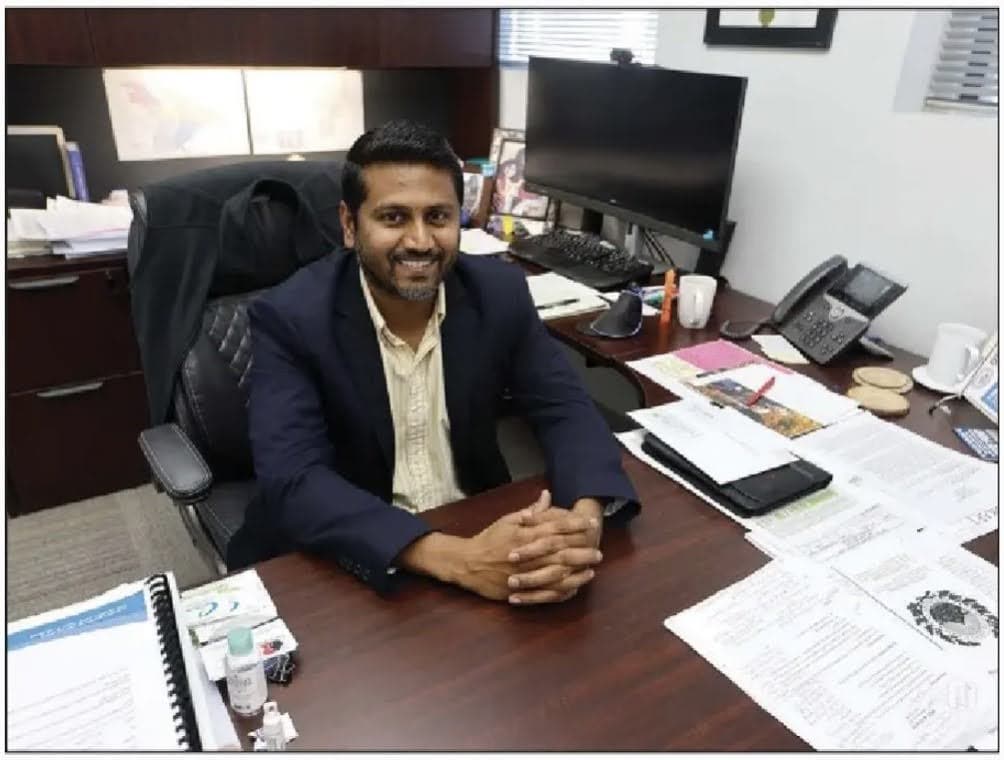
Learn more about the team co-leads: Ernest Banks and Maneesh Krishnan
The project: a pop-up business district, road diet, and art
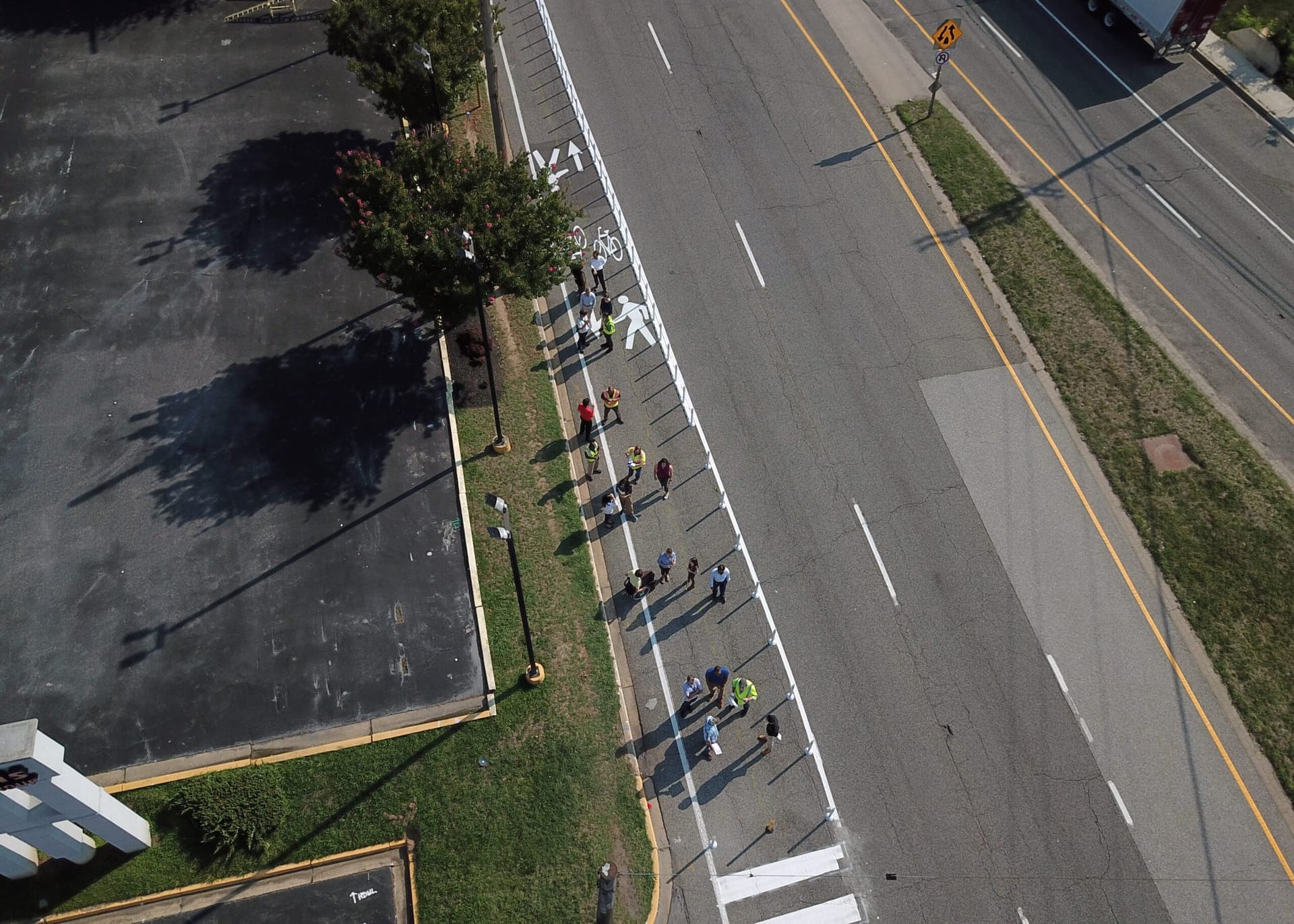
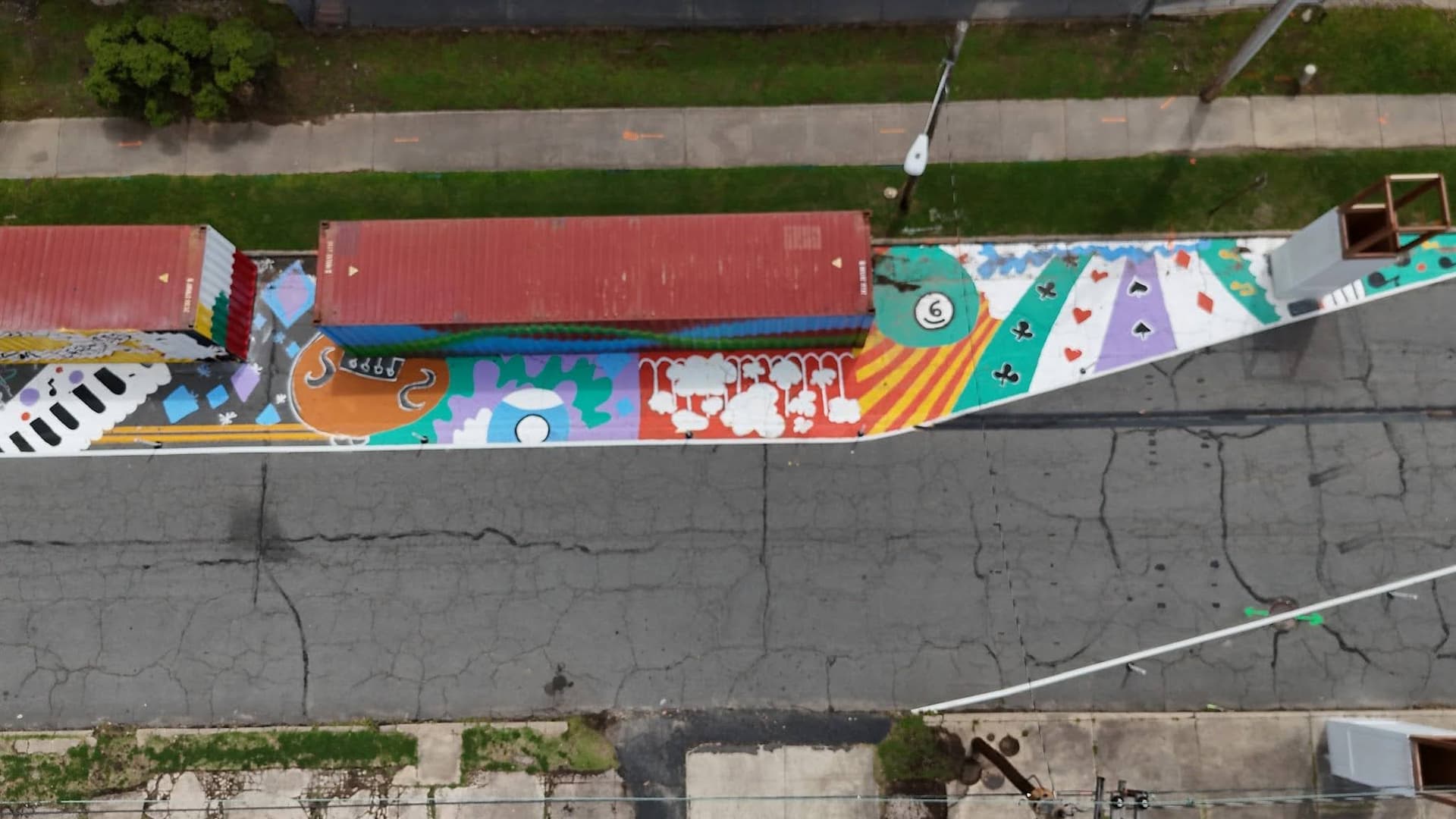
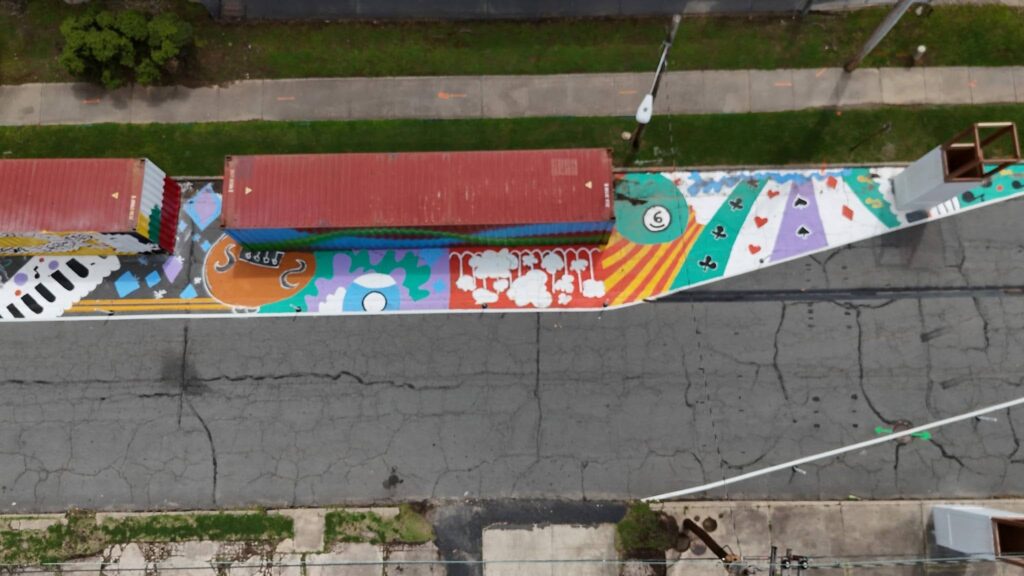
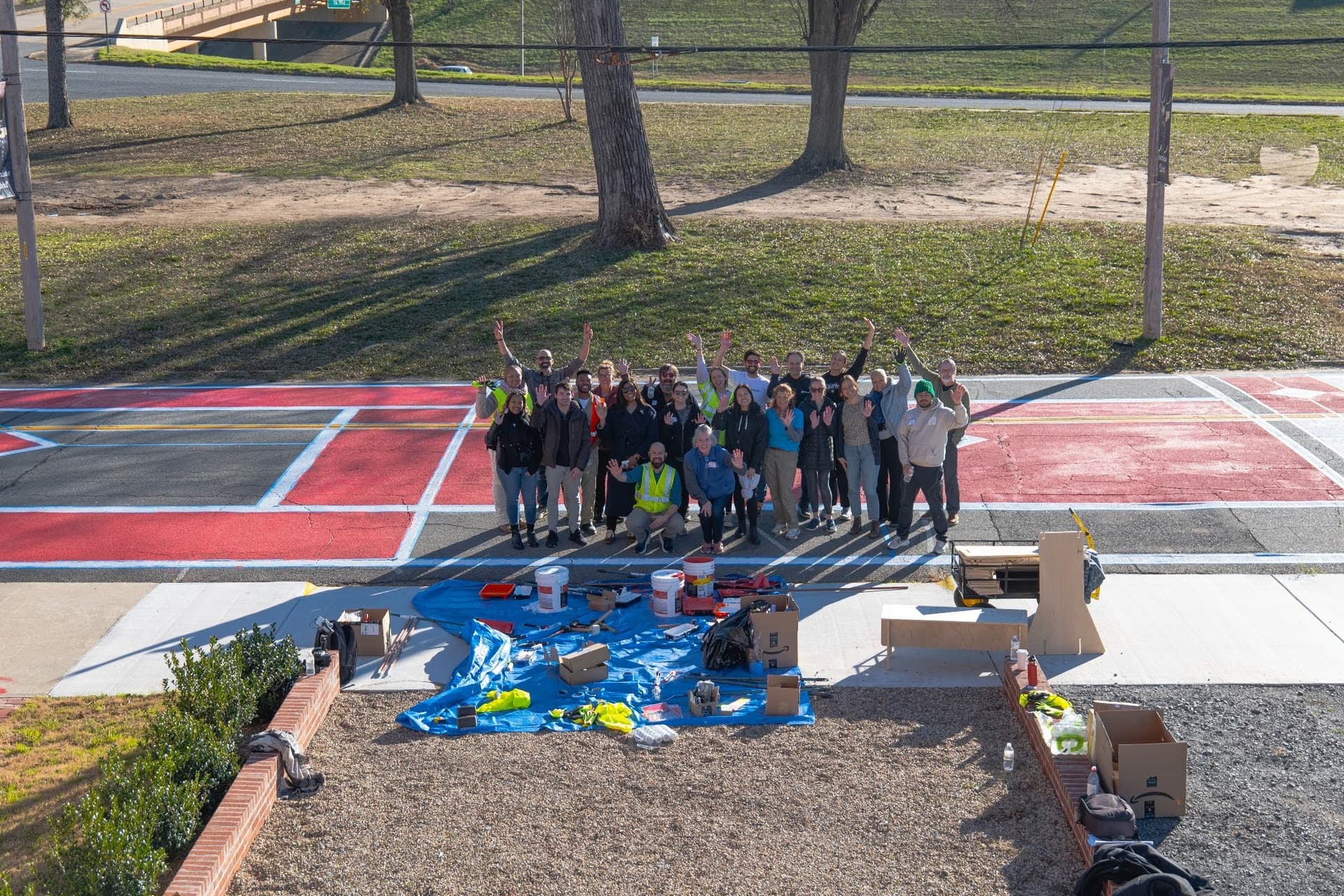
Beyond the Divide restores a strong sense of place through a temporary business district, a road diet, and public art as part of a comprehensive reimagining of West Ninth Street. Since traffic is light on the road, the road diet reduced the lane width and reclaimed the excess asphalt for public art, using tape and flex posts to create bump-outs and chicanes. The chicanes slow traffic and invite people to enjoy the nearby art, including the street mural the Community Connectors cohort installed during the January workshop.
Shipping containers along the street and within the chicanes served as canvases for additional murals by local artists. Gateway totems at both ends of the three-block project signal the boundaries of the installation as landmarks and offer more opportunities for artistic expression.
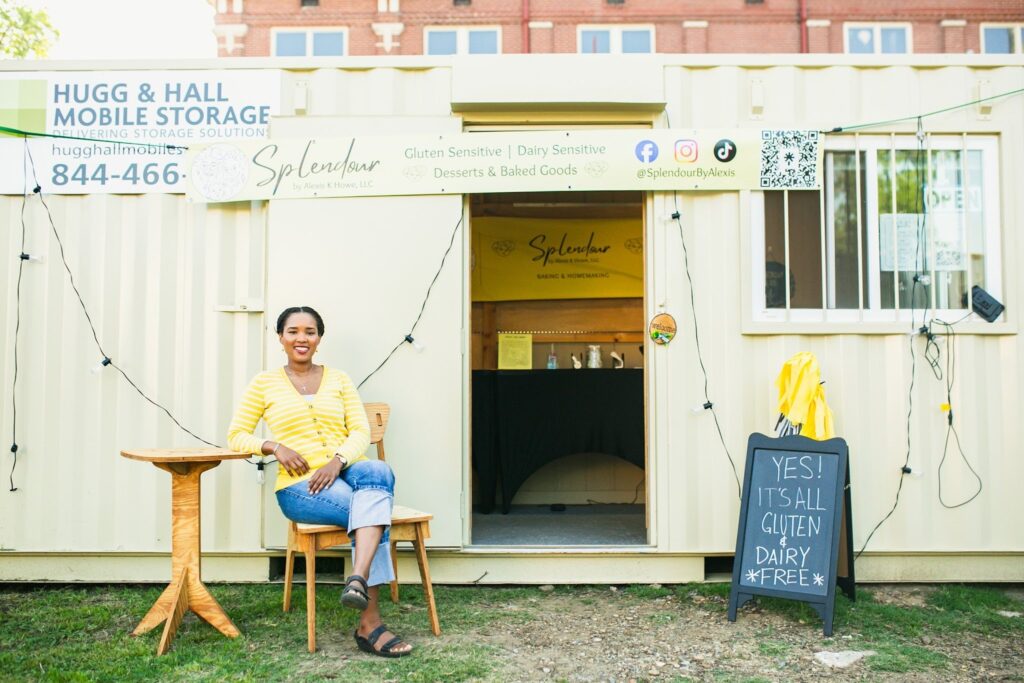
The centerpiece of Beyond the Divide is The Line on 9, a pop-up for Black-owned businesses. Twenty new businesses used shipping containers as storefronts, calling back to West Ninth Street’s past as a commercial center in Little Rock. Ongoing activities such as yoga, live music, movie nights, bike rides, fashion shows, and art nights continue to draw people to the space over three months.

Working together
The existing relationship between city staff and studioMAIN was central to the project. The nonprofit partners knew the city was familiar with temporary installations and felt confident throughout the project’s development that the city would permit the installation. In turn, the city demonstrated trust in studioMAIN by giving them the full share of grant funds through the program, rather than splitting them as with other Community Connectors teams. This delegation was partly due to a lack of capacity within city government to administer the day-to-day details of the project.
Along with studioMAIN and Our Little Rock, Beyond the Divide brought in more and more community partners throughout its development—a snowball effect. Loaned shipping containers from Hugg and Hall enabled the pop-up business district to take form and created more space for murals in the district. Downtown Little Rock Partnership and others helped organize events and activities throughout the early summer to continually encourage people to spend time in the area. None of this work would have been possible without this robust network and volunteer support.
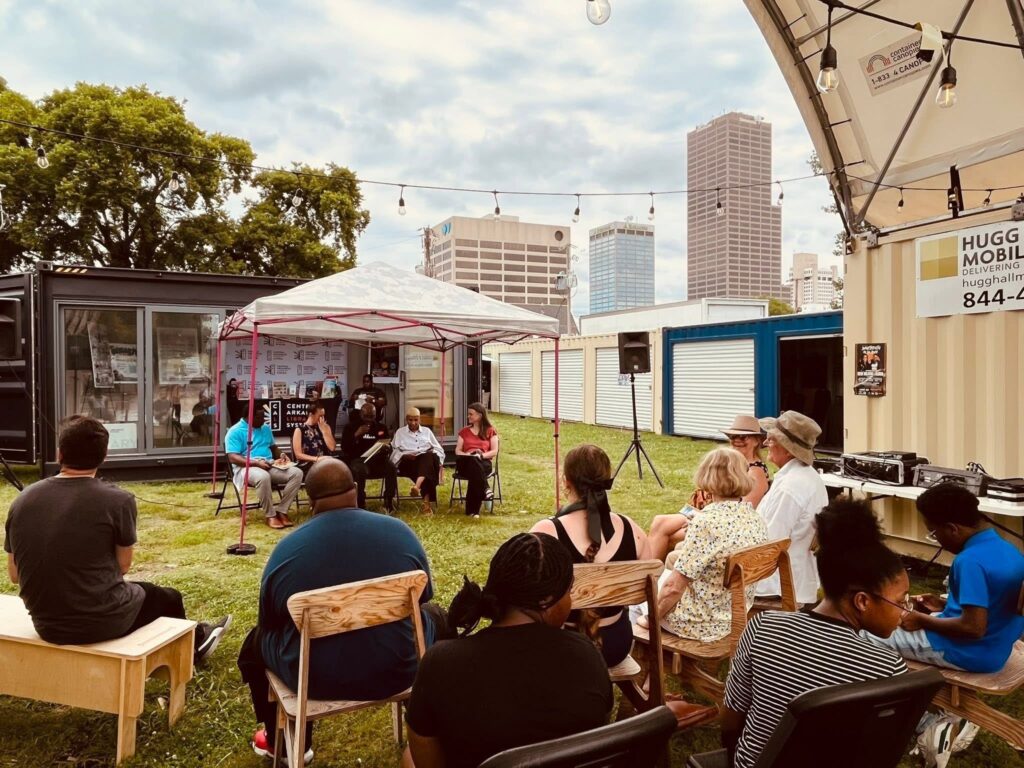
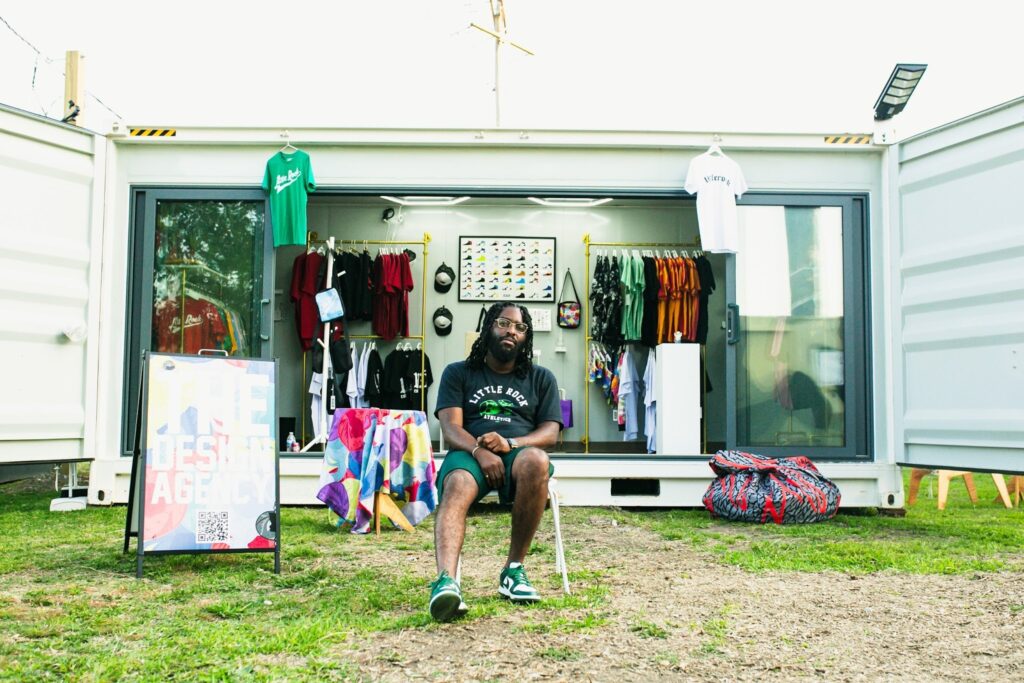
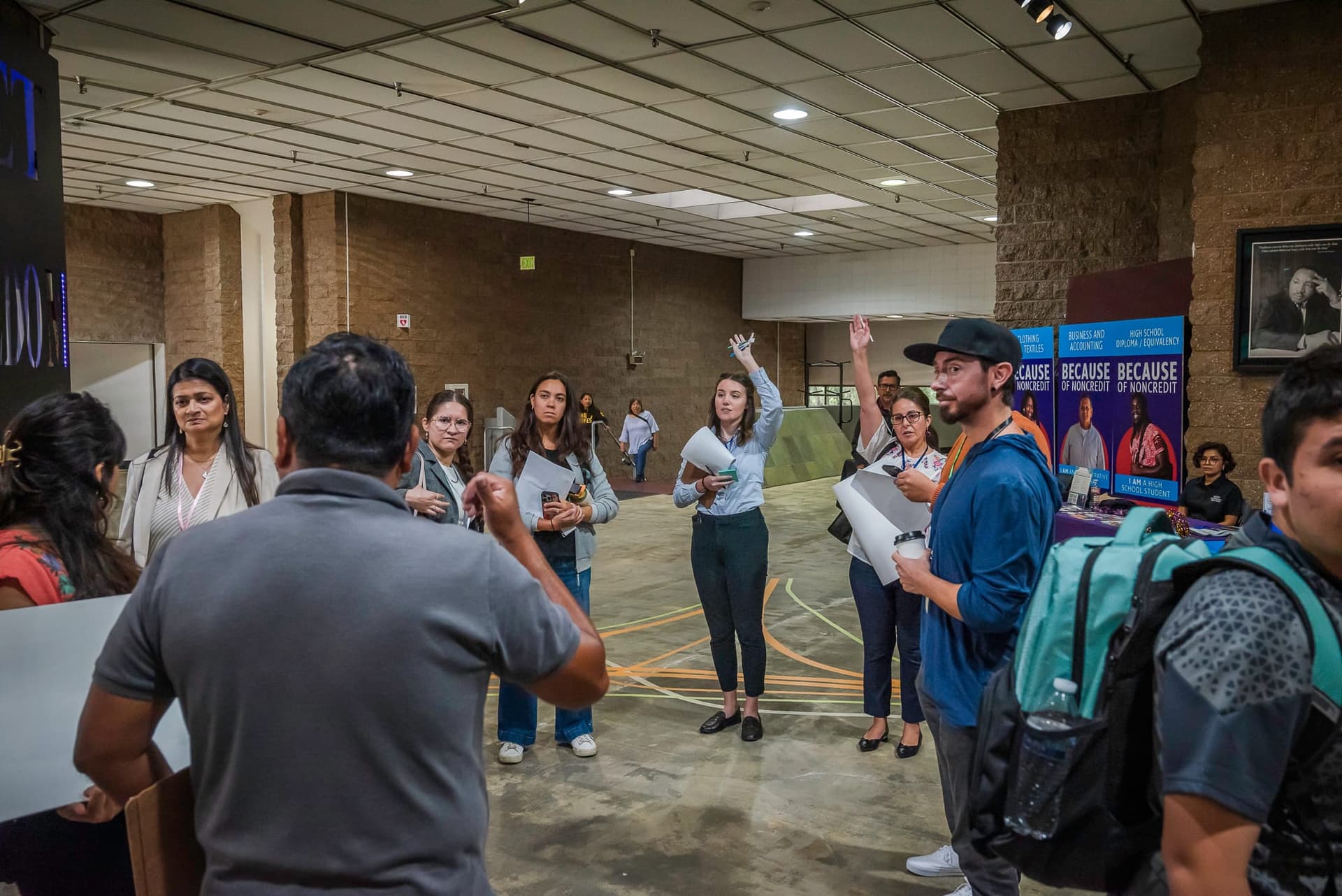
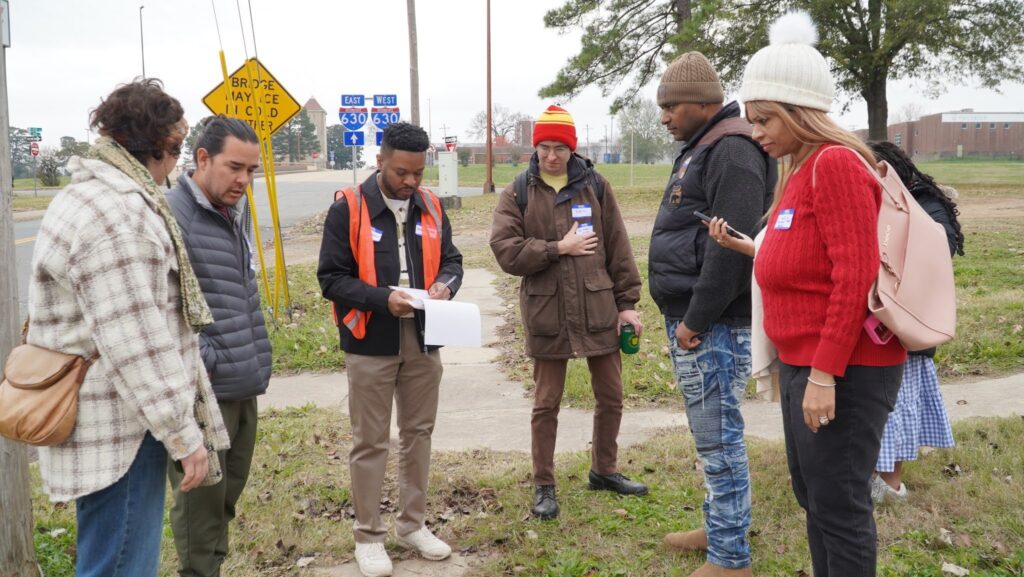
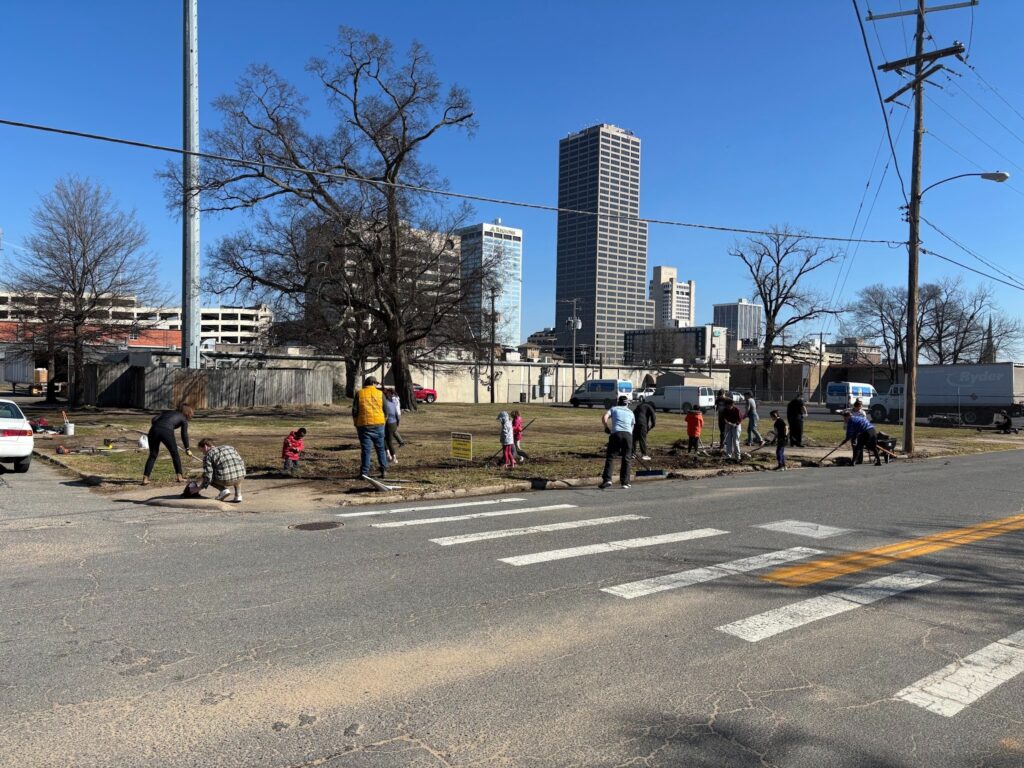
Community engagement and volunteer work took many forms. A March walk audit drew local residents, business owners, and artists to assess the existing conditions and propose ideas for the quick build. Two community clean-up events spruced up the grass and cleared the sidewalk before project installation. Local artists and volunteers installed the asphalt art and murals. The project team even hired a videographer to conduct interviews that would help tell the rich story of this corridor and the community.
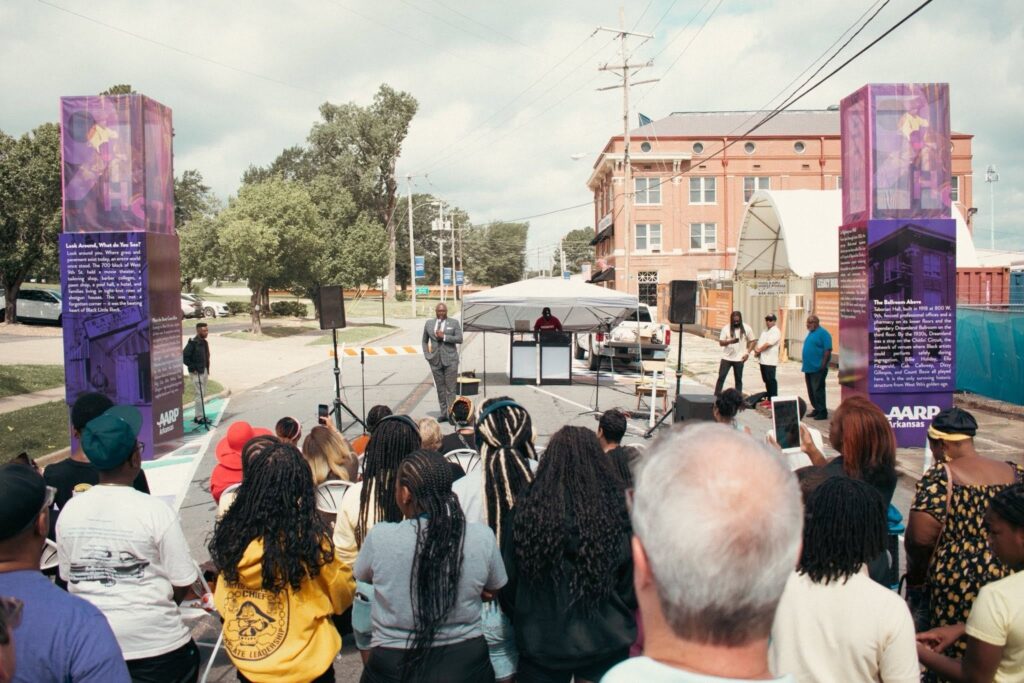
The snowball effect of the growing team even expanded the quick-build project across the highway. It gave the team a reason to approach the Arkansas Department of Transportation (ArDOT) about another demonstration project: a temporary road closure and protected path on the I-630 frontage roads and the State Street bridge by West Ninth Street, funded by AARP Arkansas. This initial demonstration project with ArDOT can help city officials make the case for a permanent bicyclist and pedestrian path across the highway.
Challenges
Although the team’s large size provided strong support and ample hands, its sprawling nature presented some coordination challenges. For example, as the project evolved to include a business district pop-up, collaborating earlier with the city’s Planning and Development Department would have made implementation easier.
As with the size of the team, the size of the project turned into a challenge, too. Many different partners and organizations volunteered their time and resources to events on West Ninth Street, and the challenge was one of endurance: to maintain the energy over several months and keep people coming back through the final celebration on Juneteenth.
Budget:
Community Connectors grant: $25,000 to studioMAIN
Road diet materials: $5,300 (bollards, butyl pads, white paint for road striping, black tape, labor costs)
Shipping container delivery: $4,400
Walk audits: $1,487
Art: $9,000 (murals, totem designs, paint, and related materials)
Totems: $10,000 (fabrication, delivery, installation costs)
History pavilions: $2,000
District banner graphics: $1,500 (murals, totem designs)
Videography: $2,000
Additional support from AARP Arkansas, the Little Rock Convention and Visitors Bureau, Simmons Bank, and The Line on 9 Business District: $23,000
In-kind contributions from: Stanley Electric and Dreamland Ballroom
Bringing future investment to West Ninth Street
Beyond the Divide brought twenty new businesses to West Ninth Street, and the effects have continued to ripple out from there. Weekly programming has brought people to the corridor to enjoy the space, connect with one another, and learn about the history of this part of downtown Little Rock. Local businesses—Dreamland Ballroom, The Hall, and Mosaic Templars—have shown their support by hosting events to complement the activation.
“The whole business aspect was the keystone of the final project: having actual businesses there now, not just in the future. Otherwise, it’s just showcasing the past and envisioning a future, but not really demonstrating anything. Having everyone come together and do this is making it happen. Everybody’s enthusiasm and the way it’s all come together has been amazing.”
– John Landosky, City of Little Rock
This project made the vision of the Downtown Master Plan tangible to the community and sparked the biggest question: What’s next? Along with pop-up business districts in other parts of the city, the team hopes to see traffic-calming elements inform the city’s and ArDOT’s approaches to their work in the area. According to the Arkansas Times, Mayor Frank Scott Jr. is hopeful the project and its pop-up event will bring further investment to the area, and city officials are already working to make this bike route more legible.
|
Timeline | |
|
December 2025 |
Walk audit Community design charette |
|
January 2026 |
In-person workshop in Little Rock |
|
February – March 2026 |
Finalize design Walk audit and surveys Permitting |
|
April 2026 |
Installation Opening ceremony |
|
May 2026 |
Ongoing programming |
|
June 2026 |
Juneteenth celebration |
Thank you to the Historic East Towson team for your dedication to your community and your insights throughout this process: Ernest Banks, Polk Stanley Wilcox and studioMAIN; Chloe Chapman, Our Little Rock; and Antwan Phillips, Maneesh Krishnan, John Landosky, Fernando Villa, City of Little Rock.
We’d also like to thank other community partners critical to this project, including Kyle Leyenberger and Chellie Longstreth, Downtown Little Rock Partnership; Brad Chilcote, WDD Architects; Heather Davis, AMR Architects; Nikki Crane-Hasty, Harding University; Ali Dunbar, Clinton School of Public Service; Quantia Fletcher, Mosaic Templars Cultural Center; Kerry McCoy and Matt McCoy, Arkansas Flag & Banner; Derrick Williams, Thrasher Boys and Girls Club; Kellen Davis and Buckley O’Mell Little Rock Chamber of Commerce; James Meyer, Taggart Architects; Amber Banks, Cromwell Architects Engineers; Ryan Biles, Kudzu Collective; Joe Stanley and Cecelia Pierce, Polk Stanley Wilcox; Jill Floyd; and Louis Tobian.
Related News


Livable places. Healthy people. Shared prosperity.


© 2026 Smart Growth America. All rights reserved
Site By3Lane Marketing
