




News
By Raveena John, August 3, 2026
Community Connectors brings city staff and community organizations together to repair divisive infrastructure through quick-build demonstration projects. Along with this summary blog, you can read our case studies about participants’ experiences in the 2025-2026 program.
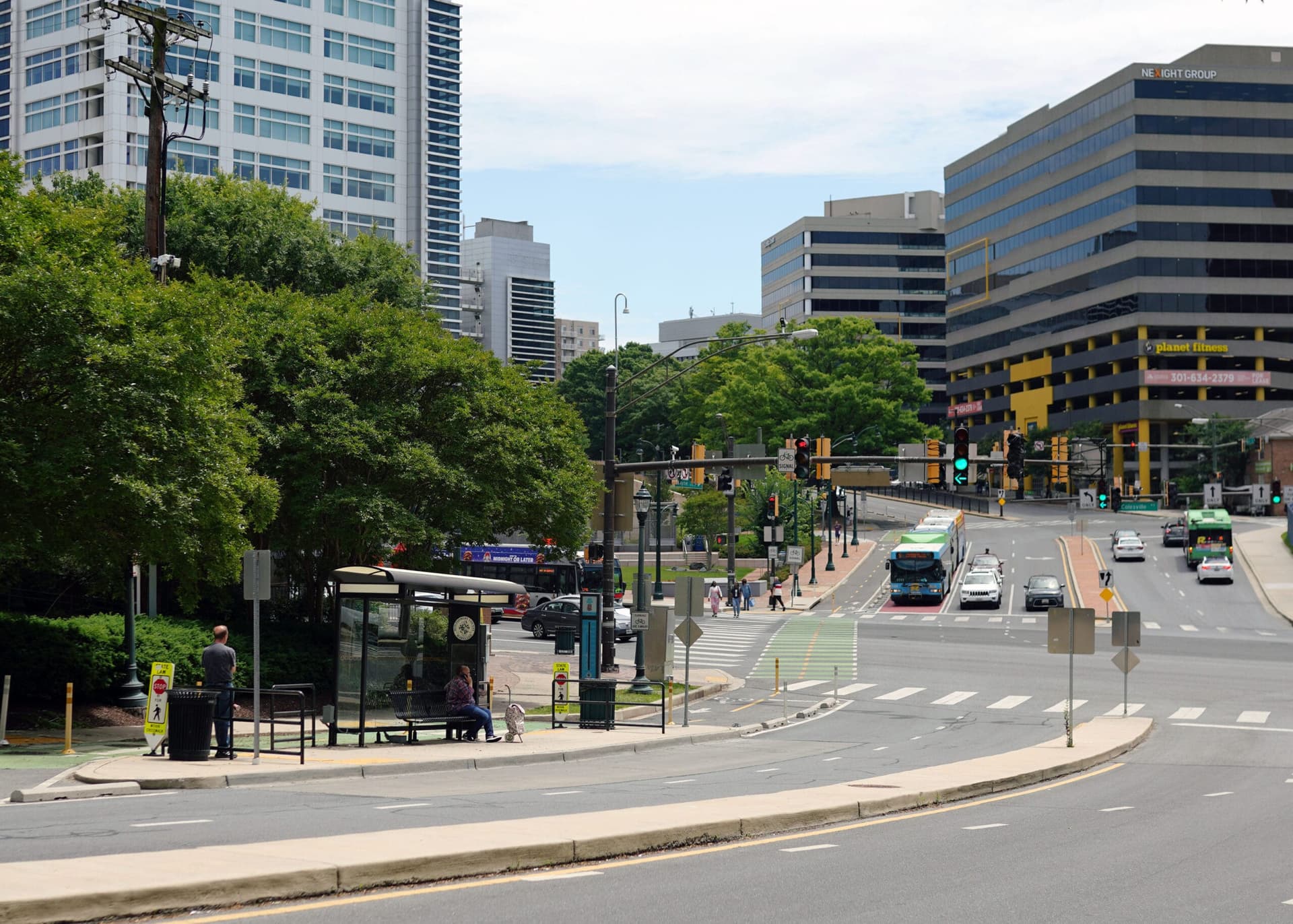
Infrastructure is meant to connect: delivering water and energy to homes, transporting goods from place to place, and bringing people together. But as we’ve seen across the country, infrastructure has been used time and time again to divide and harm communities. Highways razed Black neighborhoods, polluting power plants were placed in low-income neighborhoods, and the development patterns that brought middle-class white Americans to the suburbs drew essential resources from downtowns and their residents.
Those past decisions resulted in today’s health disparities, wealth inequality, and pedestrian fatality crisis. Now, communities must address these consequences and work with residents to imagine, invest in, and build a safer and more equitable future.
Building on lessons from the original Community Connectors program in 2023, the resounding success of the team in Harrisonburg, VA, and the established Complete Streets Leadership Academy approach, the goals of the 2025-2026 program were to:
1. Support joint teams of city staff and a local community-based organization,
2. Address locally owned arterial roads that cause division in the community, and
3. Build skills to install a quick-build demonstration project.
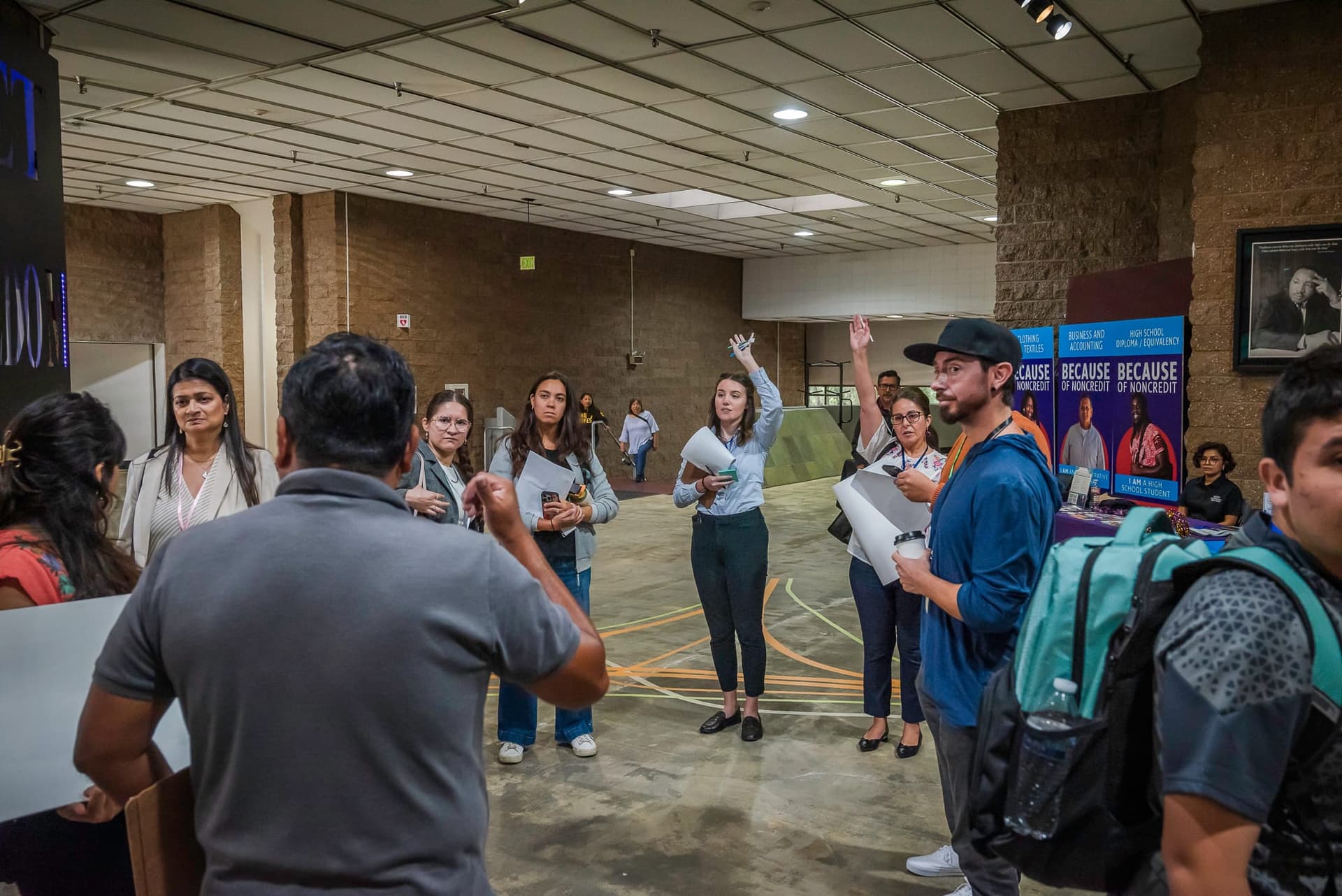
Through a series of virtual learning sessions, recurring check-ins, technical support for design, and an in-person workshop, the Community Connectors participants learned about best practices for quick-build projects and meaningful community engagement, heard from experts conducting similar work elsewhere, and supported other cohort members.
Quick-build demonstration projects are temporary installations that test new street design improvements that improve safety and accessibility. Learn more by reading resources from the National Complete Streets Coalition.


Temporary projects are a first step toward making systemic change while repairing social infrastructure. Working on a quick-build project can also help strengthen the community relationships needed to fix divisive infrastructure.

Meet the teams:
 |
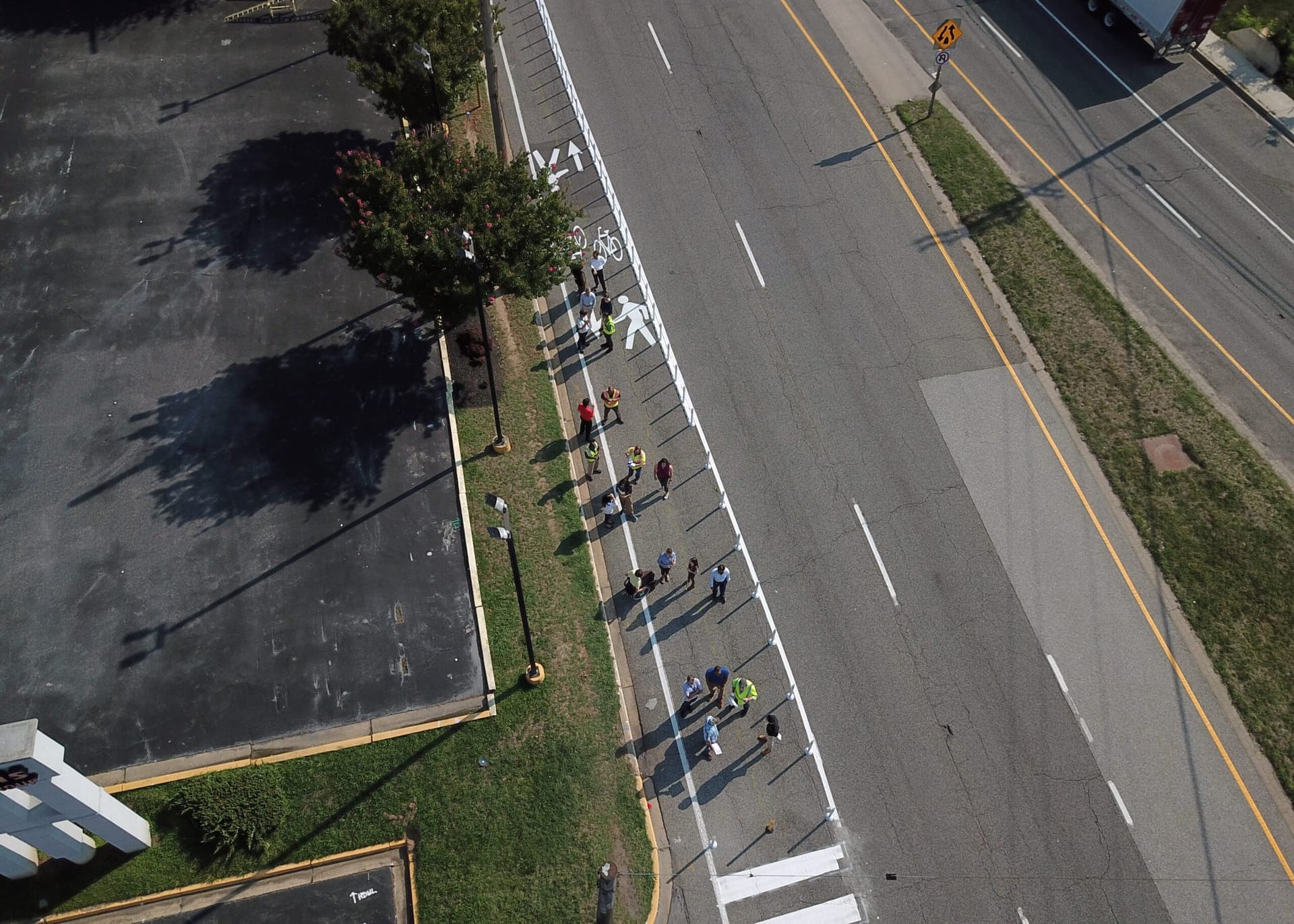
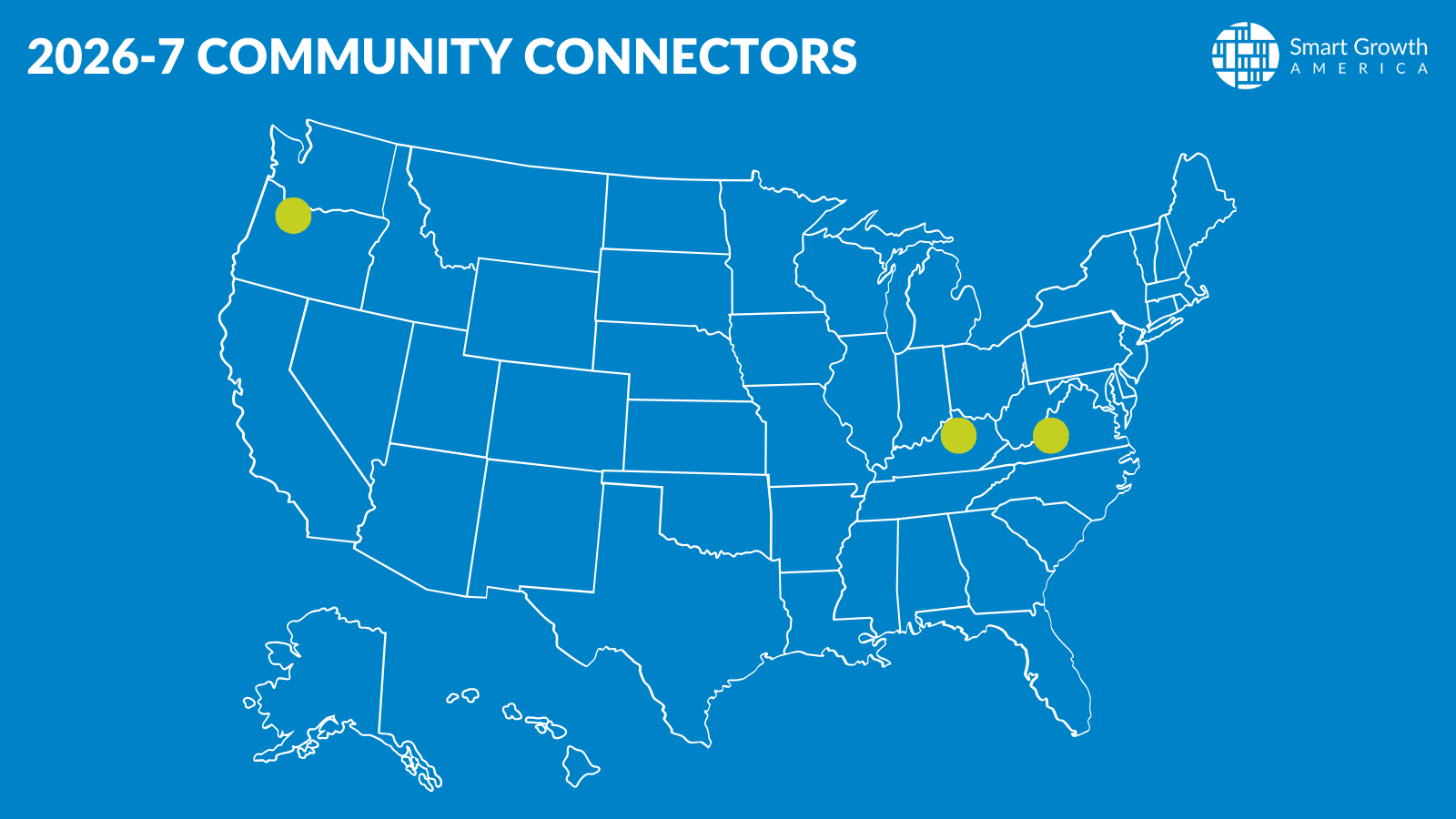
Akron, OH, and the Summit Lake Community Development CorporationLakeshore Boulevard runs between a neighborhood and the Summit Lake waterfront, which has recently seen significant investment, including new trails and parks. But the Boulevard’s high speeds, heavy traffic, and unsafe crossings cut nearby residents off from the lake and its amenities. The Akron team’s Community Connectors project built on a temporary painted road diet recently installed by the city. The team used strategies to implement further traffic calming interventions, including flex posts, additional crosswalks, and a planned artistic installation to catch drivers’ attention and reflect the neighborhood character. |
 |
Baltimore County, MD, and the Northeast Towson Improvement Association of Historic East TowsonHistoric East Towson is the oldest African American community in Baltimore County, founded by people formerly enslaved on the nearby Hampton Plantation. This neighborhood was slowly eroded by various infrastructure projects, including railroad tracks, an electric substation, and a highway bypass, but the community of Northeast Towson remains tight-knit. The Road to Freedom Trail, a project of the descendant community, will trace this history through the city along an urban trail from the former plantation to the neighborhood. This team’s Community Connectors project focuses on a key junction along the trail and gives parts of the wide roadway back to the neighborhood as public space. |
 |
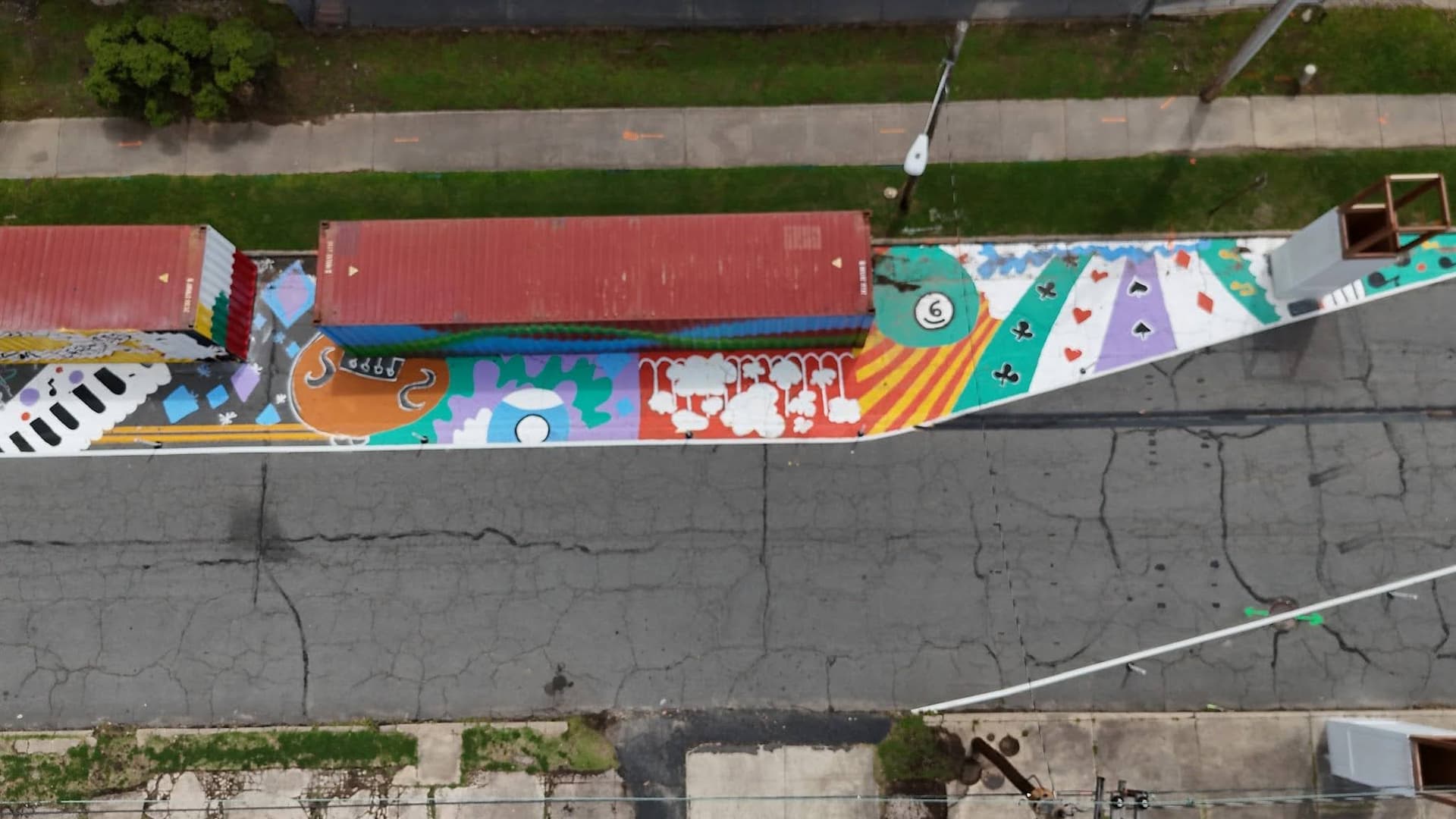
Little Rock, AR, and studioMAINDowntown Little Rock recently completed its first master plan, which identified the West Ninth Street corridor as a key focus area. Slum clearance in the 20th century tore down a thriving Black economic hub on West 9th Street for the construction of Interstate 630. Today, the few historic buildings are the only evidence of this vibrant past. The Little Rock team used their Community Connectors project to draw attention and renew energy in this area through a road diet, murals, and a pop-up Black business development district. Reimagining what this area could look like with a quick-build project gave the team a model for imagining a vibrant future for this part of downtown. |
Big ideas: 4 lessons for future quick builds
This year’s Community Connectors cohort pursued three very different projects to address a range of challenges, but clear throughlines appeared across their work. The lessons on communicating a strong vision, partnering for community engagement, strategizing team structure, and looking for ripple effects can help other communities accomplish similar goals:
1. A clear vision opens doors
A clear vision in each project brought others on board and kept teams going when they faced setbacks. Historic East Towson started with their why, Little Rock painted a picture of the future, and Akron focused on the energy within the community.
- Historic East Towson: The team’s most salient lesson was to articulate a “strong, clear, undeniable why” framing the project as necessary to a wide range of partners. Though the core team, many of whom were already on the Road to Freedom Trail task force, was already aligned on the project, bringing in other partners throughout the county was more difficult.
- Little Rock: The Downtown Master Plan had already identified West Ninth Street as a priority area, which gave the team a starting point to talk about what they attempted to build through the road diet and business district. Everyone on the team could glance at the Master Plan and understand this goal.
- Akron: Recent improvements at Summit Lake, particularly the towpath, NorthShore Park, and the already-planned road diet on the corridor, were easy references to mention when discussing the community’s need for safer crossings and slower speeds along Lakeshore Boulevard.
After citing their recent work to kickstart the conversation, Little Rock and Akron brought community members, city staff, and local decision-makers along on walk audits to make the need for safety improvements and further investment even more tangible. Historic East Towson centered the safety, reconnection, and public space benefits from the project to bring in new teammates. All were able to unite people around a salient vision for the future.


2. City work goes further with community partnerships
Central to this year’s Community Connectors program structure was city staff and local community-based organizations co-leading the projects, strengthening relationships between residents and city hall. This structure provided an opportunity for cities to rely on their community’s expertise and to demonstrate their commitment to change through a tangible improvement to a road that had caused harm.
- Akron: The community engagement process for this quick build was more robust than what the city’s engineering teams do for a typical project. Walk audits in particular brought city staff to the project site and talking to neighbors, observing the state of the sidewalks and the need for traffic calming on Lakeshore Boulevard alongside local residents.
- Historic East Towson: The Northeast Towson Improvement Association and the Road to Freedom Trail task force kept the project grounded in the history of the site and the long-term vision for the trail and the neighborhood. Volunteer support from the community and other local partners for installation and launch created a vibrant project, one the county could not have conducted on their own.
- Little Rock: Reliance on the community partner went even further, with the city acting as a supporting role as studioMAIN led the project. The city co-lead’s connections across departments was essential to keeping the project moving, but the community team really steered the project, from early ideation to implementation, benefitting from the trust the city had placed in this team.
The cohort exceeded these expectations, with each team showing how a city can go much farther with the community as an equal partner, if not in the lead. Within the teams, the partner that brought the group to the Community Connectors program often pushed the group to go further (such as the Baltimore County Department of Planning bringing the Department of Public Works and Transportation along, or studioMAIN leading the project for Little Rock), but all parties had the opportunity to step up and try something new together, finding new ground for deeper engagement.


3. Team structure is worth strategizing
Quick-build projects are iterative, particularly when a community is trying something new through this approach. As the project evolves, the team structure may shift to meet the different components of the design. Despite this flexibility, there are lessons to keep in mind when starting similar projects: the biggest takeaway is that people who can say “no” should be at the table, and the team should assign them roles from the very start.
Identifying whose approval is needed for a project and making sure these decisionmakers—often the traffic team who issues permits or the public works staff who install project materials—are at the table will make it easier to work through roadblocks together.
- Historic East Towson: A team member from Baltimore County Public Works and Transportation participated in the in-person workshop design activity, offering critical insight into the limits likely to be imposed by the department on the proposal. This discussion enabled the team to proactively brainstorm what approach would be most feasible and where to push the boundaries.
- Akron: The city traffic department, which became involved in the project later in the process, had several concerns about the viability of a demonstration project. Some concerns may have been alleviated had conversations started earlier or had traffic staff attended earlier virtual trainings.
- Little Rock: The evolution of the project to include a pop-up small business district would have benefitted from involving the city’s planning department earlier, but with the fast change in scale and scope of this team’s project, predicting the full roster of partners from the beginning would have been difficult.
Assigning roles from the beginning could have made the process smoother for the Historic East Towson and the Little Rock teams, per reflections shared at the end of the program. This could ease the workload, onboard new recruits, and keep the project moving in the face of skepticism with discrete tasks and delineated responsibilities. In Akron, city staff focused on the traffic calming design and permitting while the Summit Lake Community Development Corporation was responsible for community engagement and the artistic fence portion of the project, which worked within both groups’ abilities.


4. The focus of a project can ripple outward
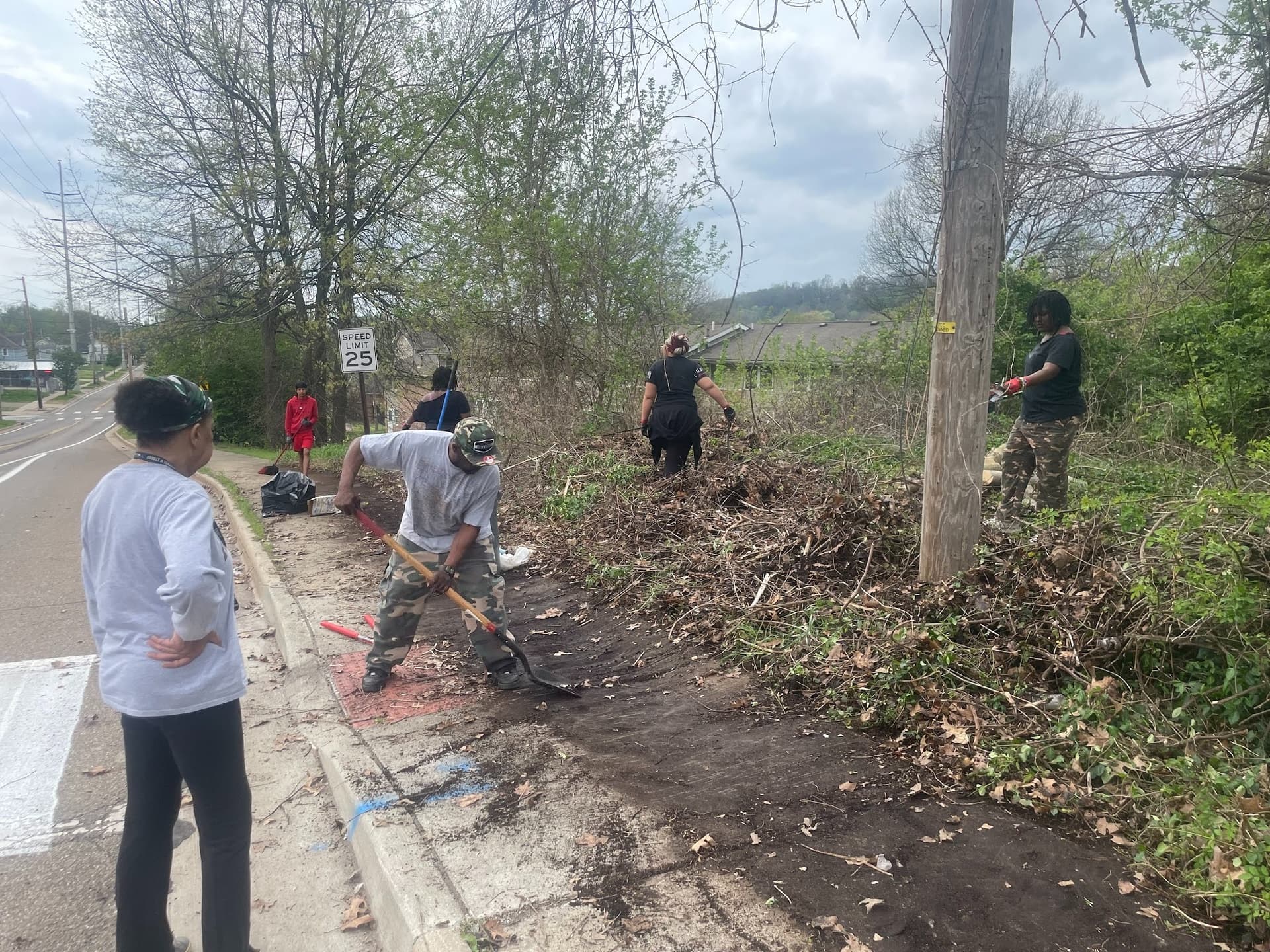
Quick-build projects often lead to larger or more lasting changes beyond the initial scope. All three teams conducted long-overdue maintenance and landscaping work as part of their projects, immediately improving sidewalk access in their neighborhoods.
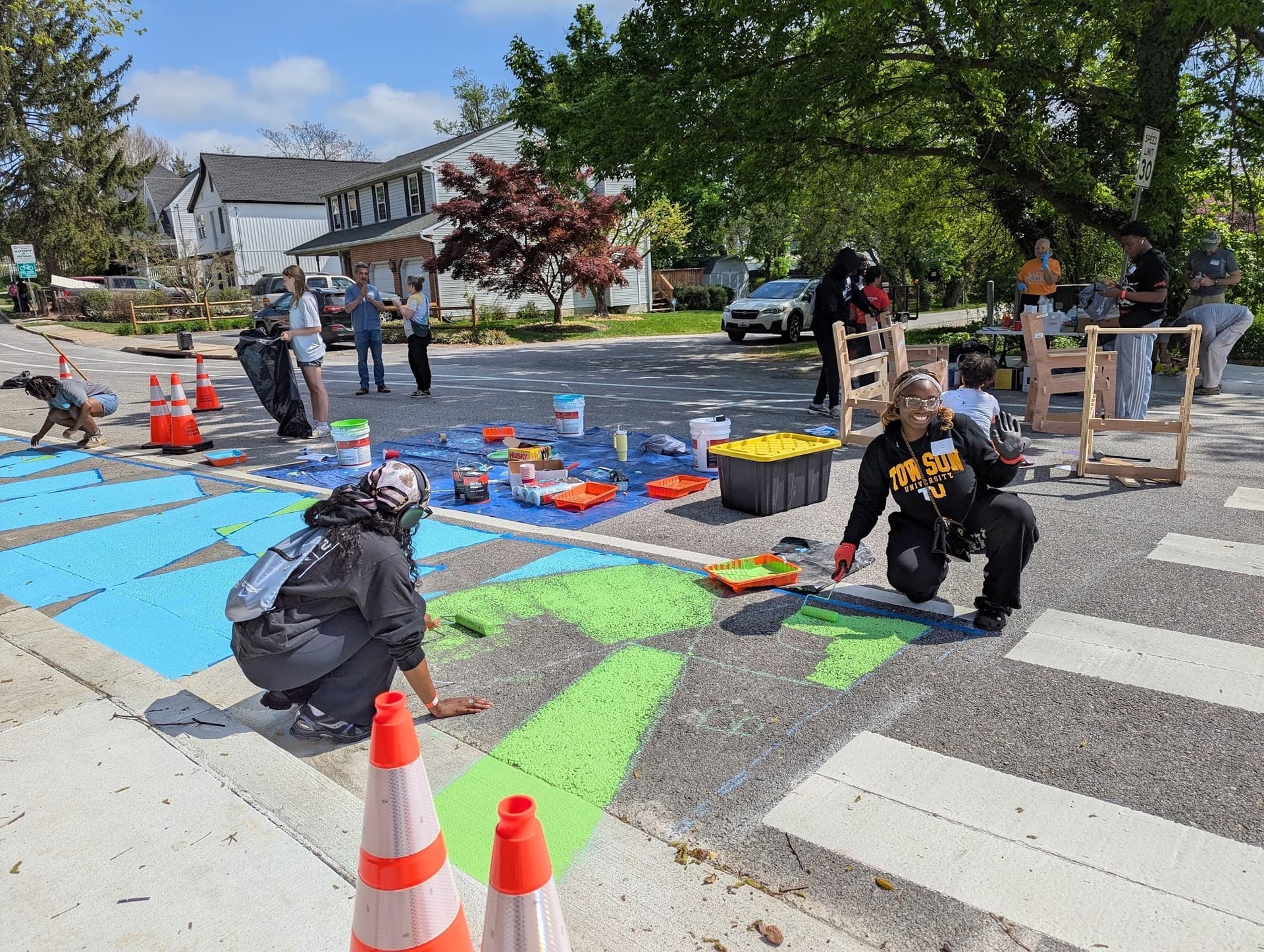
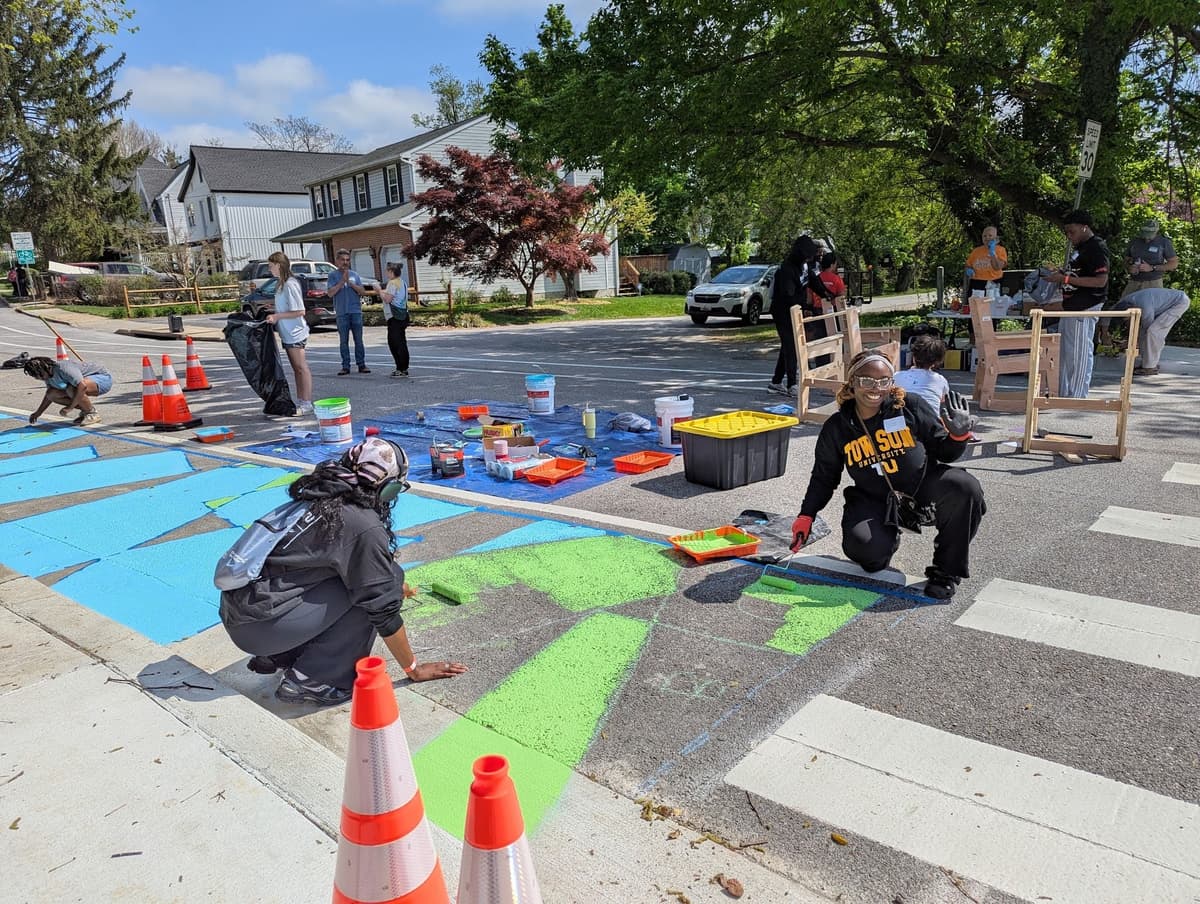
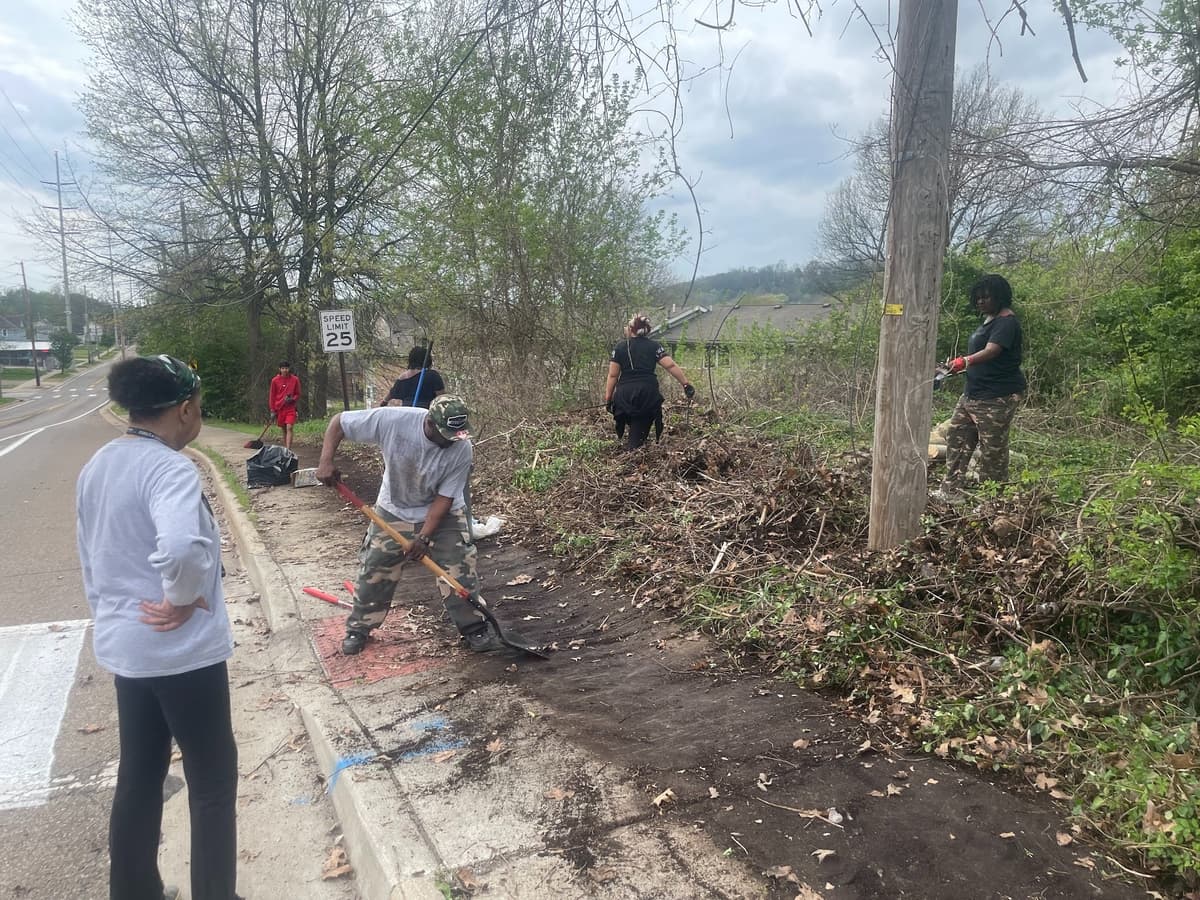
- Sidewalk maintenance: Little Rock and Akron both held community clean-up events to uncover sidewalks from overgrown vegetation. Little Rock also filled in sidewalk gaps near the pop-up business district area to allow people to more easily walk there.
- Permanent improvements: Baltimore County and Akron both installed permanent curb ramps to improve accessibility within the site boundaries.
- Larger project limits: The Historic East Towson team expanded their project to include new gathering space next to the traffic-calming installation, cleared of vegetation by volunteers. Little Rock used their focus on West Ninth Street to work with ArDOT on a demonstration project across I-630, blocking off travel lanes for a temporary multi-use path across a nearby bridge and frontage road.
Whether because city staff realized there was an opportunity for a permanent improvement alongside a demonstration project, the community wanted to spruce up an area before a launch event, or the project brought the right partners together, quick builds can kick off many other changes.


The cohort model of Community Connectors helped communities learn from one another. The distinct visions each team brought to their work challenged the others to think differently about their own projects, stretching what they thought was possible.
With installations on the ground for a few months to a year, the long-term outcomes of projects are still to be seen, but the immediate impacts have already shown the power of a quick build. Next year’s Community Connectors and any other community interested in starting the reconnection process can use these lessons in their own quick-build projects to get this important work started.
Timeline:
|
September 2025 |
Program begins with onboarding calls |
|
October 2025 |
Virtual trainings introduce quick builds |
|
November 2025 |
Virtual trainings on community engagement and data collection; teams finalize site selection |
|
December 2025 |
Teams begin community engagement and baseline data collection |
|
January 2026 |
Cohort travels to Little Rock for in-person workshop, initial project design |
|
February 2026 |
Final virtual sessions on project launch and maintaining momentum; final project design |
|
March 2026 |
Materials procurement and permitting |
|
April 2026 |
Quick-build project installation and launch events |
|
May 2026 – ongoing |
Continue site activation, community engagement, and data collection |
Lessons for SGA
At SGA, we’re always learning from our technical assistance participants and program partners. This group in particular brought a lot of great insight into how to teach and support quick builds for reconnection, and we’ll carry these lessons forward in future technical assistance programs:
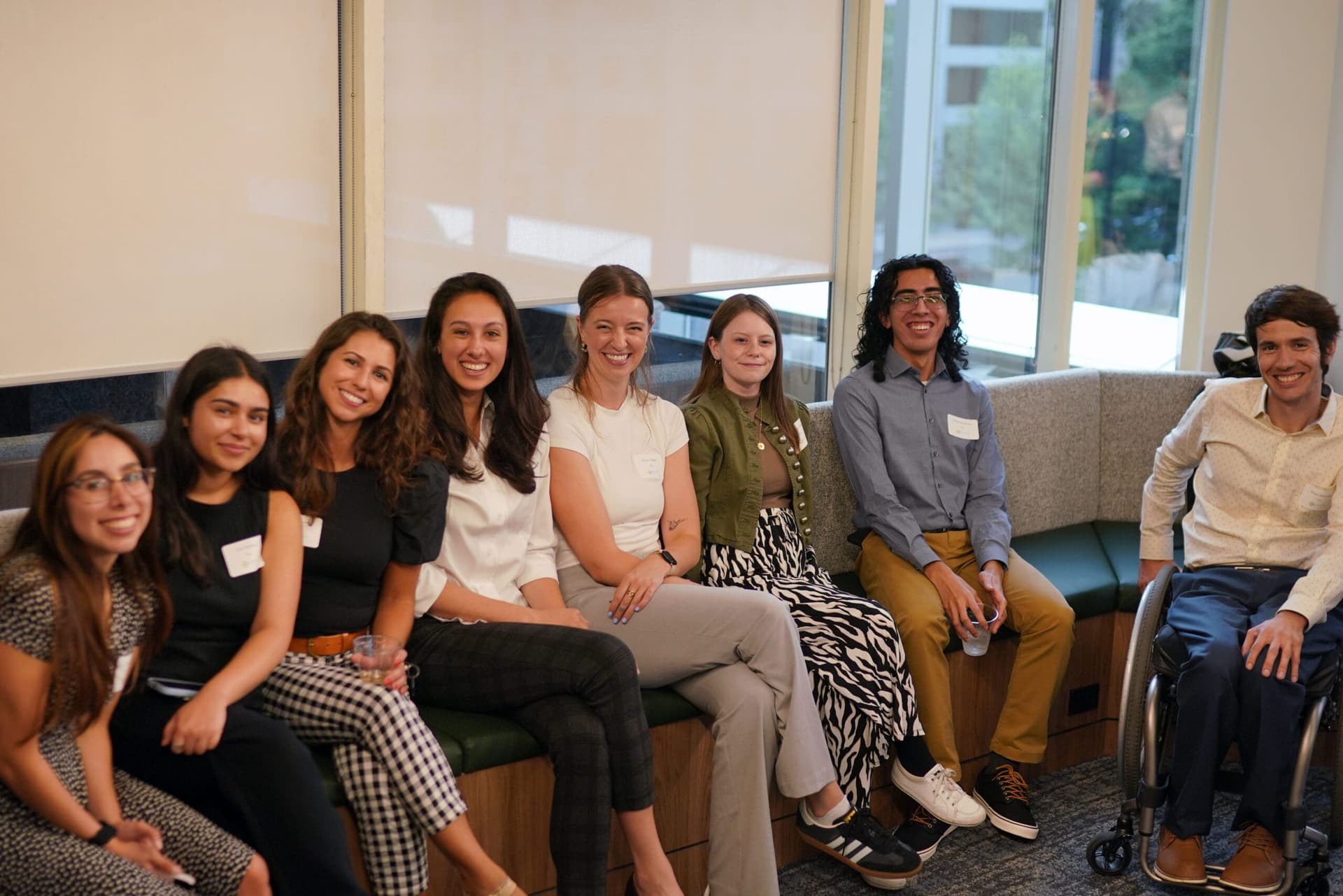
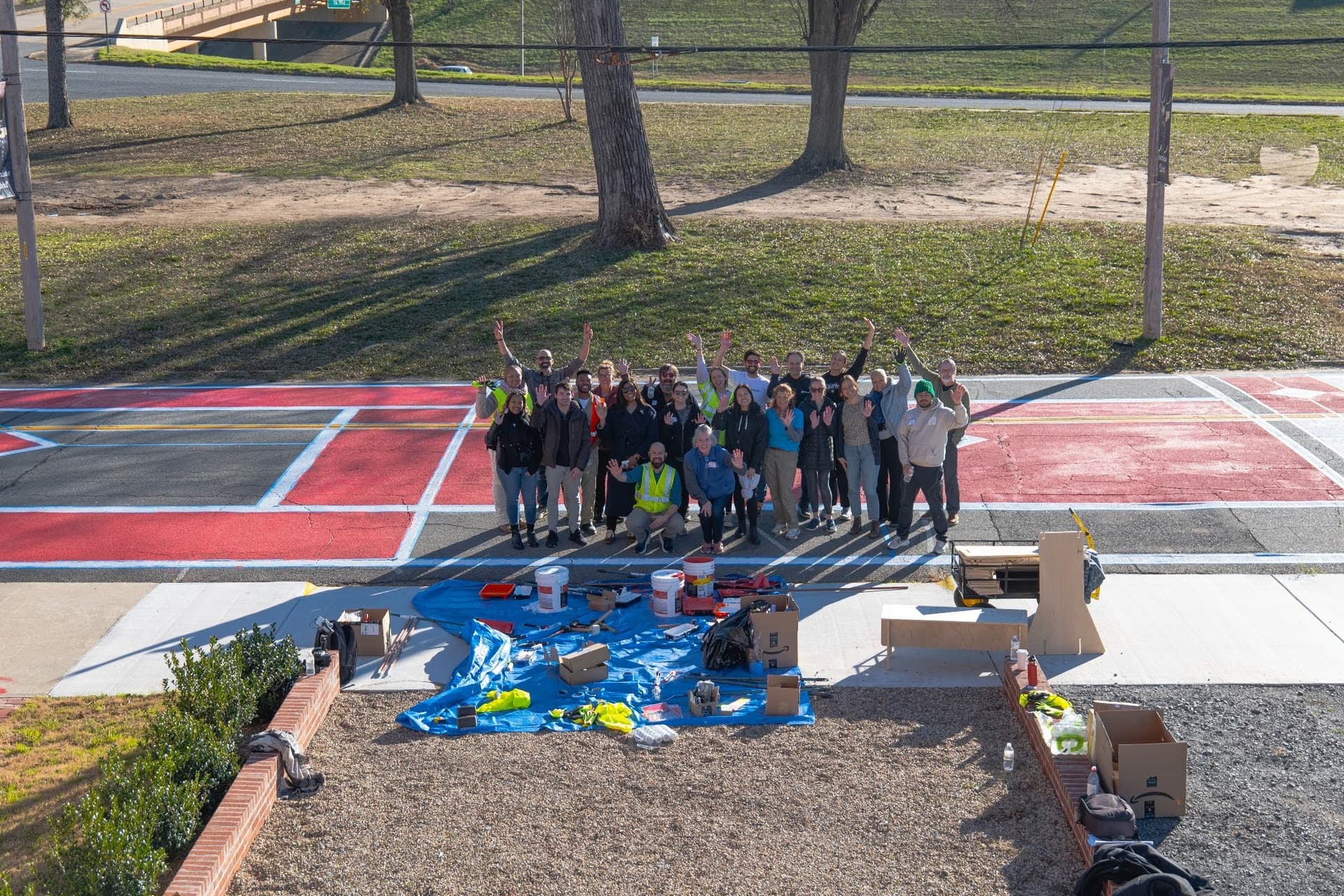
1. Meet in-person as soon as possible. This cohort became noticeably closer during the in-person workshop—within teams, across the cohort participants, and within the program’s teaching team. Some time for small talk, shared meals, and joint work on a mural built strong relationships that carried through the entire program.
2. Get outside and get creative! Thanks to our Better Block colleagues from Dallas, Texas, we felt the joy of painting a mural and witnessed the inspiration it can spark. Our virtual programs sometimes distance us from experiencing the benefits of quick builds firsthand, but Better Block’s leadership at the in-person workshop allowed us to participate this time.
3. Keep the conversation going. The projects extend well beyond the timeline of our program—and all three of our teams have planned engagement events throughout the summer. We’ll also bring the cohort back together for one final virtual call at the beginning of the fall to reconnect with one another and share how the past few months of their projects went and what they learned from additional activations.
Thank you to Matthew Roe and Travis Cook, Stantec, and Krista Nightengale, Better Block, for their expertise throughout this project and their insights for this report.
Related News


Livable places. Healthy people. Shared prosperity.


© 2026 Smart Growth America. All rights reserved
Site By3Lane Marketing
